

Home / Blog / Why Men's Jewelry Is Growing Faster Than Ever
Why Men's Jewelry Is Growing Faster Than Ever
Men's jewelry isn't a niche anymore, or it's becoming less of one, which isn't the same thing and the distinction matters more than it probably sounds. The global market landed somewhere in the $35 to $48 billion range in 2024, the spread depending on which firm you're reading and how they're drawing the edges of the category, and most projections have it somewhere near double that by the early 2030s. Not a spike. A climb that's been going for a while now. Though sustained is doing a lot of work in that sentence given we're mostly extrapolating from a handful of years of cleaner data sitting on a longer tail of messier figures that don't always agree with each other.
The Numbers
The US market moves from around $5.6 billion to somewhere over $10 billion by 2032, if the projections hold. The broader jewelry market, all of it, grows at around 5 percent annually. Men's pieces are running close to twice that, maybe a bit under depending on the source and when they ran the numbers.
Consistent enough across enough places that it gets harder to write off.
The 18–30 segment is moving fastest, but men in their 40s and 50s are a steady and largely underdiscussed buying presence: less frequent, higher spend per piece, almost entirely absent from how this category gets talked about publicly despite accounting for a real portion of what's actually moving. Stainless steel, leather, gold-plated finishes. The accessible tier. That's where most of the volume is, not the luxury end, though both are growing and treating them as entirely separate stories is probably a mistake.
Online is where the sharpest growth shows up, partly because men discovering jewelry for the first time tend to prefer doing it without someone standing six feet away across a glass case. Small thing, but it's probably more relevant than it looks.

Why Now
Not one cause. Several things arriving at roughly the same time, though they don't sit together as neatly as that framing implies, and a few of them probably started earlier than the cleaner data suggests.
For around sixty years, mid-20th century onward, give or take depending on the country, Western men kept accessories narrow. Watch, wedding band, cufflinks if the situation called for it and sometimes not even then. That was the historical anomaly, not the baseline people tend to assume. Most of recorded history has men wearing things: rank, faith, passage, where they'd been. The narrow window is closing, or has mostly closed. Hard to say exactly when it tipped, and probably the moment matters less than the direction.
A 2024 survey of something like a thousand men in the US found 78 percent considered men's jewelry mainstream. The question has moved from "can men wear this" to something more like "how do I do this without it looking like I spent the weekend thinking about it." That second question is more interesting and mostly goes unanswered in what gets written about the category.
"78% of men now consider men's jewelry mainstream. The question has shifted from whether — to how."
Visible role models
There's something about visible role models here, though the mechanism is less direct than it usually gets described. When a footballer wears a bracelet in a Tuesday press clip filmed in a corridor somewhere, not a red carpet, just a normal setting with ordinary lighting, it removes the theatrical association that used to trail this stuff. Recalibrates what reads as ordinary. Which is real. Though the same logic applied fifteen or twenty years ago and didn't move things the same way, so either the cumulative weight of it matters or there's something else underneath that's harder to name. Or maybe not exactly that, more like several things converged at once and the visibility piece was one thread, not the whole explanation.
How men actually buy
Men new to jewelry, this shows up in the buying data but also just in observation, tend to buy one piece and wear it every day. No rotation. Which changes the purchase logic. They want something that holds up, that still looks right later when the specific moment that made the purchase feel possible has long passed. Durability becomes the filter almost automatically. Pushes the category toward stainless steel and decent leather and away from things that photograph well and start losing their finish within a year. Whether that's driving the growth or just a feature of it, the data doesn't cleanly say.
Why stainless steel?
Men new to jewelry tend to end up here regardless of where they started looking. It doesn't corrode, doesn't tarnish, and still looks right after daily wear for years. Not glamorous. Just reliable.
Featured Necklaces
-

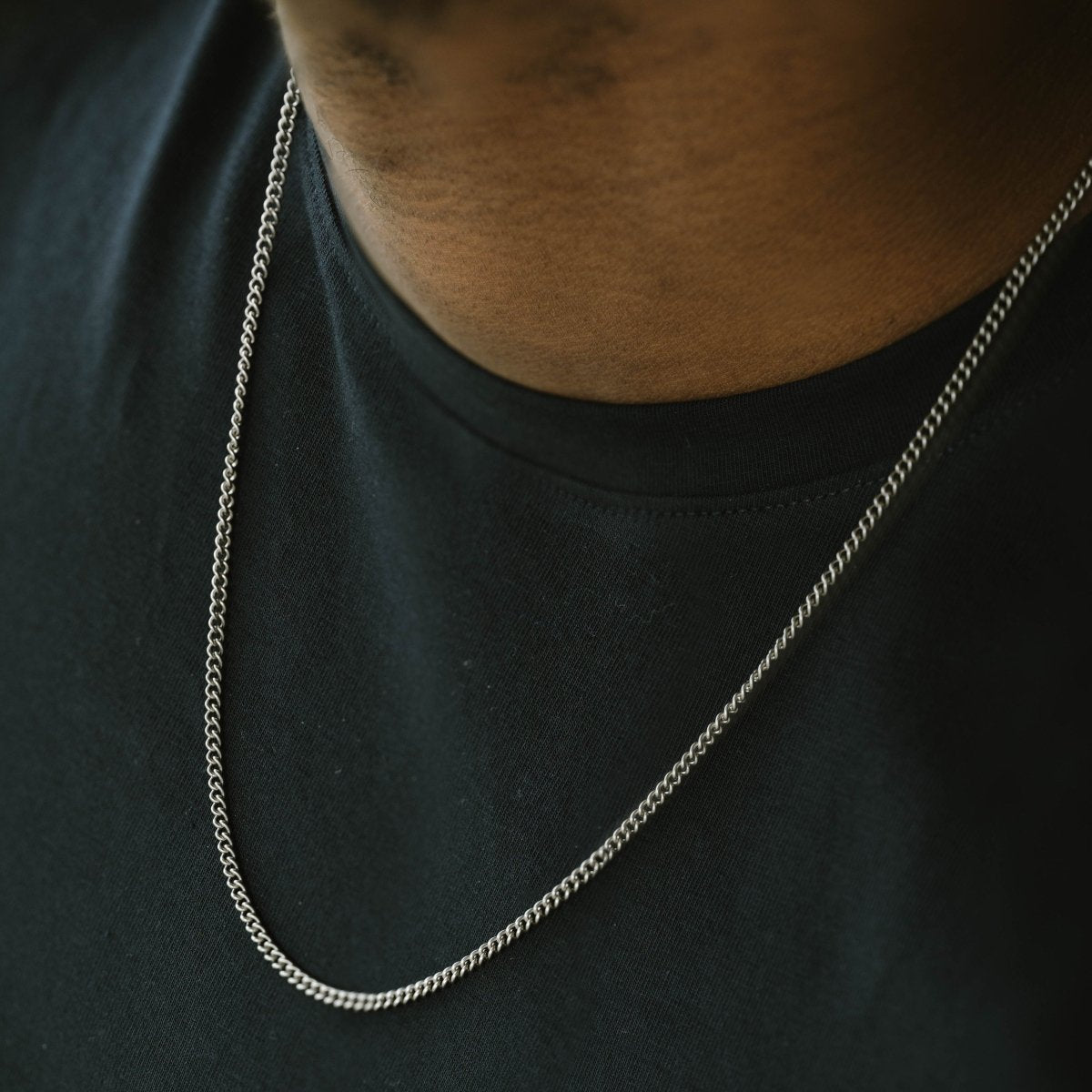
Thin Stainless Steel Curb Chain Necklace
Thin Stainless Steel Curb Chain Necklace


 VIEW PRODUCTRegular price $50.00Regular priceUnit price per
$50.00Sale price $50.00 -

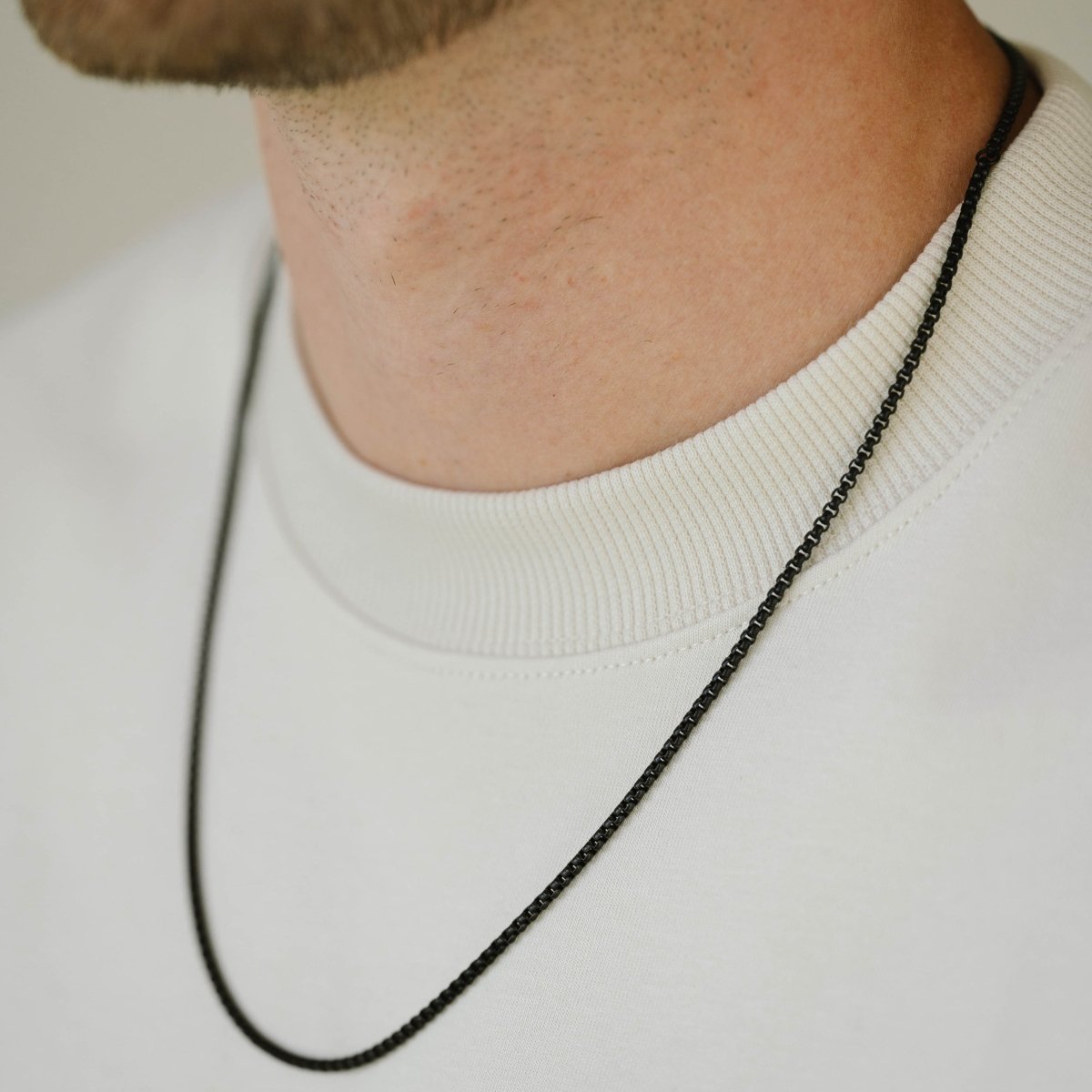
Thin Stainless Steel Black Box Chain Necklace
Thin Stainless Steel Black Box Chain Necklace
VIEW PRODUCTRegular price $57.00Regular priceUnit price per$57.00Sale price $57.00 -
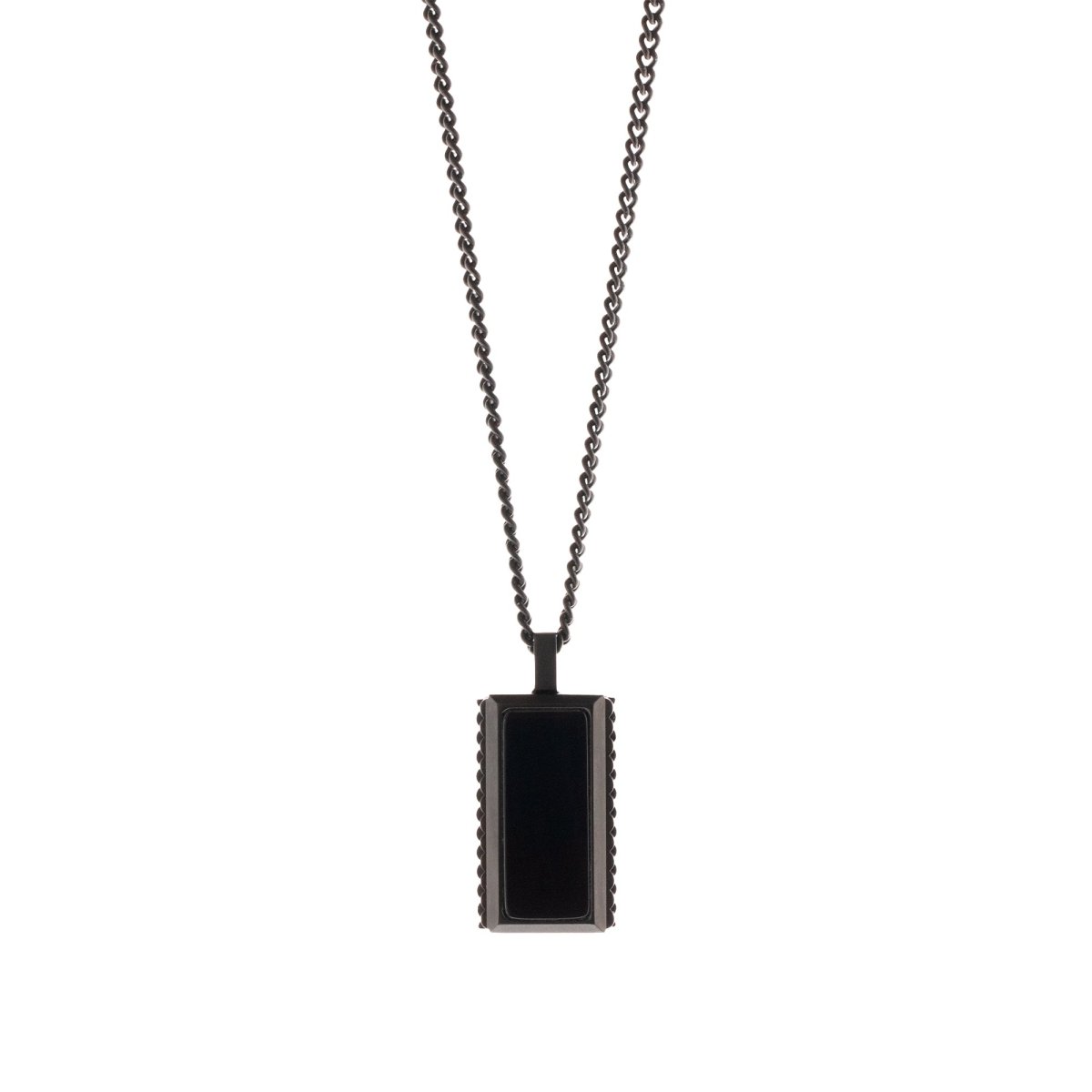
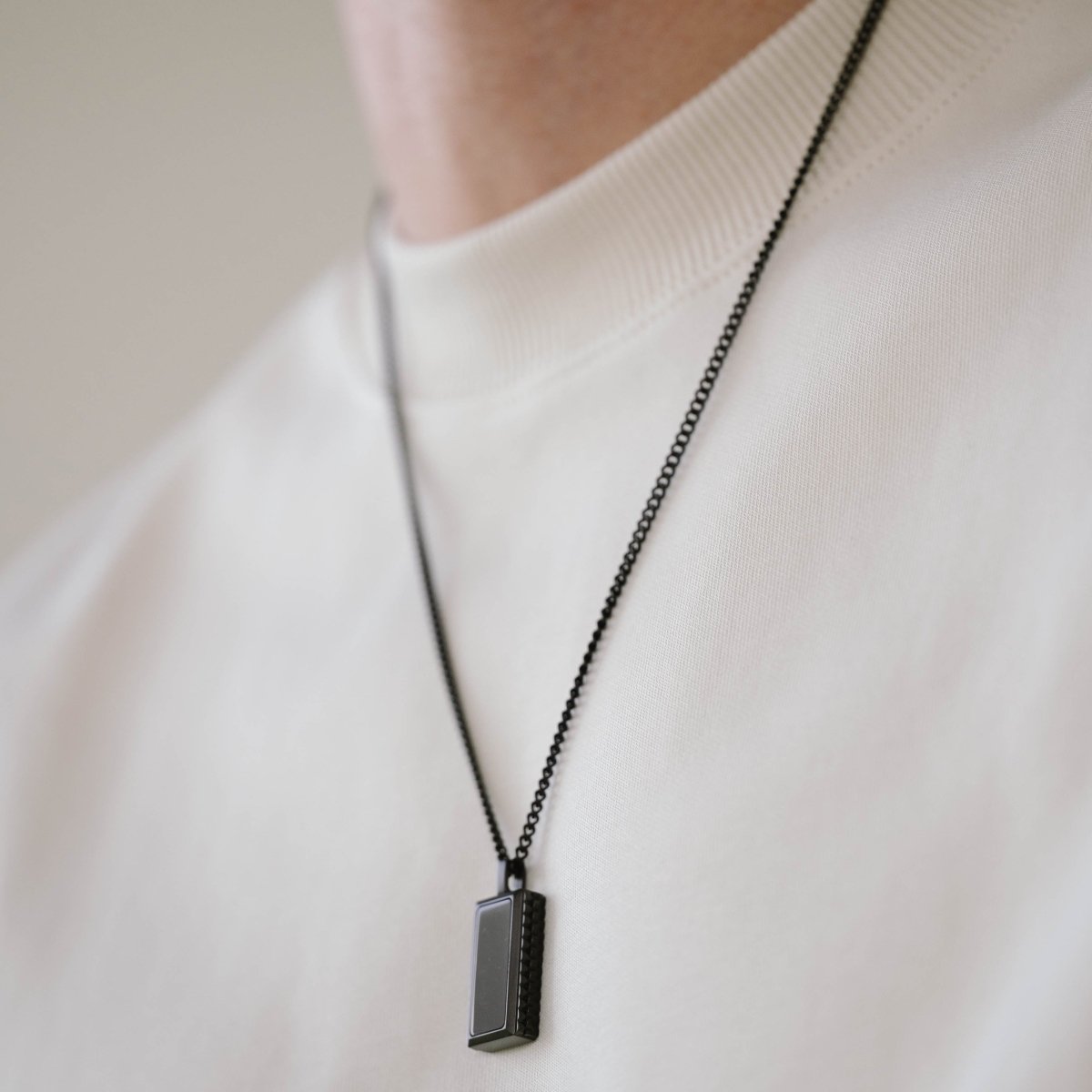
Black Stainless Steel Rectangle Onyx Stone Pendant Necklace For Men
Black Stainless Steel Rectangle Onyx Stone Pendant Necklace For Men
VIEW PRODUCTRegular price $114.00Regular priceUnit price per$114.00Sale price $114.00 -

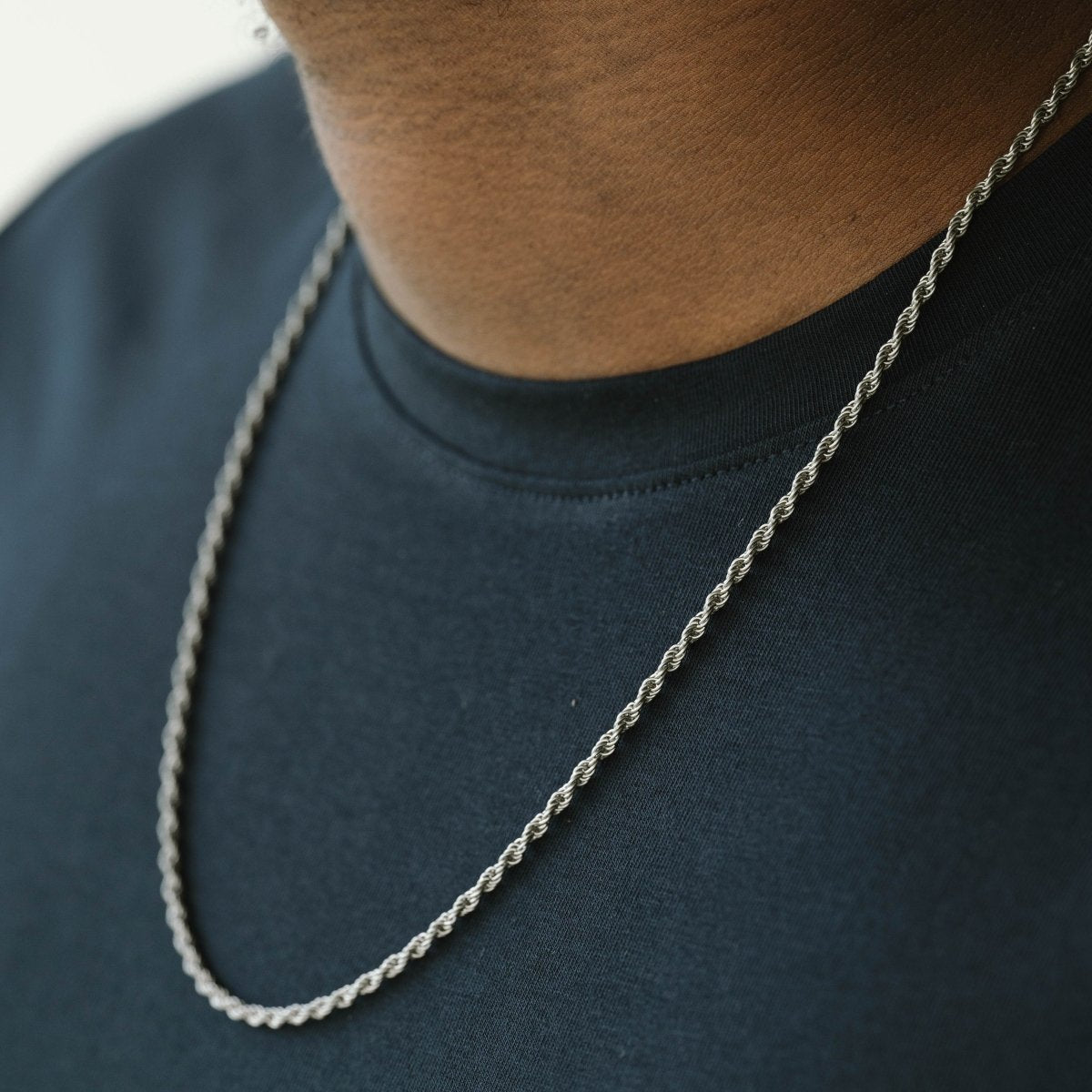
Thin Stainless Steel Twisted Rope Chain Necklace
Thin Stainless Steel Twisted Rope Chain Necklace
VIEW PRODUCTRegular price $57.00Regular priceUnit price per$57.00Sale price $57.00


What They're Actually Buying
Bracelets are where most men start. Low visibility, low commitment in terms of how much it disturbs a wardrobe that's already working, available in enough material variation, leather, steel, beaded stone, woven cord at the cheaper end, that most men can find something that doesn't feel like a costume. A single leather bracelet on a man who's never worn jewelry tends to look like it was always there. Most of the time. Not always.
Necklaces are the fastest-growing segment according to most of the forecasts. Clean chains, steel or gold-plated, worn under a shirt where they're barely visible or over a plain t-shirt on a slow weekend morning. Simple enough to wear that it's genuinely hard to get badly wrong, which probably explains some of the growth without fully accounting for it.
Rings carry the largest revenue share of the three main categories, which doesn't make immediate sense until you think about the price range. Fashion rings for men now go from a €20 or €25 plain steel band up to something considerably more, and men are buying at various points across that whole spread. Signets, minimal pieces, plain bands worn on whatever finger. That stat never quite added up until I thought about the distribution rather than the category as a single thing.
Minimal and classic designs outsell statement pieces across all three, pretty consistently. Men new to this want something that integrates. Not something that redirects the whole look toward itself.
What holds across all three categories:
Men new to jewelry almost always buy something that integrates with what they already own — not something that takes over the look. Quiet pieces consistently outsell statements. It's rarely about standing out.
Featured Bracelets
-


Layered Brown Multi Strand Leather Men's Bracelet
Layered Brown Multi Strand Leather Men's Bracelet


 VIEW PRODUCTRegular price $85.00Regular priceUnit price per
 -


Brown Leather Braided Bracelet For Men
Brown Leather Braided Bracelet For Men
 VIEW PRODUCTRegular price $65.00Regular priceUnit price per
 -
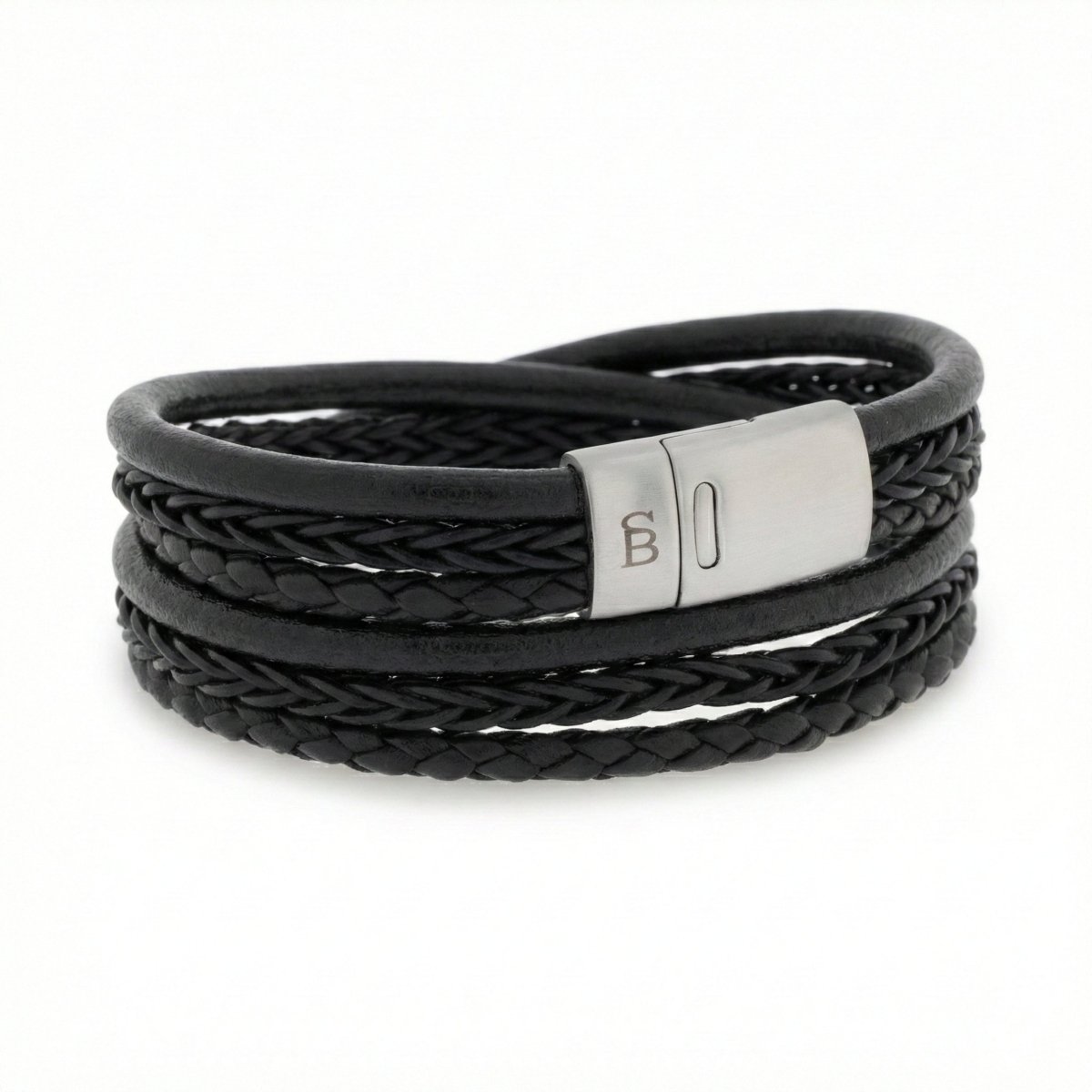
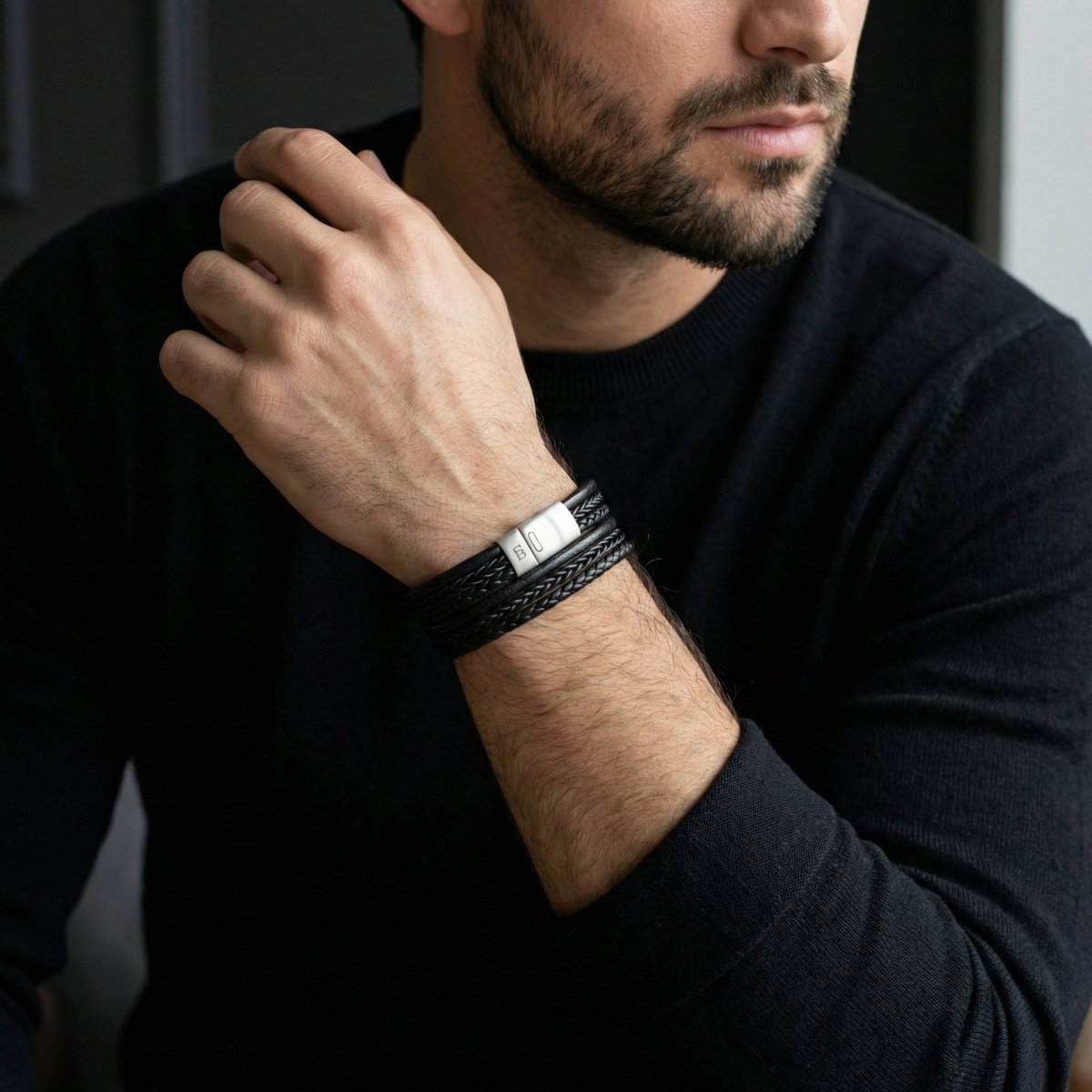
Layered Black Multi Stand Leather Men's Bracelet
Layered Black Multi Stand Leather Men's Bracelet
VIEW PRODUCTRegular price $85.00Regular priceUnit price per -
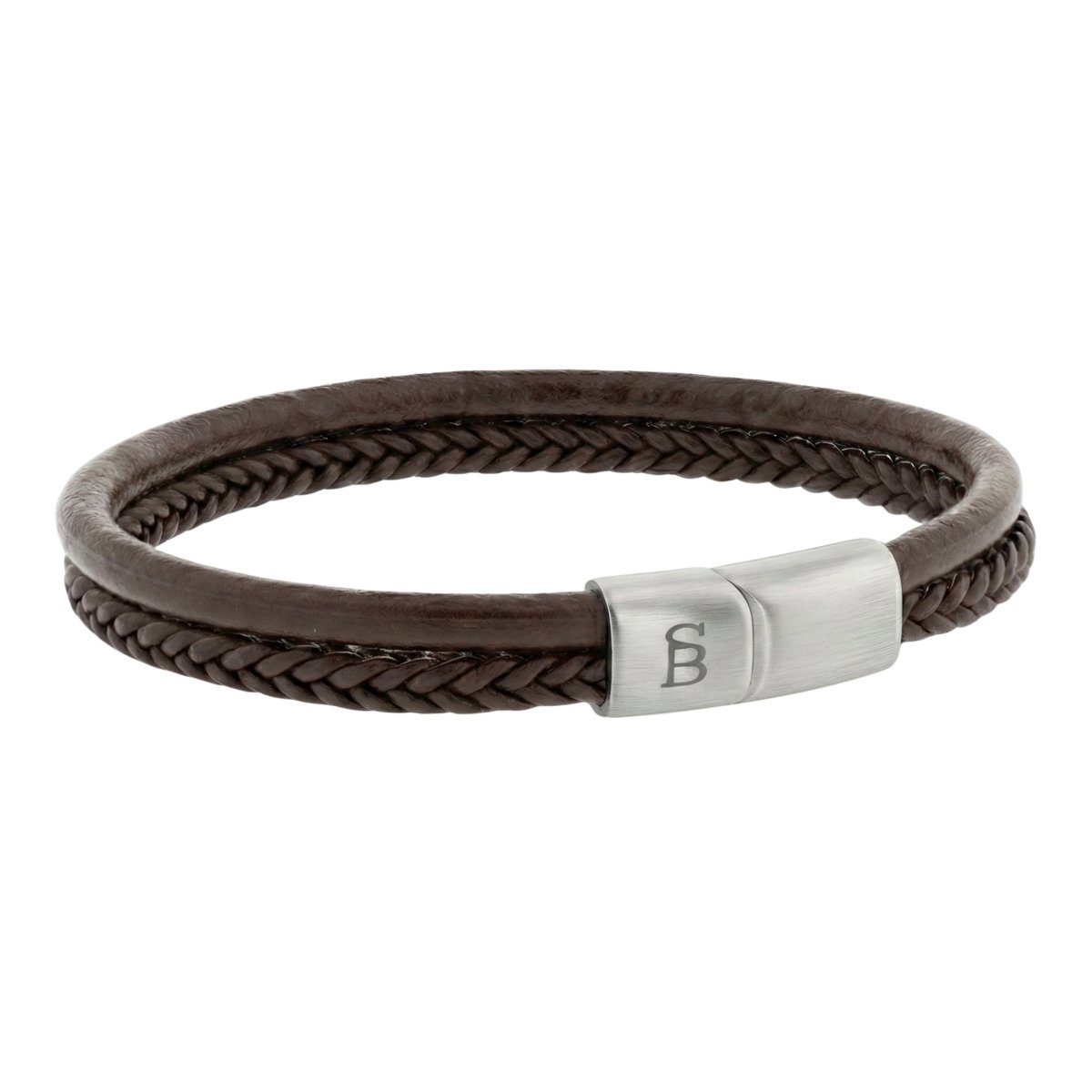

Men’s Dual-Band Brown Leather Bracelet
Men’s Dual-Band Brown Leather Bracelet
VIEW PRODUCTRegular price $65.00Regular priceUnit price per


Trend or Not
Worth asking directly because it doesn't go away.
Probably not reversing, though that's always easier to say on the way up, and there are cases of men's style shifts that looked structural and didn't hold. Worth keeping in the background.
What seems different here is that it's not attached to a specific aesthetic or a cultural moment you can point to. More diffuse, a shift in how men relate to personal expression that's been moving for two decades, maybe longer, and has now crossed into something visible enough to register in mass market data consistently. Brands at every level have reshaped or are reshaping their men's lines. Brands don't do that for a two-season window. Though brands have also misread things before on shifts that looked durable and weren't, so the signal is real without being conclusive.
The more useful question is when, not whether. Men who start early, one piece, worn daily, built up slowly, tend to end up with accessories that feel like they've always been there, like no particular decision was made. Men who wait too long and move quickly tend to buy several things at once and usually none of it settles the same way. No clean takeaway from that, it just seems to hold when you look at it.
Where to Start
One piece. Every day. That's most of the framework.
A bracelet for most men: least visible addition, widest material range, easiest to put alongside clothes that already exist in the wardrobe and already work. Match what you already own: leather if it runs warm and earthy, steel if it runs cooler and darker. Wear it for a week without paying too much attention. If it stops registering as something you put on in the morning, that's probably the right signal.
The Steel & Barnett bestsellers are a reasonable reference, not because of how they photograph but because they reflect what men come back to buy a second time. Different filter than most product pages, probably a more honest one.
Shop bestsellers"The bestsellers reflect what men come back to buy a second time. A more honest filter than most product pages."
A Few Questions That Come Up
Is men's jewelry just a trend, or is it here to stay?
Probably here to stay, though easier to say during growth. Double-rate expansion across multiple sources, driven by something that looks structural rather than seasonal. Reasonably consistent. Not conclusive.
Why are more men wearing jewelry now than before?
Shifting norms, normalisation through role models in ordinary settings, online retail removing the friction of a watched purchase, a preference for things that carry some personal meaning rather than just occupying a wrist. Those didn't all start at the same time but seem to have converged, or maybe converged a few years earlier and the data is catching up now.
What types of men's jewelry are selling the most?
Bracelets as entry point. Necklaces growing fastest by segment. Rings largest by revenue, counterintuitive until the price range becomes clear. Minimal and classic outselling statement pieces across all three, pretty much without exception.
What age group buys the most men's jewelry?
18–30 is growing fastest. 30–55 buying less often, spending more, underrepresented in coverage relative to their actual share of sales. The gap between who gets written about and who's at the checkout is wider than it should be.
Is stainless steel a good material for men's jewelry?
Yes. Doesn't corrode, doesn't tarnish, holds its finish with daily wear. Men new to jewelry tend to end up here regardless of where they started looking. That probably means something.
Is men's jewelry considered mainstream now?
Something like 78 percent of US men surveyed in 2024 said yes. Luxury houses have expanded men's lines. Growth running at roughly double the rate of women's jewelry globally. Whatever threshold you're using, this is probably past it, or close enough that the distinction stops mattering much.
Ready to start?
Handcrafted men's bracelets in leather, natural stone, steel and rope — designed in Belgium for everyday wear.