

Can Men Wear Bracelets?:
The Simple Answer
Walk into any room where style matters — a fashion week, a locker room, a boardroom in Milan — and you'll notice something. The men who look the most put-together usually have something on their wrist that isn't a watch.
It is not an accident. It is not a fashion trend. And it is certainly not new. Men have worn bracelets across every culture and every century, as symbols of rank, strength, belief and identity. The only thing that changed was a narrow window of Western fashion history that decided otherwise. That window is closing fast.
This guide cuts through the noise. You will find out which bracelet works for your style, how to wear it, how many is the right number, and how to build a wrist stack that looks considered rather than cluttered. Whether you are buying your first bracelet or refining a collection, start here.
The History Nobody Talks About
The idea that bracelets belong to women is roughly 60 years old. The tradition of men wearing them is closer to 6,000. Egyptian pharaohs wore gold and lapis lazuli cuffs as markers of divine authority. Roman soldiers received gold armillae — wrist ornaments — as military decorations for acts of bravery. Greek warriors wore leather and metal cuffs as both protection and status. Viking leaders wore twisted silver on their wrists. Celtic chieftains wore heavy bronze armlets as emblems of power.
The 20th century narrowed men's accessories down to a watch and a wedding ring. That was the anomaly, not the historical norm. Every other era, in every other culture, disagreed.
"Every era, in every culture — warriors, kings, explorers — had something on their wrist. The bare wrist is the modern invention."
Today's men wearing bracelets are not following a trend. They are rejoining something that has existed for millennia. The hesitation is understandable. But it is not historically justified.

Four Rules for Wearing Bracelets Well
There are no laws. But there are principles that separate a wrist that looks deliberate from one that looks accidental. Follow these and you will rarely go wrong.
Wear it where it feels comfortable
Most men default to the non-dominant wrist. It stays clear of writing, typing and manual work. If you wear a watch, the opposite wrist creates natural balance. Wearing both on the same wrist also works, provided the pieces differ enough in width and finish that neither drowns the other. There is no correct answer. There is only the answer that feels right on your wrist.
Mix materials, not quantities
When stacking, the contrast between materials is what creates visual interest, not the sheer number of pieces. A leather band, a stone bead bracelet and a slim rope or chain read as a considered stack. Three leather bracelets of similar weight just look like too many of the same thing.
Your watch is part of the stack
If you wear a watch daily, it is already the anchor of your wrist. Any bracelet you add — on the same or opposite wrist — should complement its size, finish and character. A large diver's watch pairs well with a chunky leather cuff or a stone bracelet. A slim dress watch calls for something thinner and more refined.
When in doubt, take one off
A wrist that looks slightly underdressed is always more elegant than one that is overdone. If you are standing in front of the mirror and something feels like too much, it usually is. Remove a piece, step back and assess. You can always add it back. You cannot unsee an overcrowded wrist once you have left the house.
-

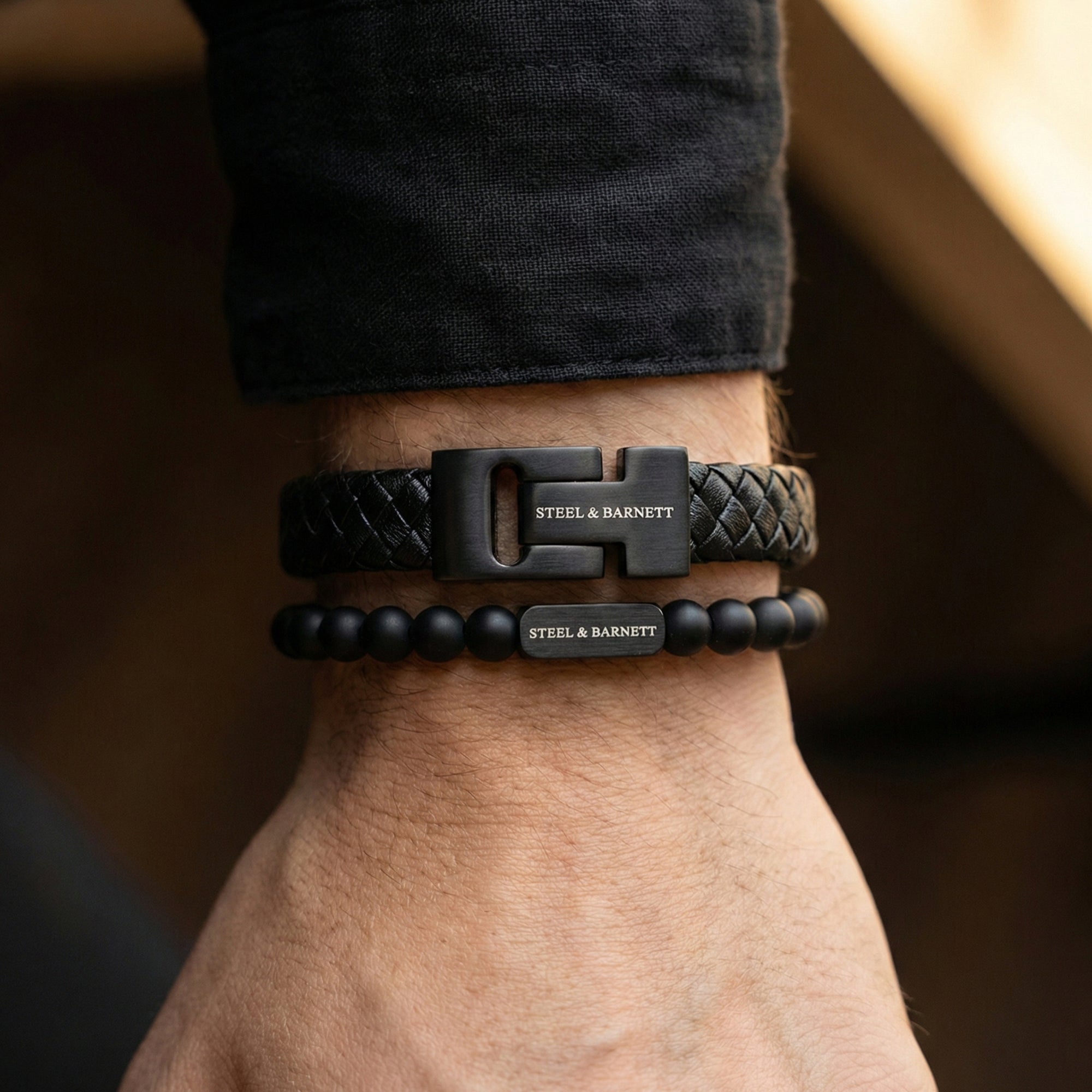
Black Edition Duo Harrison Set
Black Edition Duo Harrison Set
 View productRegular price $150.00Regular priceUnit price per
 -


Heritage Duo Set Brown
Heritage Duo Set Brown
View productRegular price $140.00Regular priceUnit price per -

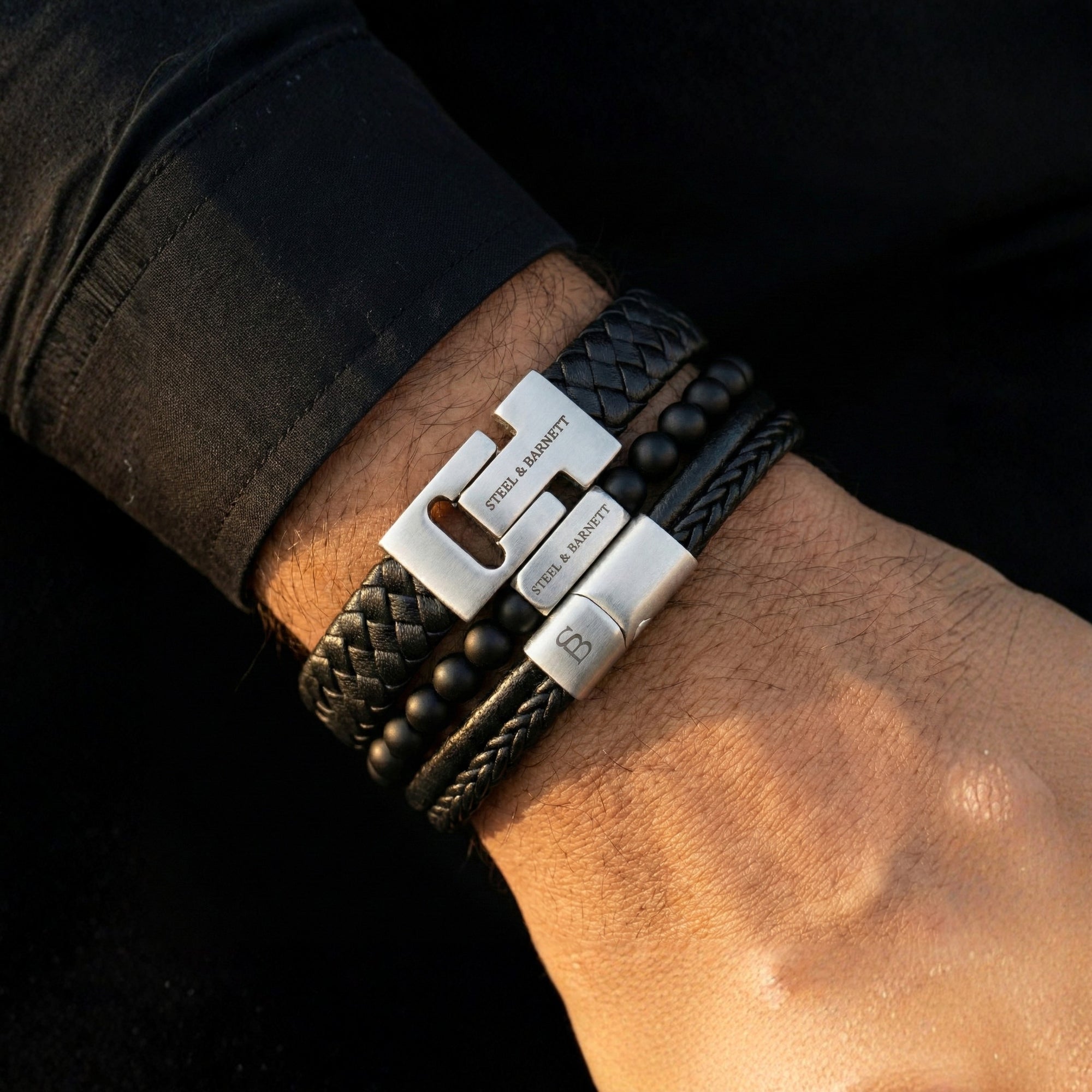
Premium Bracelet Set Black
Premium Bracelet Set Black


 View productRegular price $230.00Regular priceUnit price per
 -

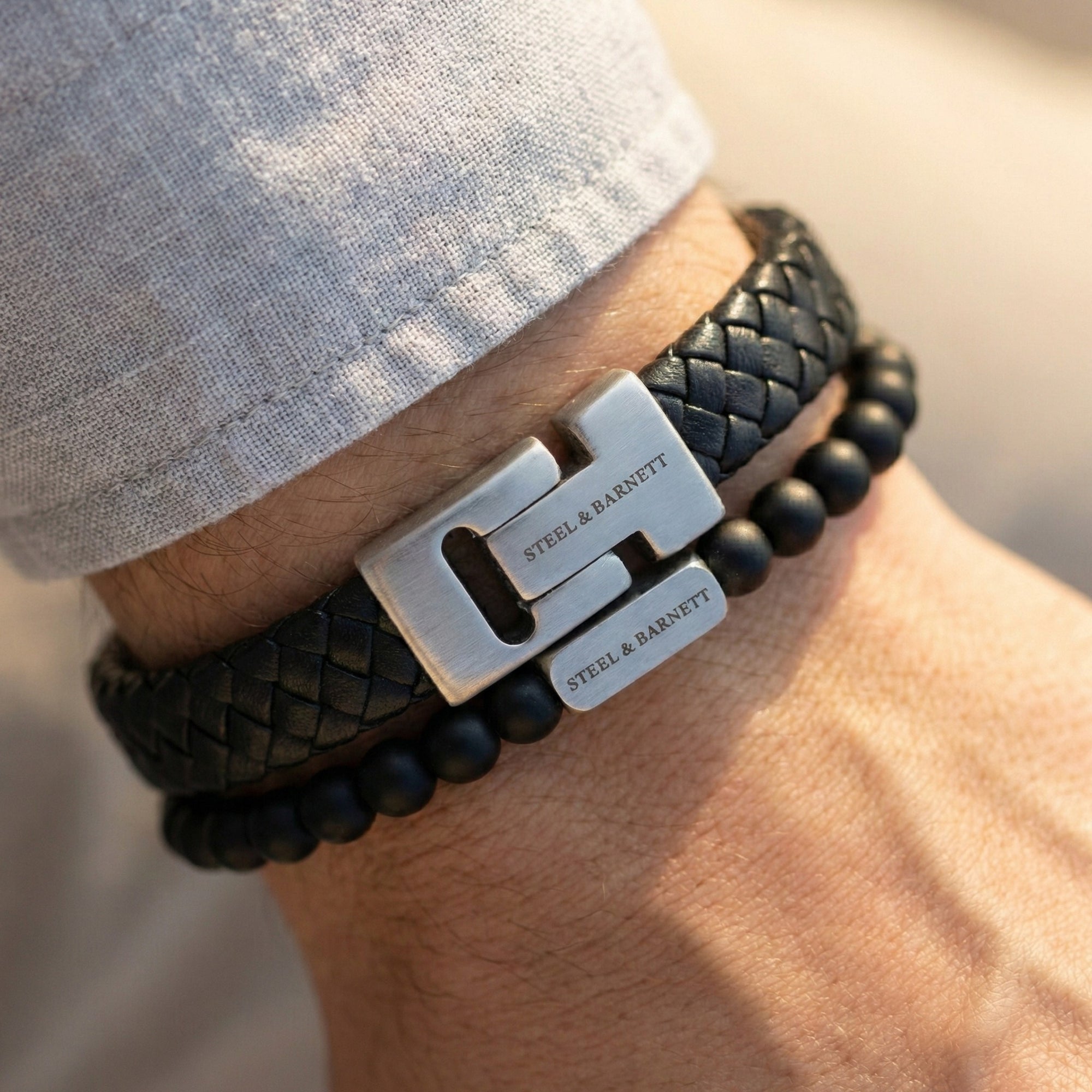
Gift Set Duo Black
Gift Set Duo Black
View productRegular price $150.00Regular priceUnit price per


Can You Wear a Bracelet to Work?
The short answer is yes, with a read of the room applied. The environment you work in tells you most of what you need to know.
In creative fields, marketing, technology, hospitality and most modern workplaces, a leather or stone bead bracelet will go entirely unnoticed in a meeting. These environments have long since moved past the idea that accessories undermine professionalism. In law firms, investment banks and highly formal corporate settings, the calculus shifts. Here, a slim stainless steel bracelet or an understated rope piece can still work — but a heavy beaded stack probably does not belong.
The principle that applies everywhere:
A bracelet at work should feel like part of your outfit, not a statement about your outfit. If you are conscious of it, so is everyone else. If you have forgotten about it by 9am, you have chosen correctly.
Start with one subtle piece for a full working week. See how it feels. That is more useful than any rule you will read here.

Find the One That Belongs on Your Wrist
The best bracelet is the one you stop noticing after a few days. The one that sits naturally, suits your wardrobe and does not ask for attention. Start with one piece. Wear it daily. Build from there if it feels right.

How to Start If You Have Never Worn One
The most common mistake men make when buying their first bracelet is choosing something they saw on someone else. It looked right on that person because it belonged in their wardrobe. It may not belong in yours, and you will feel that the moment you put it on.
A better approach: look at your existing wardrobe before you look at any bracelet. What materials already feature: leather, canvas, metal hardware? What tones dominate: earth tones, black and grey, navy and white? Start with a bracelet that already shares DNA with what you own. The integration will feel natural rather than forced.
Then wear it every day for one week. You will stop noticing it by day three. By day seven you will have a clear sense of whether you want to keep it simple or start building from there. Either path is equally valid.