

What sweat actually does to a bracelet
Sweat isn't just water. It carries salt and runs mildly acidic, which is part of why it damages materials that aren't built for it.
316L stainless steel handles this well. It's the kind of grade used in piercings and similar applications, chosen because it resists moisture, salt, and skin oils, though not every piece stamped "316L" is held to implant-grade certification. The alloy itself is still a solid, corrosion-resistant choice. Run a marathon in it, shower right after. Dried residue can dull the finish over time; a wipe with a cloth clears that up.
Leather absorbs sweat the way it absorbs the oils from your skin, except gym sweat is sustained and concentrated rather than the slow trickle of an ordinary day. The longer it sits against leather, the more it does damage: fibers swell, dye migrates, the piece dries out stiffer than it started. One tough session won't ruin it. The damage doesn't reverse, though, and it adds up.
If it happens anyway, the fix is simple: wipe the leather down as soon as you can, let it air dry away from direct heat, and condition it once it's fully dry. That won't undo the exposure, but it keeps one bad session from turning into permanent damage.
Save leather for the office, for dinner, for anywhere sweat isn't the main event.
Why cardio is actually the worst case for leather
Cardio feels like the safe workout. For stainless steel, it mostly is, nothing's gripping anything. For leather, it's closer to the opposite.
A 45-minute run means 45 minutes of continuous contact with sweat at skin temperature, longer and steadier than a lifting session's shorter bursts. Leather doesn't need a heavy impact to take damage. It needs time and moisture, and cardio hands it both.
Does workout type matter for stainless steel
Less than you'd think, and mostly for mechanical reasons rather than sweat. Cardio and bodyweight work put no real stress on it.
Weightlifting is different. A bracelet caught between your hand and a barbell, a dumbbell, or a pull-up bar gets compressed and scraped against knurled steel with every rep. Enough reps and you get scuffing or a stretched clasp. Loose links and dangling charms carry their own risk, catching on cable machines and pulley systems. A snagged bracelet mid-set can hurt your wrist, not just the jewelry.
Clasp matters more than you'd think
Not all steel clasps behave the same way under repeated arm movement.
A magnetic clasp opens and closes fast, which is exactly why it's a poor match for the gym. The same pull-apart motion that makes it convenient at home can work it loose mid-set, especially once sweat gets between the magnets. A lobster clasp or a box clasp with a safety catch holds up better against damp hands and constant wrist movement. Check the clasp before you check the price.
Fit matters too
A loose bracelet moves more, and movement is what catches on machines. Size it to sit close to the wrist without pinching, snug enough that it doesn't slide around mid-set. That alone removes a chunk of the incidental snagging that has nothing to do with material or clasp at all. Not sure which size that is for you? The size guide takes a minute.
What about bead, rope, and mixed bracelets
Bead bracelets handle sweat and cardio fine. The elastic cord they're strung on is the weak point, not the beads, and heavy grip work like deadlifts or pull-ups puts real tension on that cord over time. It's the kind of wear you don't notice until the day it snaps.
Rope bracelets hold up better structurally, though one that never fully dries between sessions picks up a smell before it shows any other kind of wear.
Which bracelet actually holds up at the gym
Stainless steel. It resists sweat and tarnish, handles the shower after, and needs nothing from you between sets. Leather stays home.

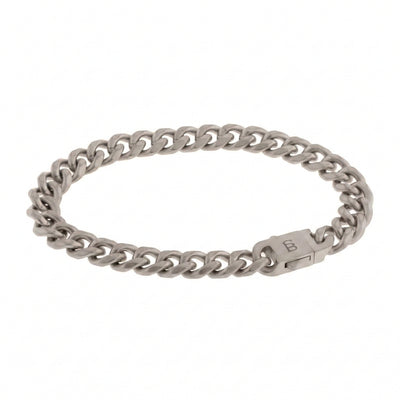
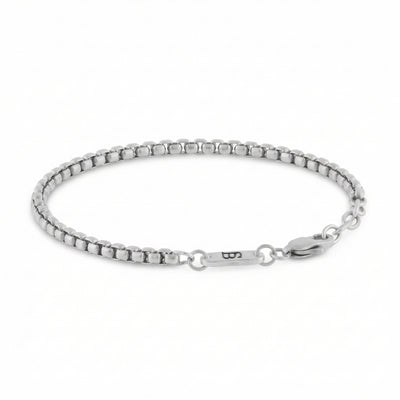
Steel
Keep it on.
Leather
Leave it at home, cardio least of all.
Bead & rope
Fine for cardio, think twice before a heavy grip day.
What to do with it after your workout
A short rinse and a dry wipe is a good habit, not a requirement. Clear the dried sweat residue before it dulls the finish.
Once you're back on your feet after the gym, how to stack bracelets covers building a wrist you're actually comfortable training in, and left wrist or right wrist covers where it traditionally goes.
A stainless steel bracelet built for exactly this.
Shop the collectionFAQ
Can you wear a bracelet while working out?
Yes, if it's stainless steel. Leather isn't recommended, especially not for cardio.
Does sweat damage a stainless steel bracelet?
Not the metal itself. Dried residue can dull the finish until you wipe it off. Browse the full stainless steel collection if you're picking a first piece.
Why shouldn't I wear a leather bracelet at the gym?
Prolonged moisture swells the fibers and dries the leather out stiffer over time. Cardio is the worst case, since it means the longest continuous sweat exposure. Leather is still a great everyday pick, just not a gym one.
Can you wear a bead bracelet at the gym?
For cardio, yes. Heavy grip work like deadlifts or pull-ups puts real stress on the elastic cord that bead bracelets are strung on.
Does the clasp type matter for gym wear?
More than most people expect. Magnetic clasps can work loose mid-set; a lobster or box clasp holds up better.
How do I know if a bracelet is gym-safe?
Three checks: stainless steel, a clasp that won't come open under movement, and a fit snug enough that it doesn't swing. If all three line up, wear it without thinking twice.
What's the safest bracelet to wear at the gym?
A snug, low-profile stainless steel bracelet. Nothing loose to catch on machines or cables.