

Do Gemstone Bead Bracelets Fade or Crack?
Some stones lose a little color over years of sun and daily wear. That's normal, not a defect. Actual cracking is rarer, and it usually has a specific cause behind it, a drop on a hard surface, a sudden shift in temperature, not the stone simply wearing out.
Noticed a change in your bracelet and wondering if it's normal? Short answer first, then the detail.
The Short Answer
Fading is common on certain stones. It happens slowly, from sunlight and skin oils, and it's cosmetic rather than structural. Cracking under normal wear is uncommon on a well-made bracelet. When it does happen, the cause is almost always physical: an impact, a squeeze, a knock against a desk or doorframe.
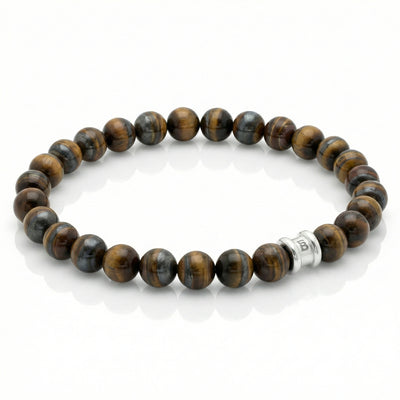
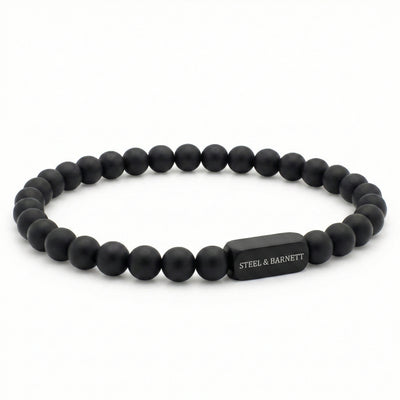
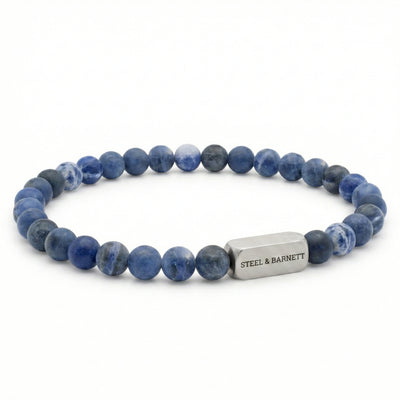
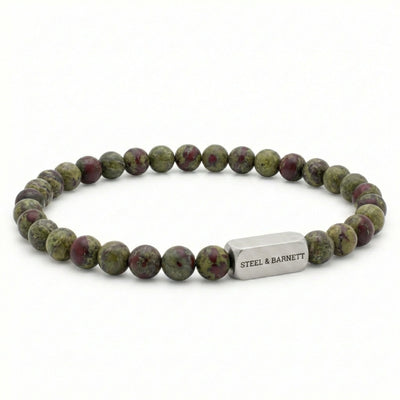
Steel & Barnett's bead bracelets use tiger eye, sodalite, black onyx, lava stone, and jasper. All five are opaque and dense rather than translucent, which is part of why they hold up better than something like amethyst or rose quartz.
Which Stones Actually Fade, and Why
Two things drive fading: UV exposure and porosity.
Sunlight breaks down pigment over months or years, the same way fabric or a car dashboard fades. Lighter, more translucent stones fade faster, since light passes further into them. Tiger eye holds its banding well over time, thanks to its layered mineral structure.
Porous or unsealed stones can also soak up body oils and sweat, which shifts their surface tone. Black onyx and sodalite tend to resist this better than softer, more porous stones.
Leave a bead bracelet on a sunny windowsill for months and it'll show it. Keep it out of direct sun and it holds up fine.
What Actually Causes Cracking
A cracked bead is almost never just age. Three things come up again and again.
Impact. Catching the bracelet on a desk edge, dropping it on tile, wearing it while lifting weights. This is the one we see most.
Sudden temperature change. Hot car into freezing air, hot water into cold, the stress goes to the stone's internal structure. Lava stone and jasper tend to be more forgiving here than denser, glassier stones.
Elastic overstretch. Force an elastic-strung bracelet over a hand that's too big, and the pressure lands on the beads, not just the cord. Over time that chips the drill holes at the edges.
Normal wear doesn't crack a bead. Neither does an occasional shower. If one cracks with no obvious cause, check whether the elastic was overstretched during sizing before assuming the stone was faulty.
Normal Wear vs. a Real Problem
Slight dulling of the polish after a year or two
Normal. Buff gently with a soft cloth.
A very small surface chip on one bead, no impact remembered
Usually normal wear on a lower Mohs-hardness stone.
A visible crack running through a bead
Physical stress. Check for a recent knock or drop.
The whole bracelet snapping at the cord
Elastic fatigue, not a stone problem. Cords wear out over years regardless of stone type.
The Stones We're Talking About

How to Keep a Gemstone Bracelet Looking Sharp
- Take it off before workouts with weights, or manual work where it could knock against something hard.
- Skip long, direct sun exposure. A windowsill or car dash for hours isn't the place for it.
- Wipe it down with a soft, dry cloth after wear; sweat and oils dull the surface over time.
- Bead bracelets generally handle a quick shower fine, unlike some leather pieces (can you shower with a leather bracelet?). Just avoid soaking it or leaving it in a hot tub or pool for long stretches.
- Store it separately from steel chain pieces so the beads don't rub against metal edges.
How Bead Bracelets Compare to Leather and Steel for Durability
Steel shrugs off a hard knock better than beads or leather, though it can still scratch. Leather is the one that needs to stay dry, moisture is its weak point, not impact. Beads handle water and daily wear well; a hard hit is the real risk. For the gym or manual work, steel or a well-strung bead bracelet will outlast leather.
If the decision is really about a stone's meaning rather than toughness, the guide to matching a gemstone to your personality covers that, and the piece on what lava stone represents goes deeper on that one specifically.
FAQ
Is it normal for a gemstone bracelet to fade?
Yes. Slight fading after a year or more of sun exposure is normal on lighter or more porous stones.
Why did my bead bracelet crack out of nowhere?
Almost always a knock you didn't notice, or an elastic overstretched during sizing. Rarely the stone failing on its own.
Can you shower with a gemstone bead bracelet?
Yes, occasional water is fine for the stones we use in our bead bracelets. Skip long soaks, hot tubs, and pools, and dry it off after.
Which stones hold up best over time?
Black onyx, tiger eye, and sodalite are generally the safest bets for color and durability.
Ready for a bracelet built to last?
Tiger eye, sodalite, black onyx, lava stone, and jasper, across the full bead bracelet collection.
Shop bead bracelets