

Home / Blog / How to Dry a Leather Bracelet
How to Dry a Leather Bracelet That Got Wet
A wet leather bracelet is almost never a dead one. The panic kills more straps than the water does: someone fishes their bracelet out of the sink, grabs a hairdryer, and ruins in ten minutes what would've been fine by morning. Never understood it. Nobody blow-dries a leather jacket.
Leather copes with water. Always has. Think of sandals, saddles, boat shoes. What it doesn't cope with is being rushed.
Pat dry. Air dry slowly. Condition. That's it, really.
(Wondering whether you should wear it in the shower at all? We covered that here.)
Step 1: Pat It Dry. Don't Rub.
Off the wrist, clean towel, press. Lift, move, press again. No scrubbing: that drives water deeper and drags the grain. Most dull patches start with a well-meant scrub.
The clasp too. That junction where steel meets strap holds water longest, and it's always where things go wrong. Always. Well, nearly always.
Step 2: Air Dry It Slowly
Flat, room temperature, some airflow. No sun, no radiator. Walk away.
Faster feels safer. It isn't. The water pulls the leather's oils out as it leaves, and heat pushes that too hard: fibers set before anything settles back. Cracked, shrunken leather is heat damage, not water damage. People rarely believe that until it happens to them.
A splash, a few hours. A soaking, up to 24. The surface lies, by the way. Dry to the touch means nothing about the core. When in doubt, the night.
Step 3: Condition It Once It's Fully Dry
The step everyone skips.
Thin layer of conditioner, fingertips, let it sink in, buff off the rest. Water took oils out; this puts them back. Skip it and the strap feels fine for a week, then goes stiff and flat. The delay is what throws people: by then they're blaming something else.
Neutral, colorless balm, shoe or bag quality. Not the waxy boot stuff. That's for sealing hides against weather, and it darkens fine leather for good. A tin of decent balm lasts years anyway, it's not an investment.
Fixing the Problems That Show Up After
The bracelet went stiff
Fixable. Conditioner, a few hours, gentle flexing, then wear it. Body heat does the rest. Wearing it is part of the repair, honestly.
Water stains or rings
More water. Nobody believes it.
The ring is one patch drying faster than the rest, so reset it: dampen the whole strap evenly with a barely wet cloth, dry it all again at one pace. Condition after.
It smells
Trapped moisture. Air it a day or two, then a night in a box next to (not touching) baking soda. Better than the sprays, oddly.
If it comes back every wear, the strap's drinking sweat faster than it dries. Off at night for a while. That one takes patience.
It fits tighter or looser
Stretches wet, pulls back dry. Small changes fix themselves on the wrist within days, so sit tight. Real shrinkage, conditioner and flexing claw some back. Heat shrinkage: no. The fibers have set.
The clasp looks dull
It's steel. Dry cloth. Work the mechanism a few times.
Fixing the Problems That Show Up After
The bracelet went stiff
Fixable. Conditioner, a few hours, gentle flexing, then wear it. Body heat does the rest. Wearing it is part of the repair, honestly.
Water stains or rings
More water. Nobody believes it.
The ring is one patch drying faster than the rest, so reset it: dampen the whole strap evenly with a barely wet cloth, dry it all again at one pace. Condition after.
It smells
Trapped moisture. Air it a day or two, then a night in a box next to (not touching) baking soda. Better than the sprays, oddly.
If it comes back every wear, the strap's drinking sweat faster than it dries. Off at night for a while. That one takes patience.
It fits tighter or looser
Stretches wet, pulls back dry. Small changes fix themselves on the wrist within days, so sit tight. Real shrinkage, conditioner and flexing claw some back. Heat shrinkage: no. The fibers have set.
The clasp looks dull
It's steel. Dry cloth. Work the mechanism a few times.
When It's Beyond Saving
Cracks and flakes when you bend it. Brittle from saltwater. Shrunk past wearable. Those three are final. Anyone telling you a product fixes them is selling the product.
Replacing it: leather bracelets. And if it keeps getting wet because of work or training, change the material, not the habit. Stainless steel bracelets need none of this.
-


Heritage Duo Set Brown
Heritage Duo Set Brown
View productRegular price $140.00Regular priceUnit price per -
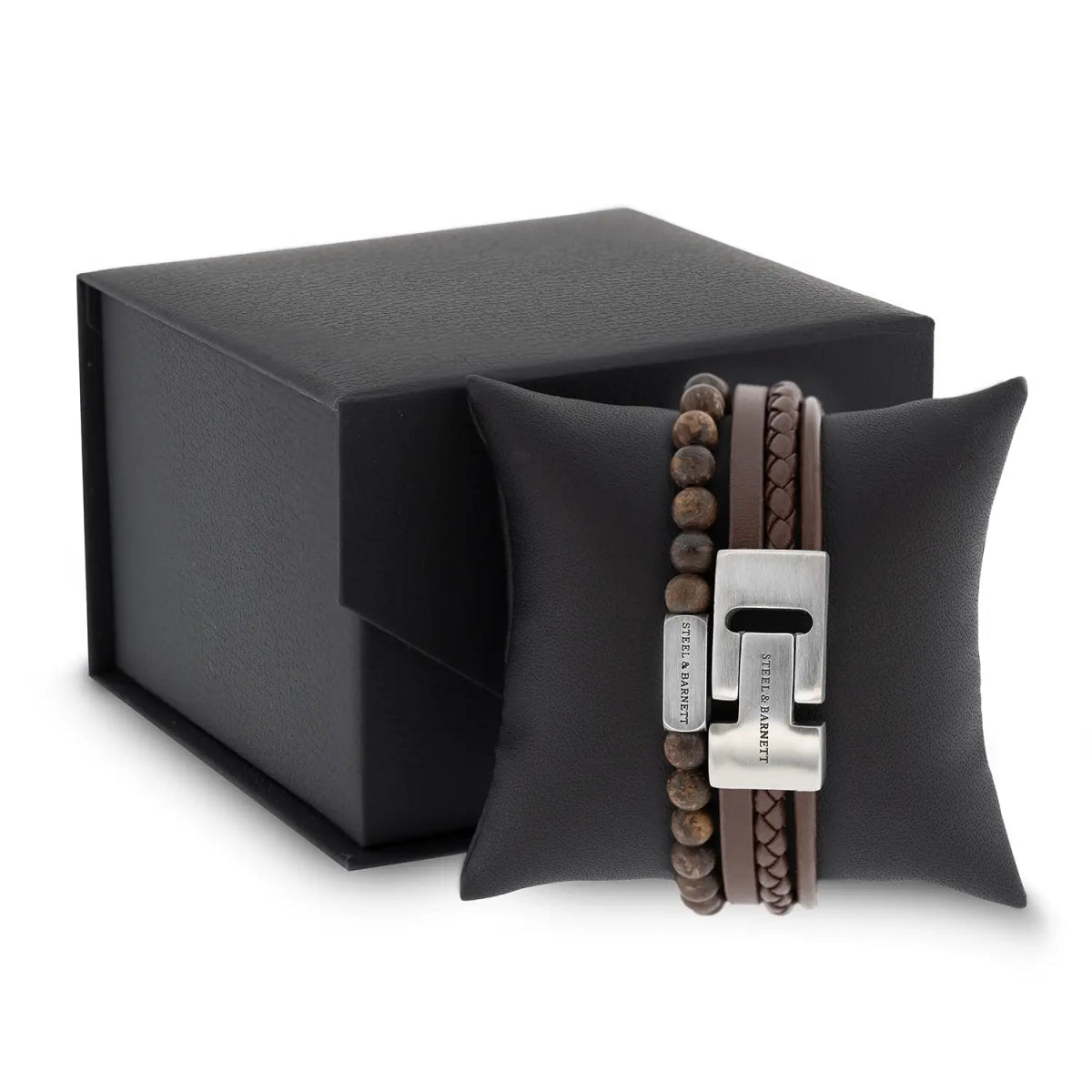

Timeless Duo Set Brown
Timeless Duo Set Brown
 View productRegular price $160.00Regular priceUnit price per
 -
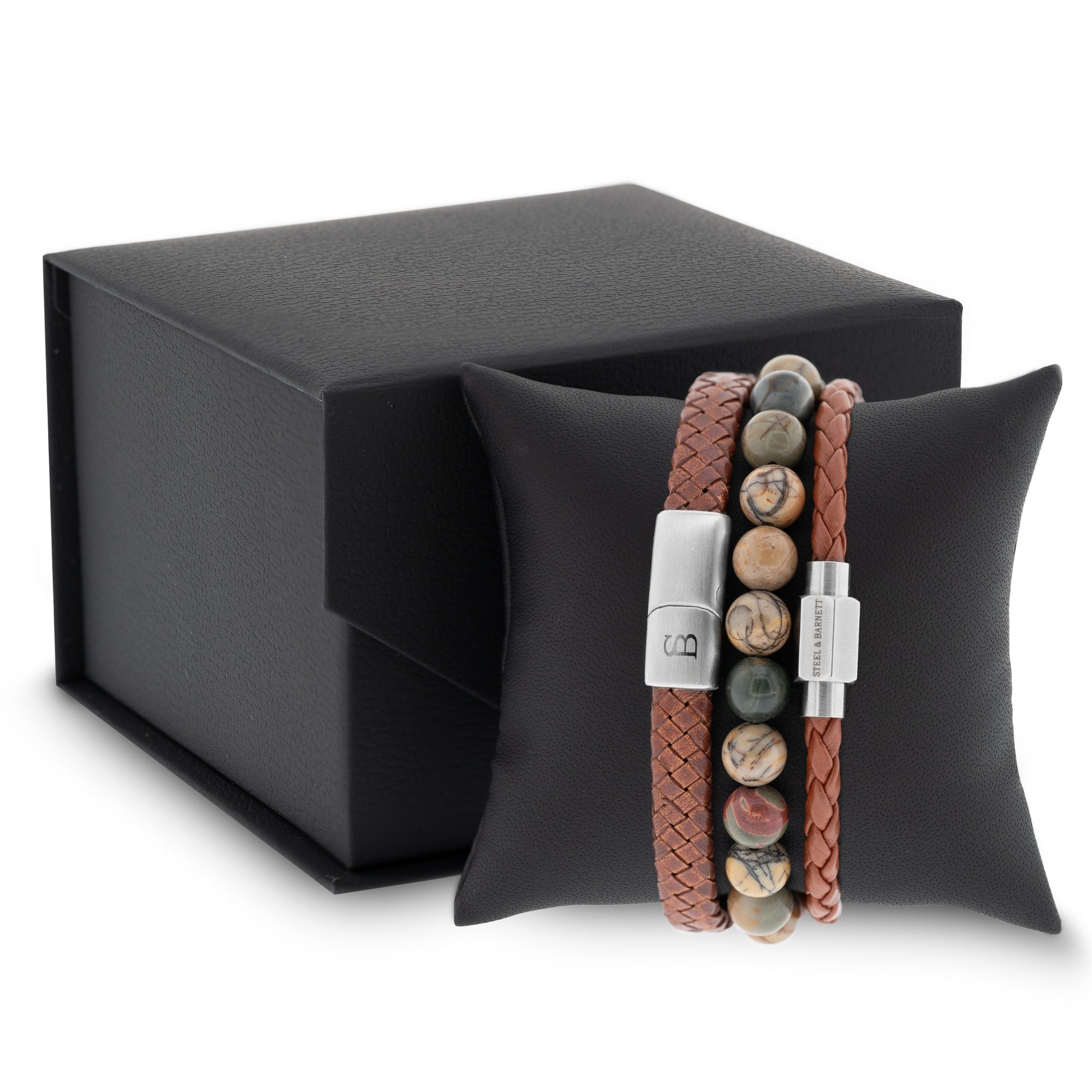
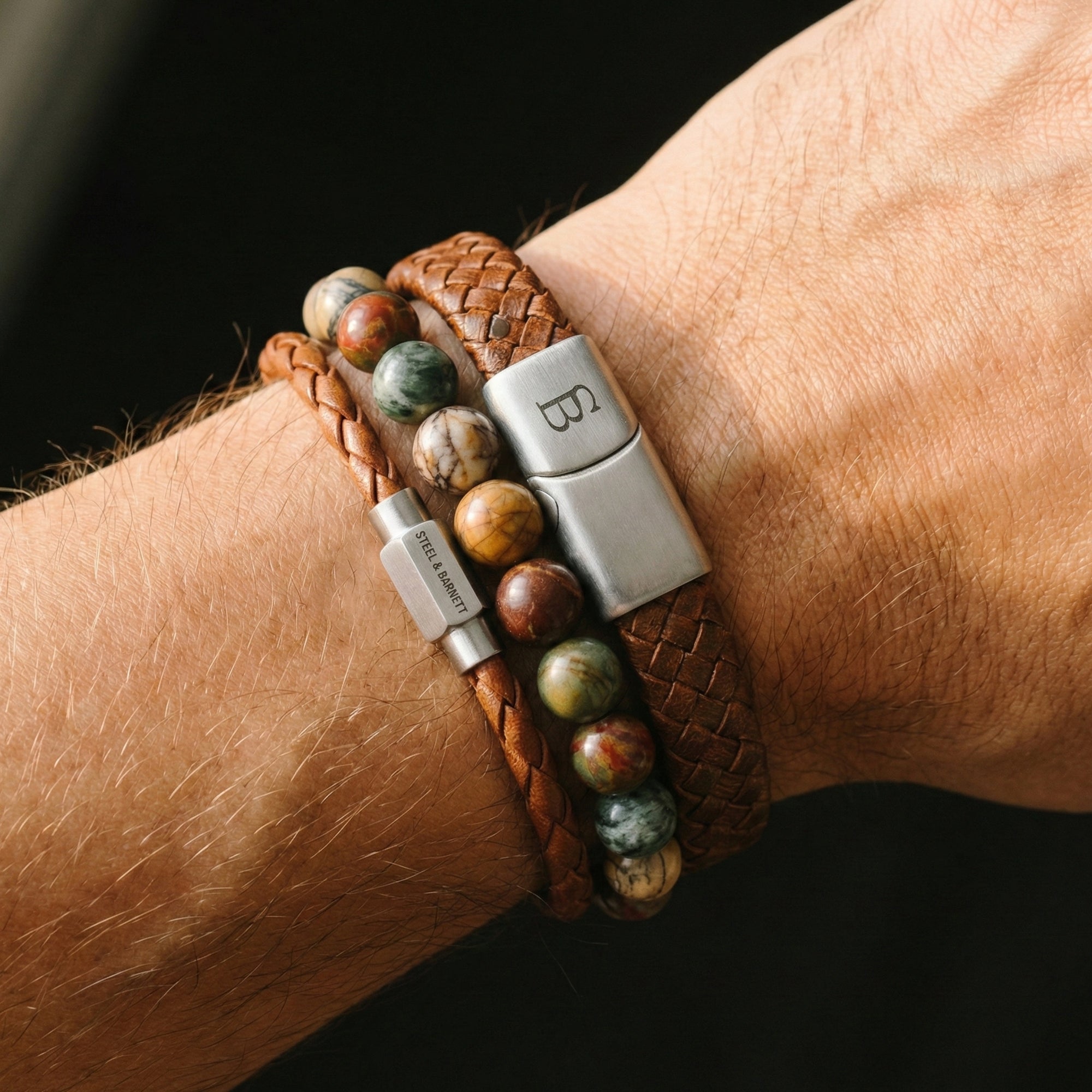
Gift Set Cognac
Gift Set Cognac

 View productRegular price $200.00Regular priceUnit price per
 -

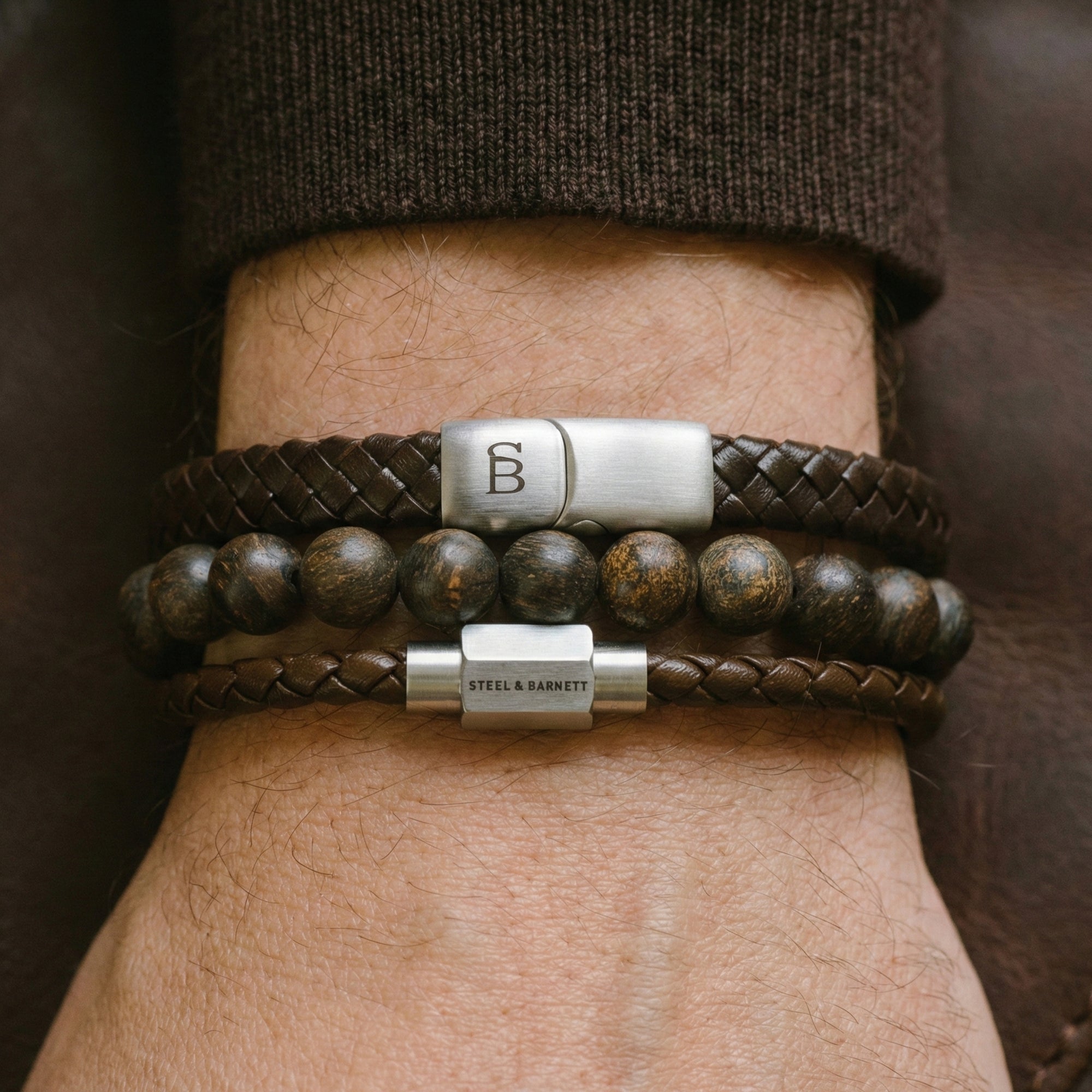
Gift Set Brown
Gift Set Brown
View productRegular price $200.00Regular priceUnit price per


Frequently Asked Questions
How long does it take for a leather bracelet to dry?
Few hours for a splash, up to 24 for a soaking. Don't trust how it feels: the surface dries first. When in doubt, overnight.
Can I dry a leather bracelet with a hairdryer?
No. Heat strips the oils, fibers come out brittle. Cool air at a distance if you really must. Better to just wait. If your wrist keeps getting wet, stainless steel bracelets avoid all of this.
How do I soften a leather bracelet that went stiff?
Conditioner, a few hours, flex it, wear it. Done in a few days. The same balm keeps any leather bracelet supple over the long run.
How do I remove water stains from a leather bracelet?
Re-wet the whole strap evenly with a barely damp cloth, dry it slowly. Even drying takes the ring out. Condition after.
How do I get a smell out of a leather bracelet?
Air it a day or two, then a night near (not touching) baking soda. Comes back after wearing? Leave it off at night until it stops.
Can you fix a leather bracelet that shrunk in water?
Partly. Conditioner, flexing, a few days of wear. Heat shrinkage stays. If the fit is gone for good, a fresh leather bracelet is the only real fix.
What leather conditioner should I use on a bracelet?
Neutral, colorless balm for shoes or bags. Nothing waxy or silicone.