

How Men's Jewelry Shapes the Way He's Perceived (A Father's Day Gift Guide)
I once spent most of a wedding watching a man fail to stop touching his ring. New to it, obviously. He turned it, slid it to the knuckle and back, took it off twice to read something engraved inside that he plainly knew by heart. Nobody else noticed. I notice this sort of thing instead of listening to the speeches, which is a flaw I've somehow made a career out of.
The point (there is one) is that the things men wear on their hands and wrists give them away. Long before they speak. You can read a stranger across a room in the few seconds it takes him to cross it: the watch first, then a leather band gone pale at the buckle, a chain that shows when he turns and hides when he doesn't. The read is rarely as wrong as it has any right to be.
Father's Day is the excuse here, and not a bad one. Jewelry is among the few gifts a man wears daily without being asked to, so it keeps working long after the card's been binned. What follows is part field guide, part the usual digressions, to the pieces, and the men who can't leave them alone.
First impressions form before he says a word
There's a tidy academic label for this, nonverbal communication, and like most tidy labels it flattens the thing it names. What goes on is faster and more graceless. A man comes in, and somewhere below thought the room files him: meticulous or chaotic, the kind who irons or the kind who's outsourced the entire question to a steamer he's used once.
The literature says the verdict lands in roughly two seconds. I'll grant the speed and quarrel with the decimal point. We've become a culture that puts a stopwatch to instinct and then prints the number. But early it certainly is. The metal gets read before he's said a word in his own defense.
Here's the part the studies skip, because it can't be measured and therefore barely exists as far as a journal's concerned. A man in something he likes stops handling it. The fidget goes. The hand that would otherwise be turning the bracelet or tapping the watch face just rests, and other people read that stillness as confidence, or competence, or whatever flattering thing they were already inclined to read, which rather suggests the object was beside the point all along.
-

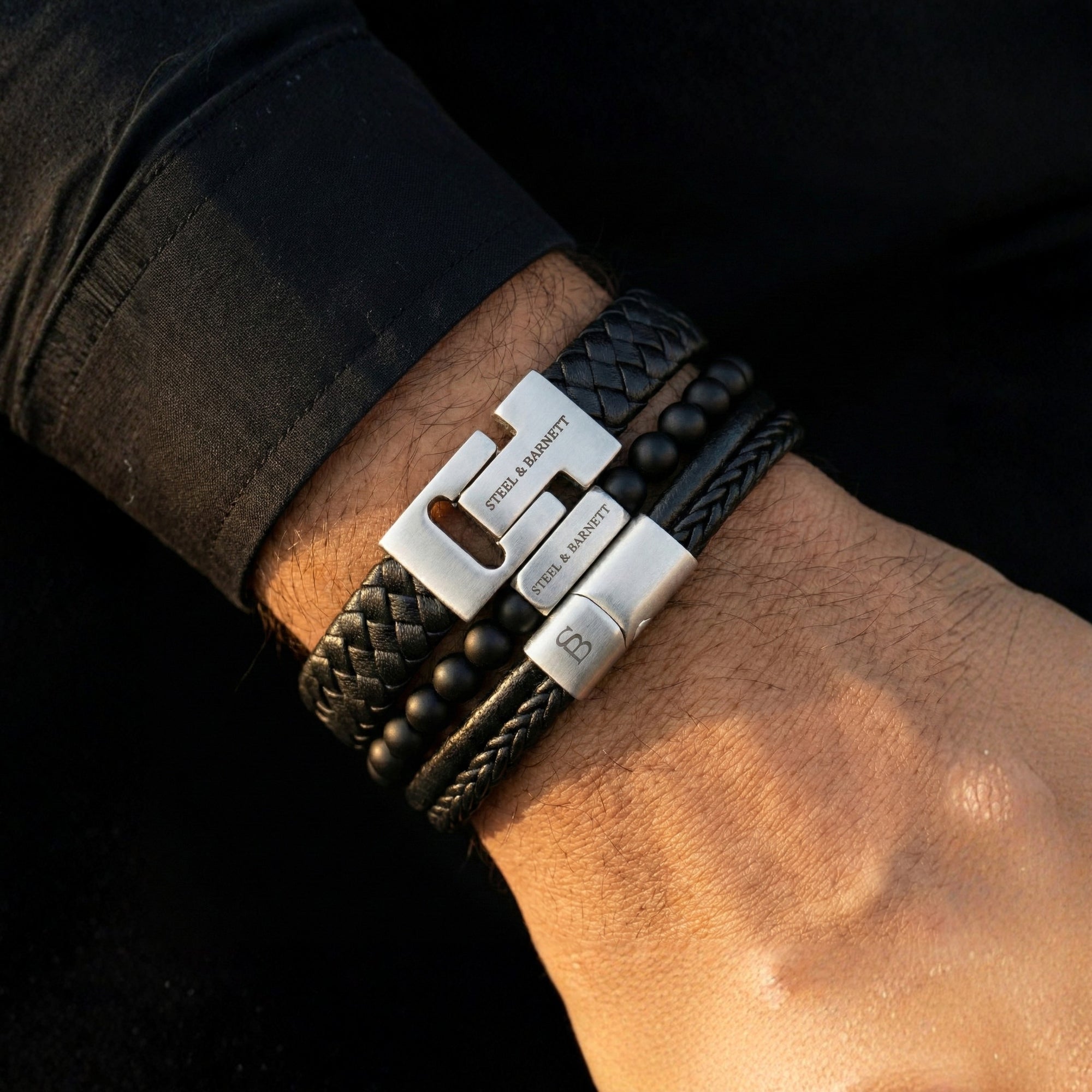
Premium Bracelet Set Black
Premium Bracelet Set Black


 View productRegular price $230.00Regular priceUnit price per
 -

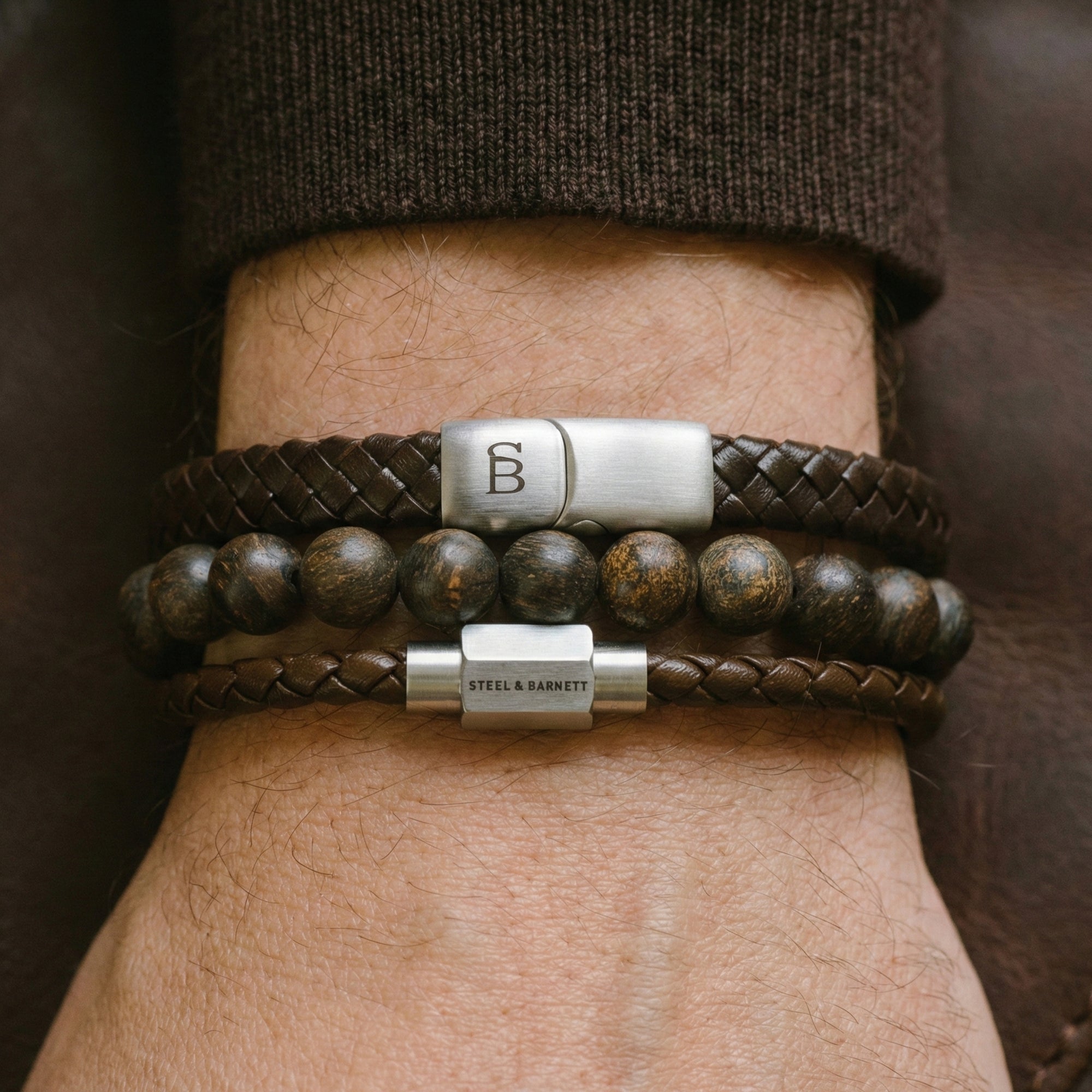
Gift Set Brown
Gift Set Brown
 View productRegular price $200.00Regular priceUnit price per
 -
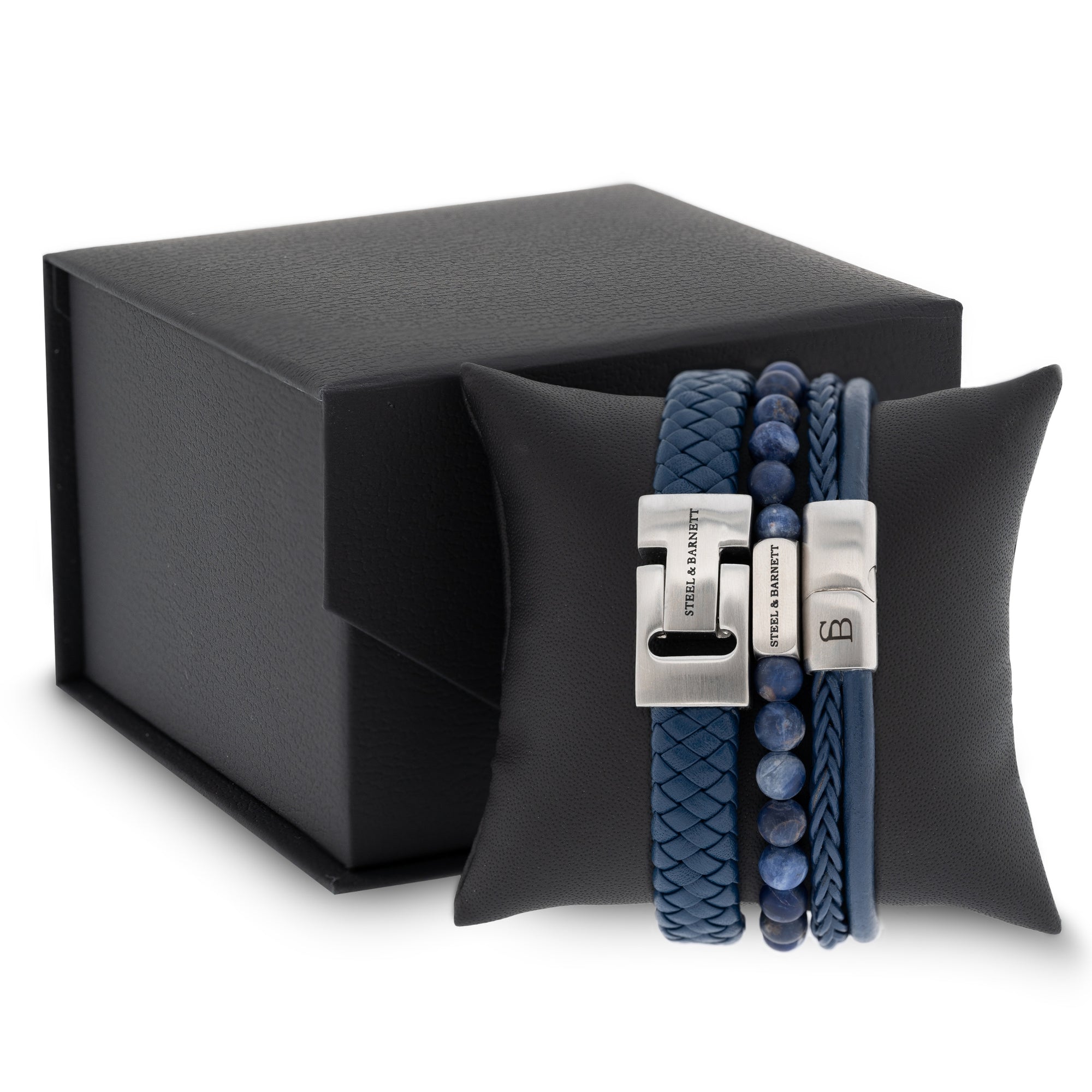
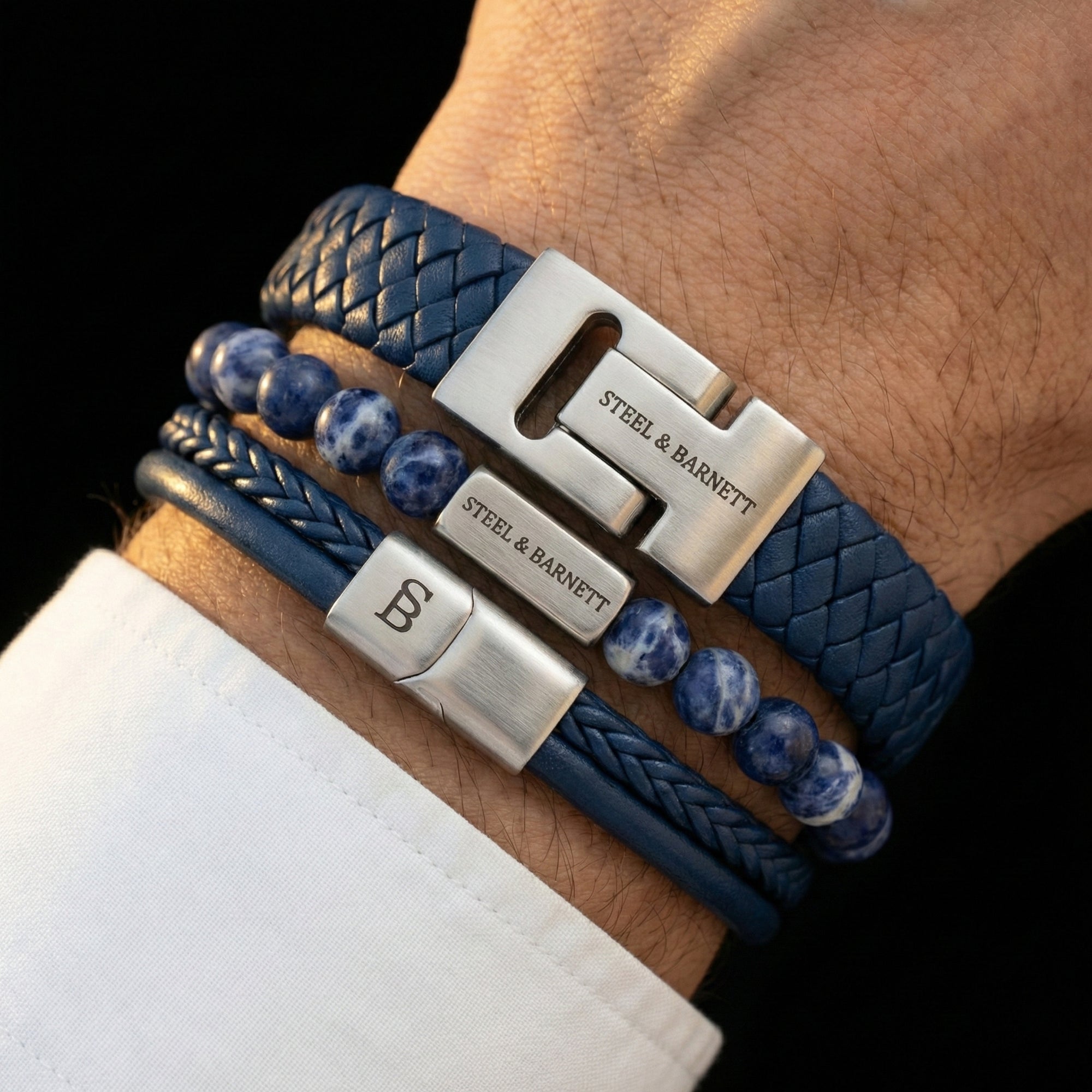
Premium Bracelet Set Blue
Premium Bracelet Set Blue
View productRegular price $230.00Regular priceUnit price per -
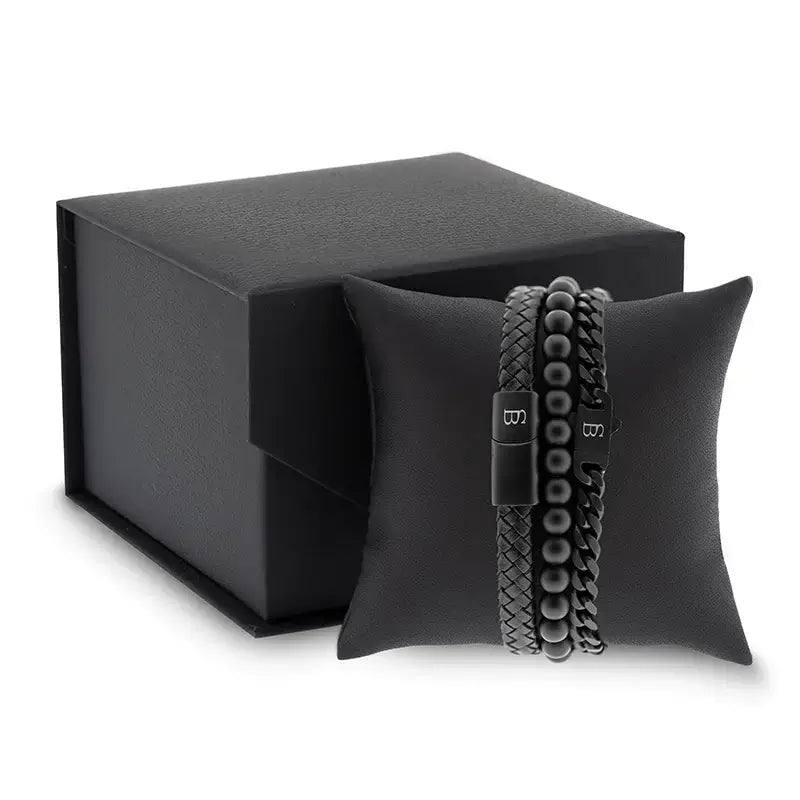
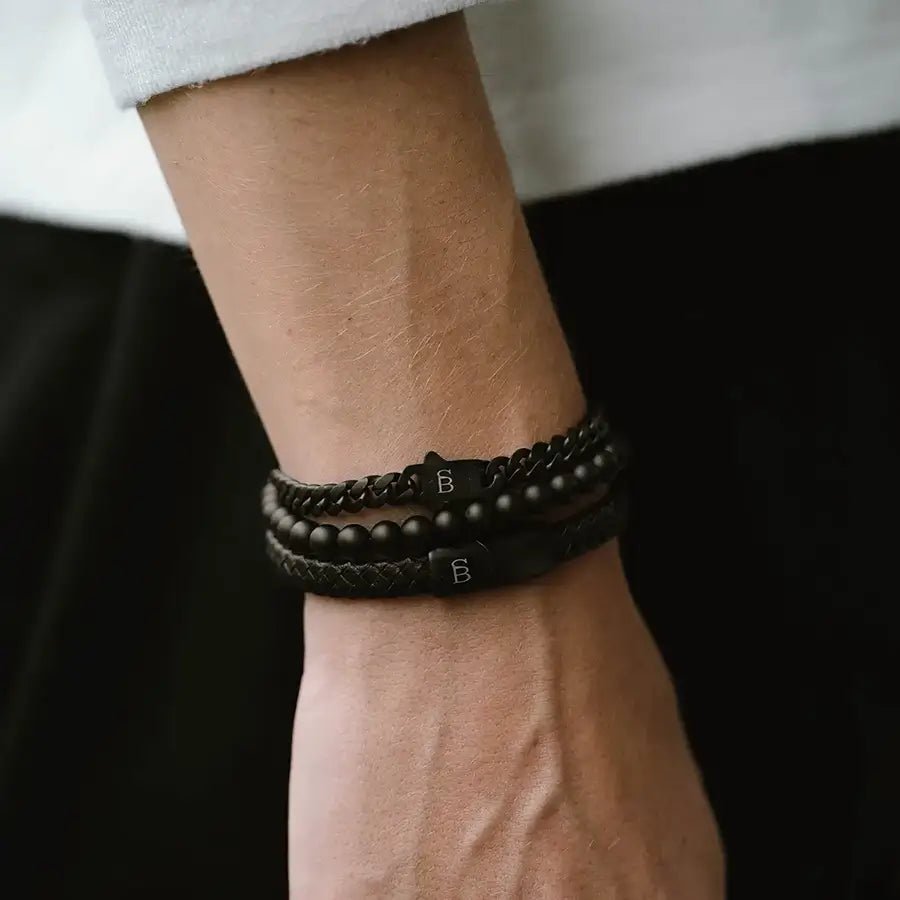
Gift Set Black Editions
Gift Set Black Editions
View productRegular price $225.00Regular priceUnit price per


Why this makes a smart Father's Day gift
The unromantic argument is the strong one: he'll wear it. The watch gets upgraded, the whisky vanishes, the novelty socks do one lap of the drawer and are never seen again. A chain just keeps surfacing on the same wrist until the day it arrived has blurred into every other Tuesday.
The romantic argument won't fit in a sentence. Choosing the right thing means you'd been watching, that you'd clocked what he reaches for and what he leaves face-down on the dresser every morning, defeated. He won't mention it. It isn't the kind of thing men mention. He'll just have it on the next day, and the one after, which you can take or leave as evidence.
How to choose a piece that fits the man
Begin with the wardrobe that exists, not the one a photographer would assemble. A dad in flannel and a single watch wears steel and lets the beads die quietly in a drawer, and no styling on earth relocates that instinct. Buy toward the habit.
His hands settle more than his taste does. Work with them, or sweat through a day, and leather turns sullen: waterlogged, stiff, a grey nobody has ever once called rugged. Steel ignores all of it. Calmer days reward leather and beads instead: a bit of warmth, some grain under the thumb, nothing to maintain.
Go small to start. One piece he reaches for beats three he's forgotten owning. A bracelet, a plain chain: the soft landing. A matched set if guessing isn't in your nature, and no, there's no extra credit for difficulty.

Find a Father's Day piece that fits him
The pieces that last are the ones he stops noticing, not from boredom, but because they've quietly joined him, the way a watch becomes part of the wrist it rides on. Have a look. The right one will already sound like him before you've worked out why.
FAQ
Does wearing jewelry make a man more attractive?
Often, though it comes in through the back. It works on how he holds himself more than on the metal. A piece he's easy in changes his posture, and people respond to the posture without crediting the cause. Less, almost always. The maxed-out wrist tends to deliver the opposite of the intention.
What does a man's jewelry say about him?
More than he'd guess, and sooner. Leather reads relaxed and personal, steel clean and dependable, beads more considered. With one catch worth holding onto: it only works when the piece suits him. Mismatched, it still talks. It just says something unflattering, and fluently.
Is jewelry a good Father's Day gift?
Yes, mainly because it stays put. Nothing to use up, nothing to date. A decent chain folds into the everyday and quietly carries a trace of whoever gave it.
What jewelry should I buy my dad for Father's Day?
Let his wardrobe do the talking. Steel for the no-nonsense type, leather or beads for the looser dresser, a matched set when you'd rather not gamble. One good thing, not a handful.
Do people judge men for wearing jewelry?
Much less than they did. A single, well-judged piece looks deliberate now rather than strange. Keep it spare and matched to him and the worry mostly evaporates.
What kind of jewelry looks good on older men and dads?
Understatement, near enough always. A plain steel chain, one leather or beaded band, a classic ring: nothing competing for the eye. Two pieces is generous; one is often better.
How much jewelry should a man wear?
Less than the mirror talks him into. Two that get along beat five that bicker. The old rule outlives every trend because it's correct: put it all on, then take one thing off.