

Nickel Allergy and Men's Jewelry: What to Look For
If one bracelet leaves your wrist red and itchy by evening while another never bothers you, blame the metal. Not your skin. Nickel causes more jewelry reactions than anything else combined, and it turns up in far more pieces than the label lets on.
This covers what a nickel reaction actually looks like, why the metal keeps showing up in jewelry, and which materials hold up if you react to it. None of this replaces a dermatologist. If you suspect a real allergy, a patch test settles it.
What a Nickel Reaction Actually Looks Like
A nickel reaction is contact dermatitis, nothing more dramatic than that. Redness, itching, small raised bumps, right where the metal sat against your skin. It usually takes 12 to 48 hours to show up, not minutes, and that delay is exactly why it gets misread so often. The bracelet you put on that morning gets cleared of blame, and the irritation that shows up the next evening gets pinned on something else entirely.
Once your skin sensitizes to nickel, it stays that way. Reactions tend to get faster and more noticeable with repeated exposure, which is usually why a man wears the same kind of jewelry for years with no issue, then suddenly can't. Nothing sudden about it, really. His skin was building toward that point the whole time.
A true nickel reaction stays right where the metal touched you. Hives across your whole body, throat swelling, trouble breathing, that's not nickel dermatitis. That needs a doctor, not a materials guide.
Why Nickel Ends Up in Jewelry in the First Place
Nickel is cheap. It hardens softer metals and resists corrosion, which is why it ends up as an alloying agent almost everywhere in fashion jewelry, not just in the obviously cheap stuff. Most stainless steel contains it. So does most white gold, and the base metal sitting underneath most gold plating.
A 316L surgical-grade stainless steel piece and a cheap costume-jewelry piece can both technically contain nickel and still behave very differently against your skin. What varies is how much of that nickel migrates onto your skin during normal wear, through sweat, friction, and body heat. Most metal jewelry contains some, which makes "does this have nickel in it" a less useful question than it sounds.
The Materials Worth Trusting
316L stainless steel. Surgical grade. It's related to the alloys used in piercing needles and some surgical implants, and it's the material most dermatology sources point to for sensitive skin. A passive chromium-oxide layer binds much of the nickel inside the alloy, so under normal wear only a small amount typically reaches your skin. 304-grade and unmarked "steel" release more nickel on average and draw more complaints. Grade alone won't guarantee an outcome for every wearer. If a chain necklace or bracelet doesn't specify its grade, that's worth asking about.
Titanium. No nickel, period. The safest bet for men with a confirmed, strong allergy, though it shows up less often in fashion jewelry than steel does.
Solid gold, 14K and up. Higher karats generally mean fewer complaints, since lower-karat gold gets alloyed with other metals, sometimes nickel among them. Pure gold itself is considered inert on skin. Not a guarantee at any karat, but a reasonable bet.
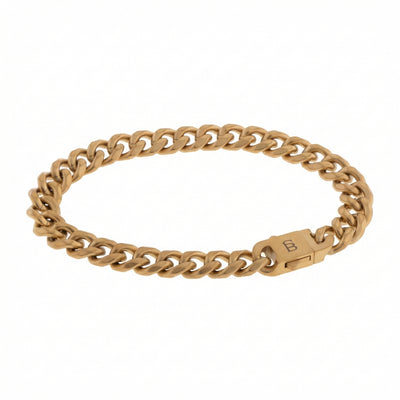
Gold-plated steel, done right. The gold layer itself is inert. Problems start once the plating wears through and exposes the metal underneath. Gold-plated pieces built over 316L steel, rather than brass, tend to keep a nickel-safer base even as the surface finish shows wear, since plating over brass just wears through faster.
Leather with a steel clasp. Leather carries no nickel risk on its own. The clasp is usually the only metal touching your skin on a leather bracelet, so the same 316L standard applies there, just on a smaller piece of hardware.
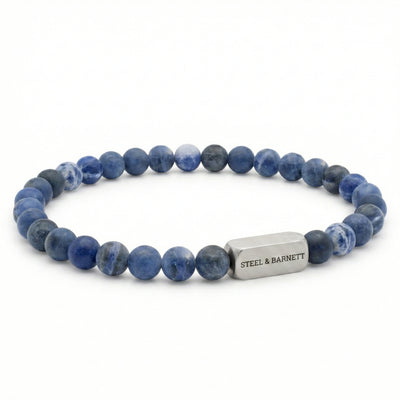
Beaded and gemstone pieces. The stones are inert. Metal contact, if there's any at all, comes from the clasp or the spacer beads. A gemstone bead bracelet with a 316L clasp carries the same low risk as any other steel piece. The clasp decides this one, not the stone.
Nickel-Safe Materials, Ready to Shop
Four materials from this guide, each built on a 316L base.


What "Hypoallergenic" Doesn't Actually Mean
"Hypoallergenic" has no legal or regulated definition in jewelry. Any brand can print it on any tag, regardless of what's actually inside the piece. The word alone confirms nothing. The alloy or grade behind the label tells you something real: "316L," "surgical steel," "solid 18K," "titanium." "Hypoallergenic" by itself just tells you the brand knows allergies exist.
It doesn't mean allergy-proof either. Even 316L can trigger a reaction in someone with a severe, established allergy, especially on fresh piercings or skin that's already irritated. For most men with a mild sensitivity, or no confirmed diagnosis at all, it's still a genuinely reliable baseline.
How to Check a Piece Before You Buy It
Look for the grade or karat, not just the word "hypoallergenic." "316L stainless steel," "surgical steel," "titanium," "solid gold, 14K or higher," these are specific claims a brand can actually be held to. A vague "nickel-free coating" with no base metal named? Ask before you buy.
Check what sits under any plating, especially on rings and bracelets that take daily friction against a desk, a steering wheel, a keyboard. Plating over steel tends to outlast plating over brass, and thicker plating generally lasts longer than thin flash plating regardless of what's underneath it.
If you already know you react, start with a single piece in 316L or titanium. Wear it normally for a week before committing to a full bracelet stack.
Frequently Asked Questions
What jewelry material is best for a nickel allergy?
316L stainless steel and titanium are the two most reliable options, with solid gold at 14K or higher as a warmer alternative.
Is stainless steel jewelry safe if you're allergic to nickel?
Only if it's actually 316L. Lower grades like 304, or steel with no grade listed, release more nickel on average and cause more complaints.
Is gold-plated jewelry bad for a nickel allergy?
Not inherently, no. The gold itself isn't the issue. The base metal underneath becomes one once the plating wears through, and that tends to happen sooner over brass than over stainless steel.
How do you know if you're allergic to nickel?
Redness, itching, or small bumps 12 to 48 hours after wearing a piece, right where the metal touched your skin, clearing up once it's off. A patch test from a dermatologist can confirm it.
Can a nickel allergy suddenly appear after years of no problems?
Yes, this is a common pattern. Sensitization builds gradually with repeated exposure, so a piece worn comfortably for years can eventually cross that threshold. Switching to 316L, titanium, or solid gold tends to help going forward, though it isn't a guaranteed fix for a severe, established allergy.
Ready to stop guessing at labels?
Our 316L stainless steel bracelets and gold-plated pieces are built on the same nickel-safe standard, whichever finish you're after.