

Home / Blog / Left Hand or Right Hand
Left Hand or Right Hand: What Your Ring Placement Says About You
Most men choose a hand once and never revisit the decision. The ring goes where it fits, or where the other one isn't. Then somebody across a table asks why it's on that side, and nothing arrives.
There's usually a reason in there somewhere. Tradition, occasionally. More often something as unremarkable as which hand signs the receipt. What follows is what each side reads as, finger by finger, and how much of it is worth a second thought.
The Short Answer
No wrong hand. Worth knowing even if you end up ignoring it.
Left hand
Quieter. More personal.- The practical default for right-handed men
- Associated with commitment and character
- Where the wedding band sits in most of the West
- Works well: a statement piece on the right
Right hand
More visible. More outward.- Enters the frame during handshakes and gestures
- Associated with action, work and status
- No marital signal in most Western countries
- Works well: a plain band on the left
-
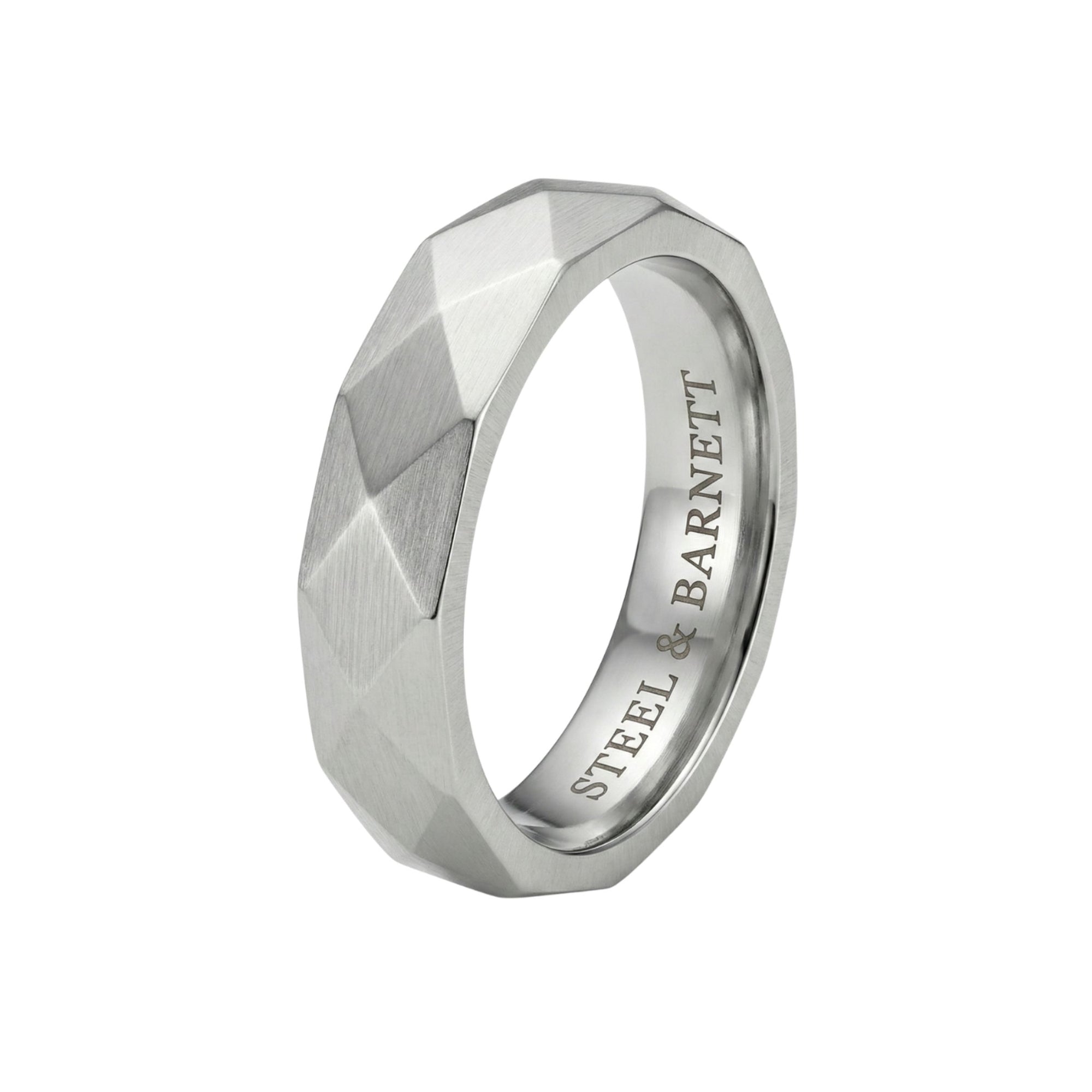
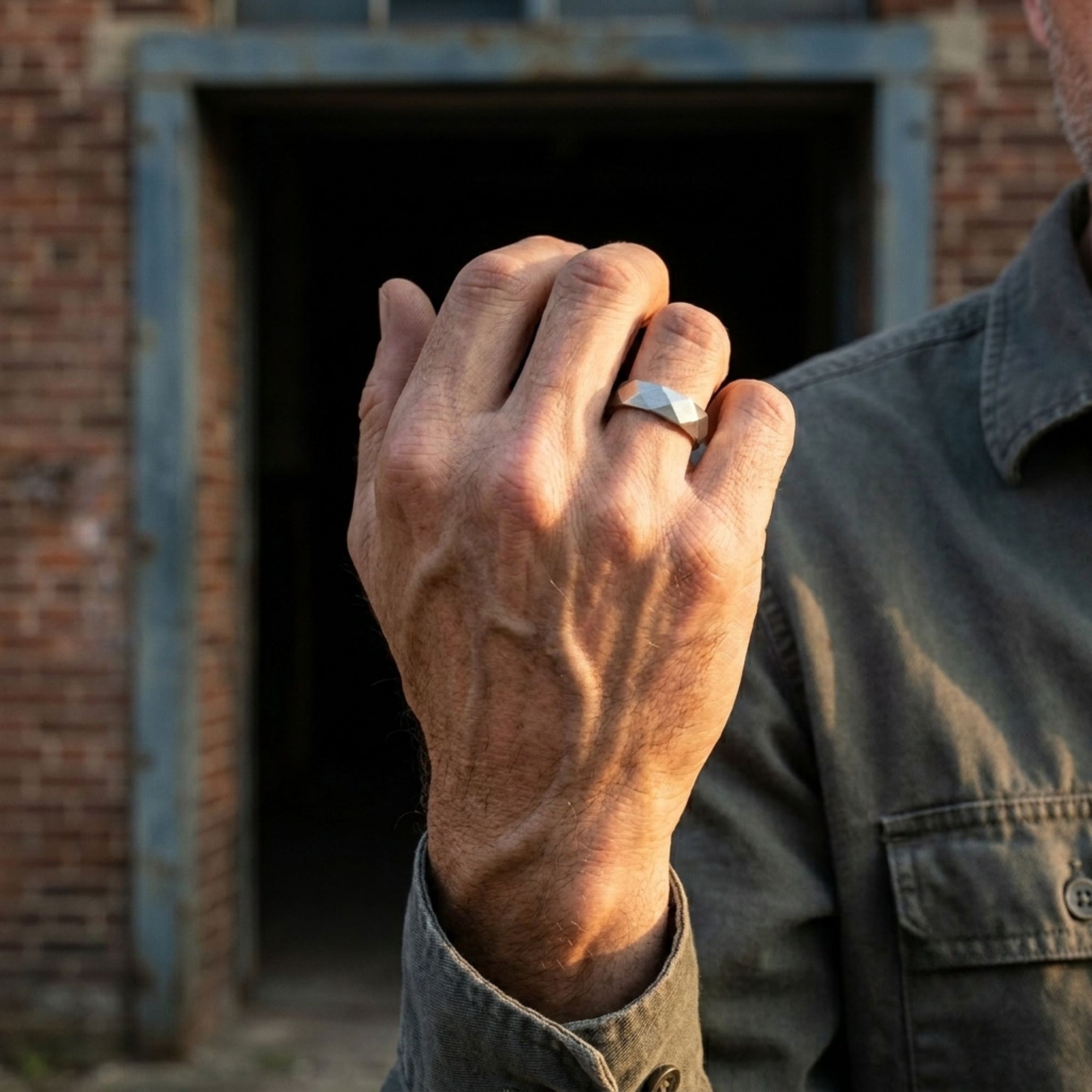
Men's Facet Band Ring In Stainless Steel
Men's Facet Band Ring In Stainless Steel

 View productRegular price $60.00Regular priceUnit price per
 -
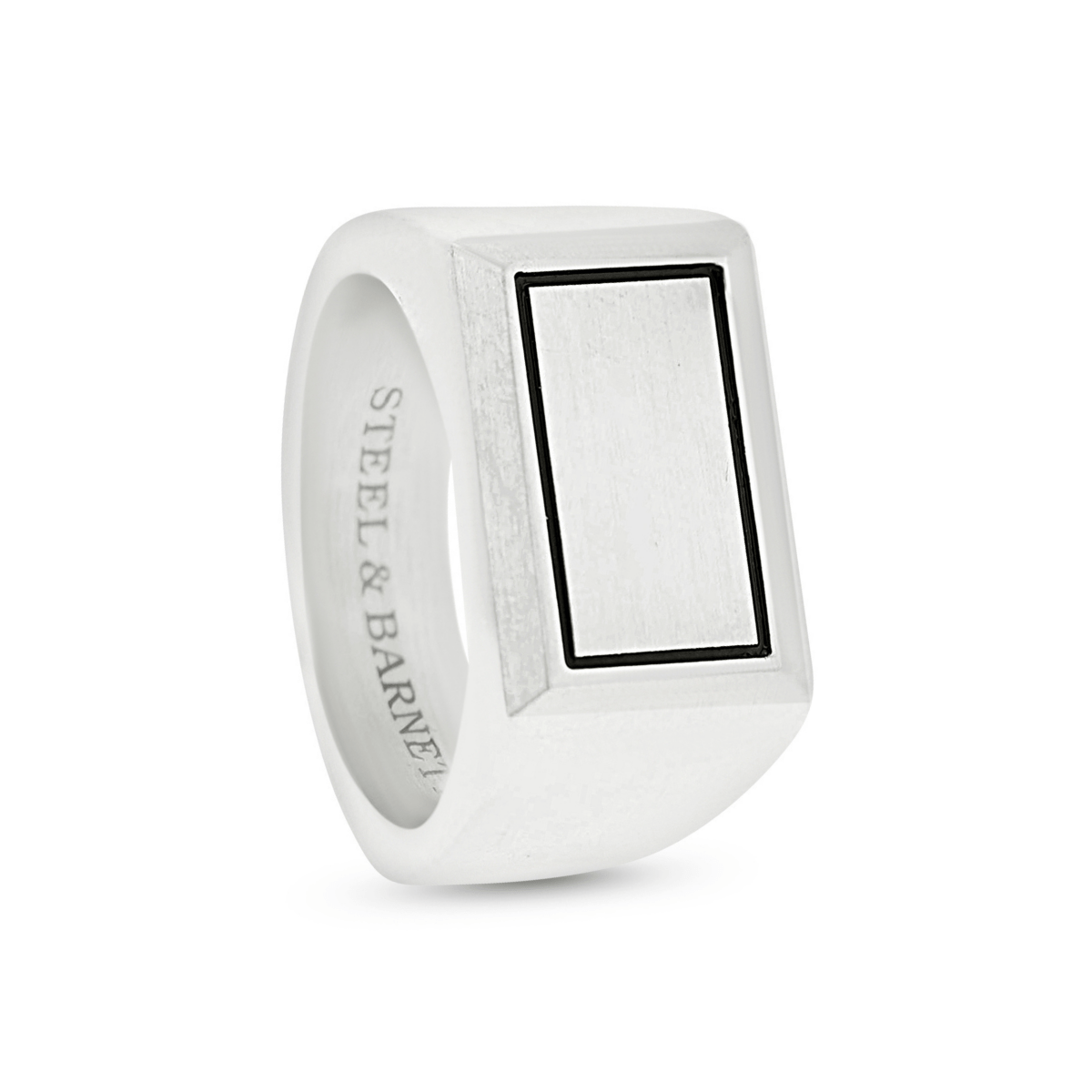
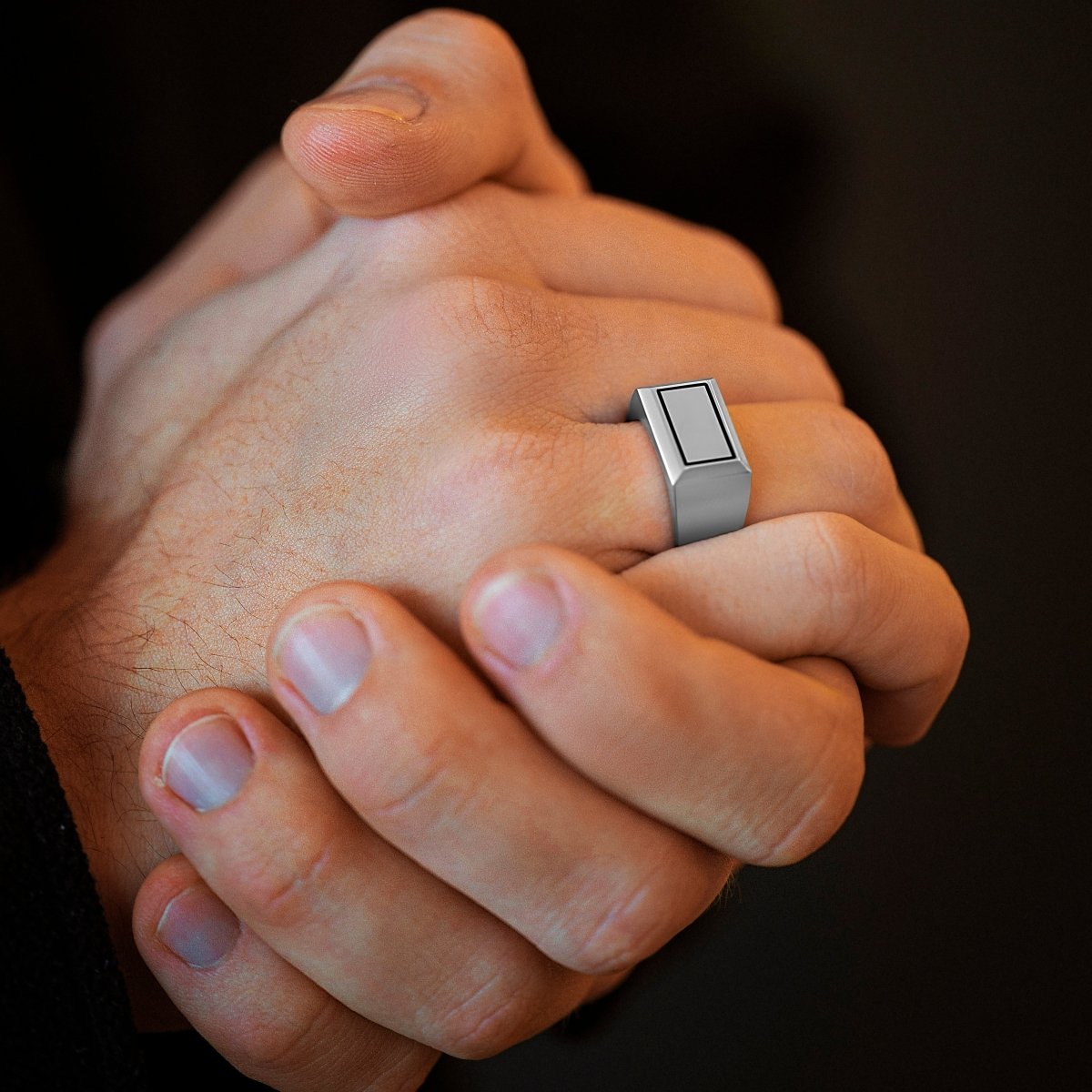
Men's Rectangle Signet Ring In Stainless Steel
SaleMen's Rectangle Signet Ring In Stainless Steel
View productRegular price $40.00Regular priceUnit price per$80.00Sale price $40.00Sale -
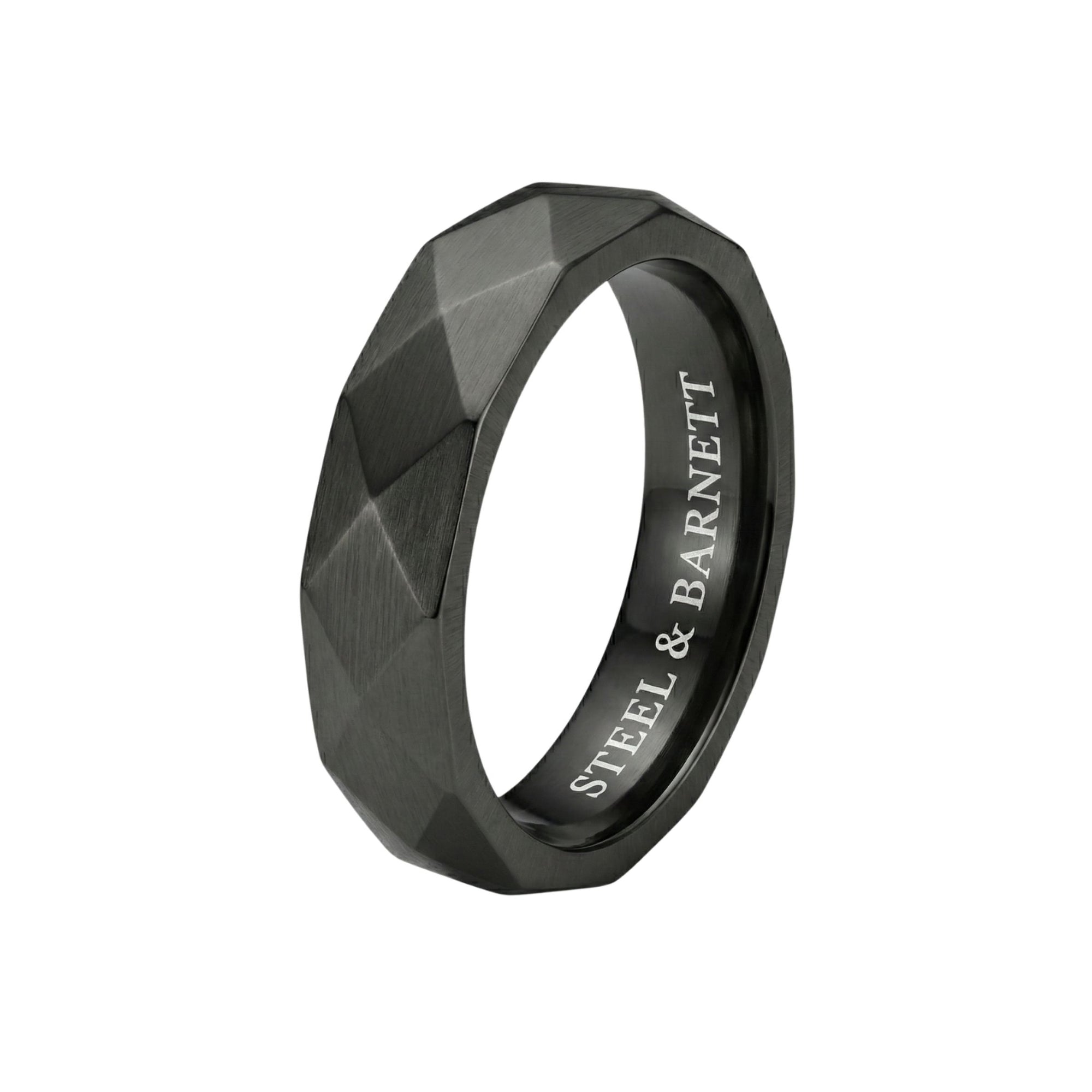
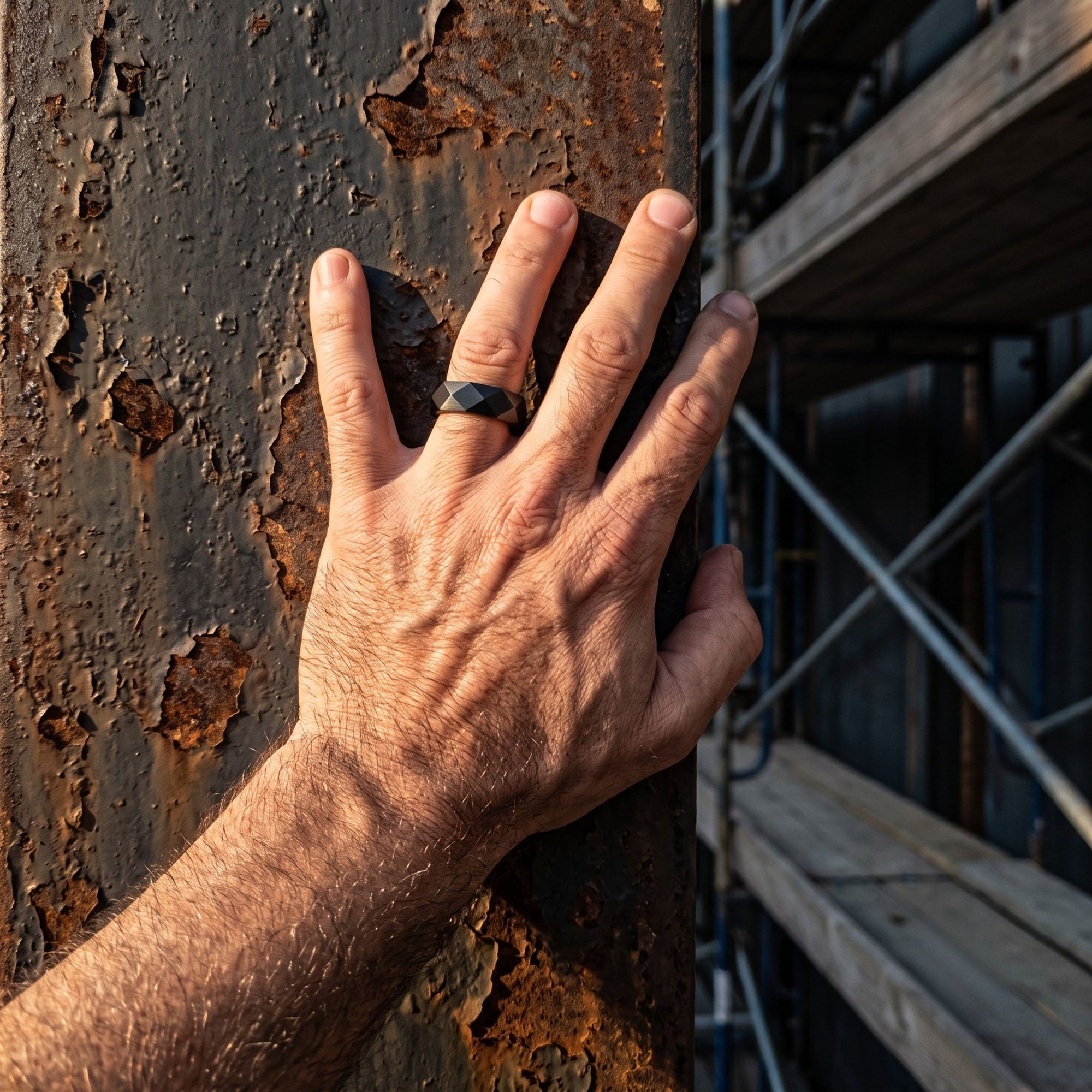
Men's Facet Band Ring In Black Stainless Steel
SaleMen's Facet Band Ring In Black Stainless Steel
View productRegular price $60.00Regular priceUnit price per$120.00Sale price $60.00Sale -
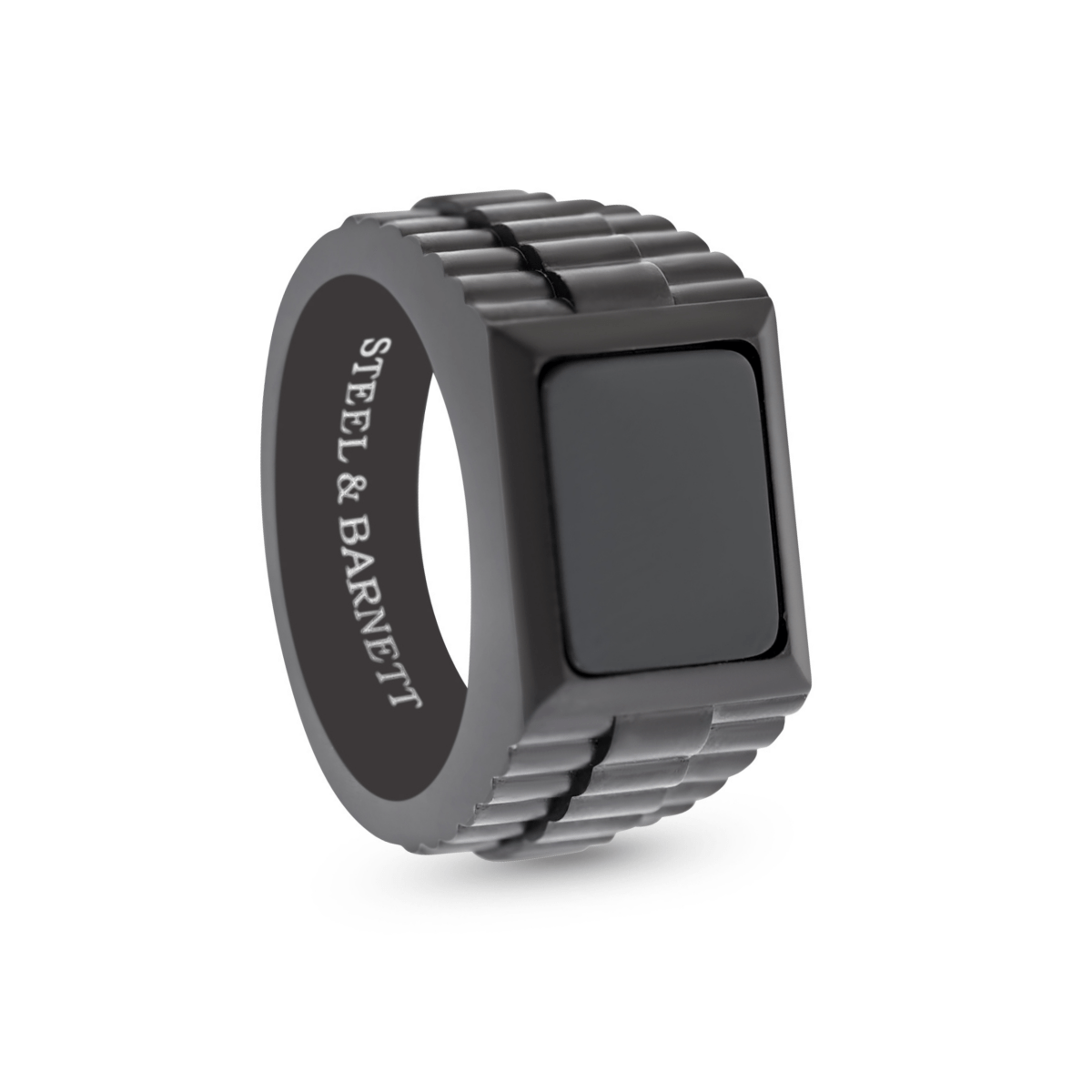
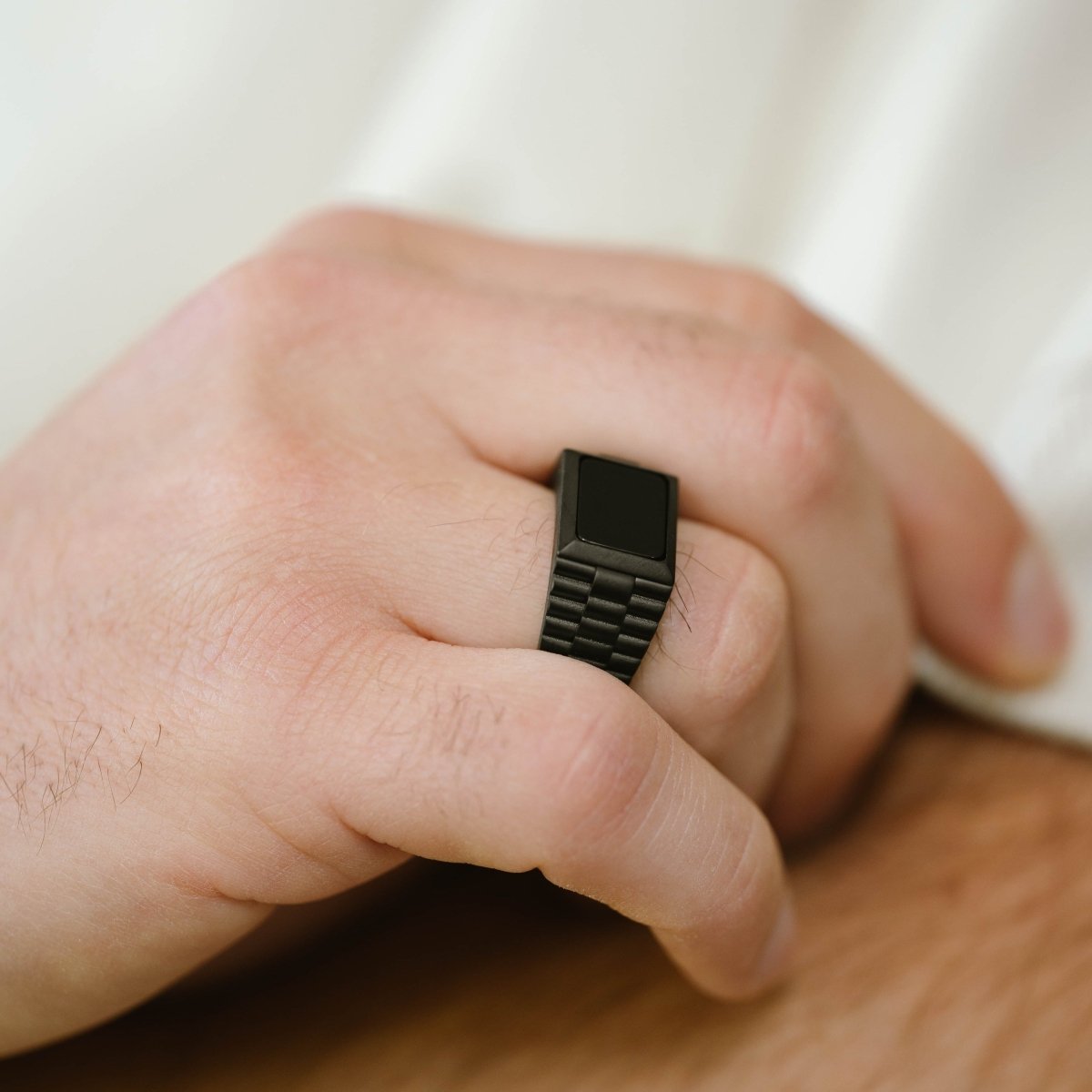
Men's Black On Black Stainless Steel Onyx Signet Ring
Men's Black On Black Stainless Steel Onyx Signet Ring

 View productRegular price $110.00Regular priceUnit price per


It Starts with Practicality
Your dominant hand takes the day. Door handles, keyboards, tools, the bottom of a bag, the drawer that sticks. A ring over there picks up scratches at a rate the quiet hand never sees. Right-handed, and you want it to look next year roughly like it looked in the box? Left. Same instinct that put your watch on the left wrist and never bothered explaining itself.
The counterargument's better than people expect. Your dominant hand is the one that moves: gestures, reaches, takes the handshake, points at the menu. Wear a ring there and it gets seen without you doing a thing. Which raises a fair question about hiding a piece you bought precisely because you liked looking at it.
Then there's sizing, which settles more of this than symbolism ever has. Most men run about half a size larger on the dominant hand. Decades of work, built into the knuckle. A ring sized perfectly for your left ring finger can sit tight on the right by evening. So measure the finger you'll actually wear it on. Not its twin.
See the size chart →The Left Hand and the Right Hand
Left hand
← Swipe for morePersonal and inward
Commitment, belief, character. What you've decided about your life rather than what you do between nine and six. The quieter side, and the one people read for meaning rather than status.
The practical default
Most men are right-handed, so the left hand takes fewer knocks. Less scraping, fewer scratches, a ring that still looks like itself two years in.
Where the band lives
In most of the West the wedding band sits here, fourth finger. That one ring tints everything else you put on the hand, whether you planned it that way or not.
Works well with: a statement piece on the right
Plain band left, something with weight on the right. Each hand gets its own job and neither argues with the other.
Right hand
← Swipe for moreOutward and active
Action, work, status. The things you built rather than the things you promised. It's the hand that moves, so the ring travels with it.
No marital label
In most Western countries nothing on this hand signals married. That leaves it genuinely free, which is rarer than it sounds.
Home of the signet
Signets have lived on the right for centuries, pinky more often than ring finger. Family, profession, or simply the fact that you liked it.
Works well with: a plain band on the left
If the left is already spoken for, the right becomes where the personality goes. Most men land here without ever deciding to.
Finger by Finger
The finger does more talking than the hand. Tap each card to reveal the meaning.
Thumb
Tap to revealIndependence and status
Independence. Self-assertion. Reads bold, partly because it takes more metal and partly because it sits off to one side like it wandered away from the group. A good second ring when you already wear a band and don't fancy a crowded hand.
Tap to flip backIndex
Tap to revealAuthority and leadership
Authority, leadership, the finger family crests lived on for centuries. Also the finger you point with, so the ring joins every gesture you make, invited or not.
Tap to flip backMiddle
Tap to revealBalance, and not much else
Balance. Biggest, most central, least loaded of the five. A ring here says almost nothing. Occasionally that's the entire point.
Tap to flip backRing finger
Tap to revealCommitment, conditionally
Commitment, mostly. And only on the left, in most of the West. On the right it means something else, depending on where you happen to be standing.
Tap to flip backPinky
Tap to revealFree expression
Self-expression. Almost no religious or cultural baggage attached in most places, which makes it the free finger, and explains how signets ended up there, right hand more often than left.
Tap to flip backOne rule worth keeping: an empty finger between rings. Two to four across both hands is plenty. Past that, a hand stops reading as considered and starts reading as inventory.
See the fashion rings →The Wedding Band Question
Left, in most Western countries, on the strength of a myth. Romans and Egyptians believed a vein ran from the left ring finger straight to the heart, the vena amoris. There's no vein. There never was. The habit outlived the anatomy, which is roughly how every tradition works.
Right-hand wedding bands are every bit as traditional, just filed elsewhere. Orthodox countries wear them right: Russia, Poland, Bulgaria, Ukraine. The German-speaking countries too, and Greece, and Dutch Protestants. That last one a post-Reformation move, a way of not being Catholic at a glance.
Culture doesn't explain all of it. Widowers shift the band to the right. Men whose work would chew up a ring on the dominant hand shift it left. Both are common enough that reading a man's marital status off his hand is a bad bet.
See the wedding bands →
Frequently Asked Questions
Which hand should a man wear a ring on?
Practicality usually settles it before symbolism gets a word in. Right-handed men lean left because the quiet hand does less damage and the ring ages better for it. Right, if you want it seen, or if the left's already carrying a wedding band. There's no rule here. Only a pattern. Browse the men's rings.
What does a ring on the right hand mean for a man?
Action, work, personal style, broadly. Most Western countries attach no marital signal to that hand, which leaves it free for a signet, a statement piece, or something that marks what you achieved rather than what you promised. Orthodox and German-speaking countries, though: there it can simply mean married.
What does a ring on the left hand mean?
Commitment and character, in Western tradition. The personal side rather than the professional, mostly because the wedding band got there first in most of the West. A non-wedding ring on the left signals nothing on its own. The ring finger's the exception. People read that one whether you meant it or not.
Can you wear a ring on your right ring finger if you're not married?
Yes. In most Western countries nobody reads it as married at all: it's one of the more common homes for a band with no relationship attached to it. The exception is Orthodox and German-speaking countries, where the right ring finger is precisely where a wedding band goes.
Which finger should a man wear a ring on?
Starting out: the pinky, or the right ring finger. Both low-risk. The pinky carries no cultural baggage; the right ring finger reads as style rather than status across most of the West. Index says authority. Thumb says independence. Middle says very little. See the fashion rings.
What does a pinky ring mean on a man?
Self-expression now, family or professional identity further back. It's the finger with the fewest rules attached, which is exactly why signet rings ended up there. It also sits apart from the rest, so nobody mistakes it for an accident.
What does a thumb ring mean on a man?
Independence, confidence, and historically wealth, for the unglamorous reason that a thumb ring takes noticeably more metal to make. It's also the simplest way to add a second ring without crowding the hand. The thumb keeps its distance.
Is your ring size different on your left and right hand?
About half a size, usually. The dominant hand has had more work put through it over the years and it shows. This catches people out constantly: measure the exact finger, on the exact hand, you intend to wear it on. Use the size chart.
How many rings should a man wear?
Two to four across both hands, with an empty finger between any two. One reads deliberate. Two or three reads considered, assuming the pieces don't all say the same thing. Past four, it isn't a choice anymore. See the bestsellers.
Does wearing a ring on your left hand mean you're married?
Only on the ring finger, and only in the countries where that's the tradition. Left index, middle, thumb, pinky: no marital meaning, anywhere. Design carries some weight too. A plain band and a wide signet aren't telling the same story.