

Wearing Jewelry When You Work With Your Hands: A Practical Guide
Most men's style writing is written for desk jobs. Chain length under a button-down. Bracelet against a blazer cuff. Doesn't help much if your hands are inside a wheel arch by mid-morning.
This one's for the rest. Mechanics, sparkies, chippies, welders, chefs, warehouse guys. You can wear jewelry on tools — you just have to be honest about which pieces, and what comes off before you do something you'll regret.

The Ring Problem (and Why It's Different From Everything Else)
The finger most likely to put you in A&E is the one with the band on it.
Ring avulsion is the medical name for what happens when a ring snags on something and pulls the soft tissue off the bone. Around 5% of upper-extremity ER visits in the US — roughly 150,000 cases a year. A study by the American Association for Hand Surgery found that the force needed to break a silicone ring is about ten times less than what it takes to break a metal one, and silicone didn't cause avulsion injuries at the same force levels. Ladders. Moving parts. Sheet metal. A spanner falling past you in a tight bay.
Electricity adds its own problem. NFPA 70E doesn't dress it up — conductive jewelry such as watchbands, bracelets, rings, key chains and necklaces shall not be worn where it presents a contact hazard with exposed energized conductors or circuit parts. That's the code.
Most men on tools have already worked it out. The wedding band lives in a cupholder, a toolbox, or on the kitchen bench. Back on after the shift. Silicone if you want something on the finger all day. We don't make those.
-


Heritage Duo Set Brown
Heritage Duo Set Brown
View productRegular price $140.00Regular priceUnit price per -
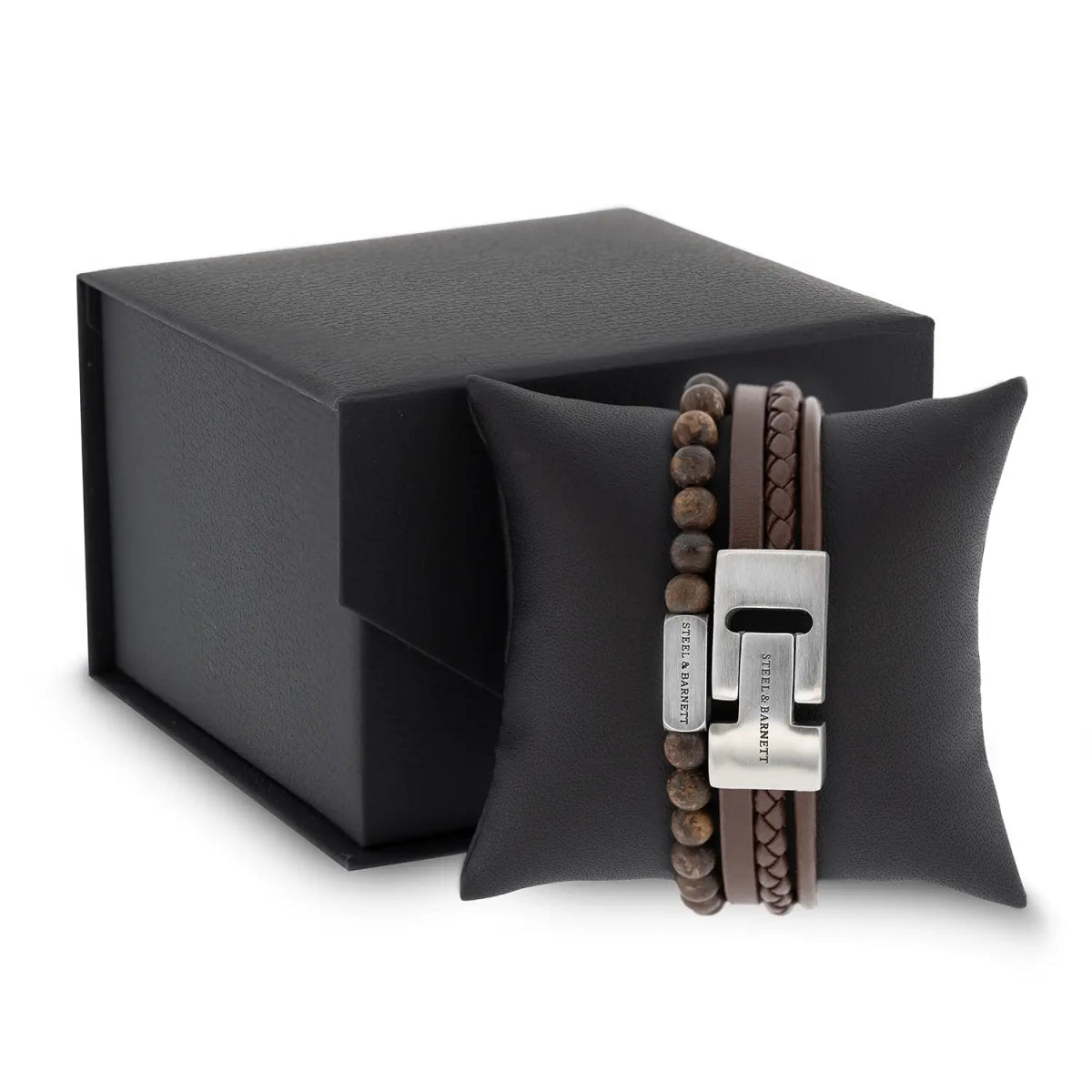

Timeless Duo Set Brown
Timeless Duo Set Brown
 View productRegular price $160.00Regular priceUnit price per
 -
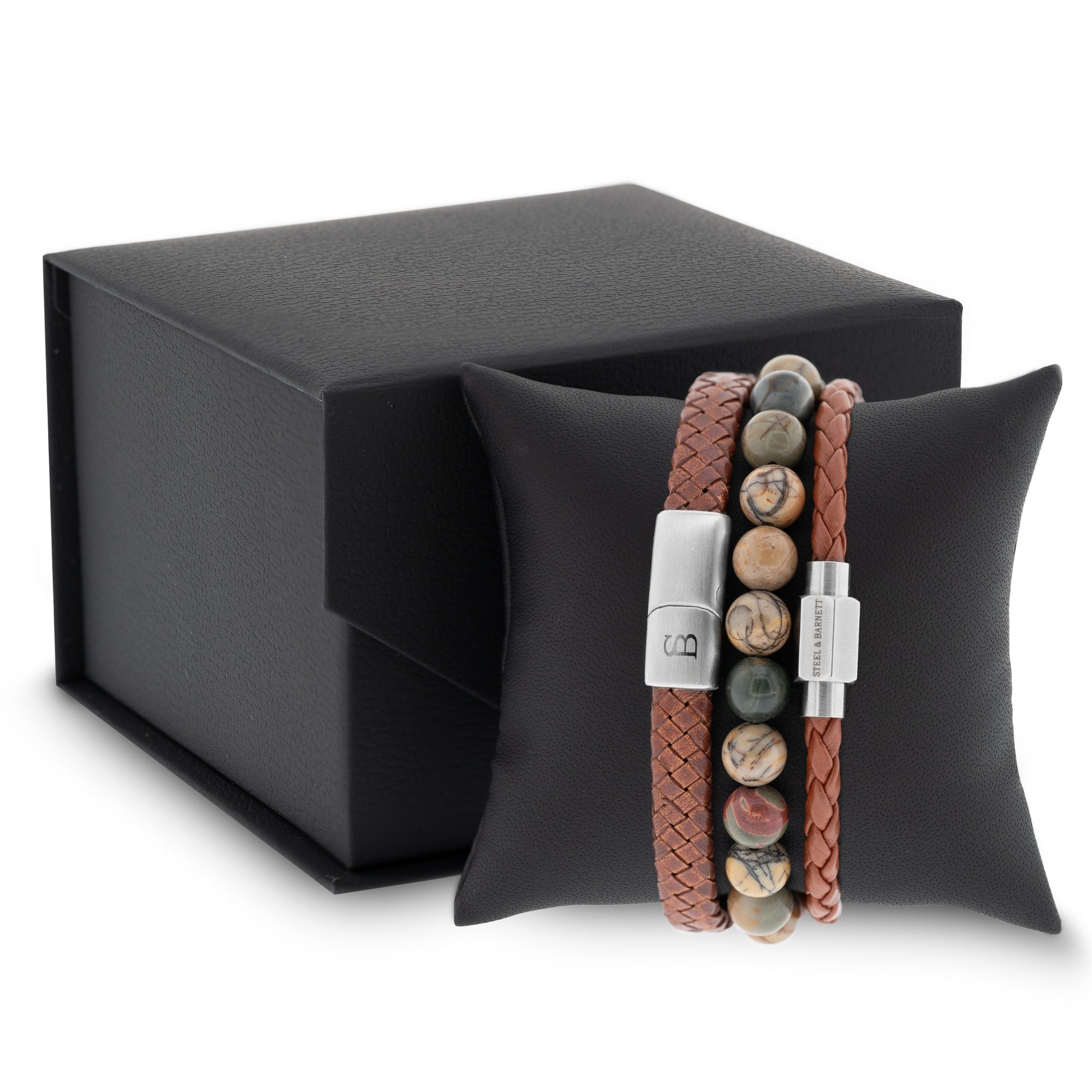
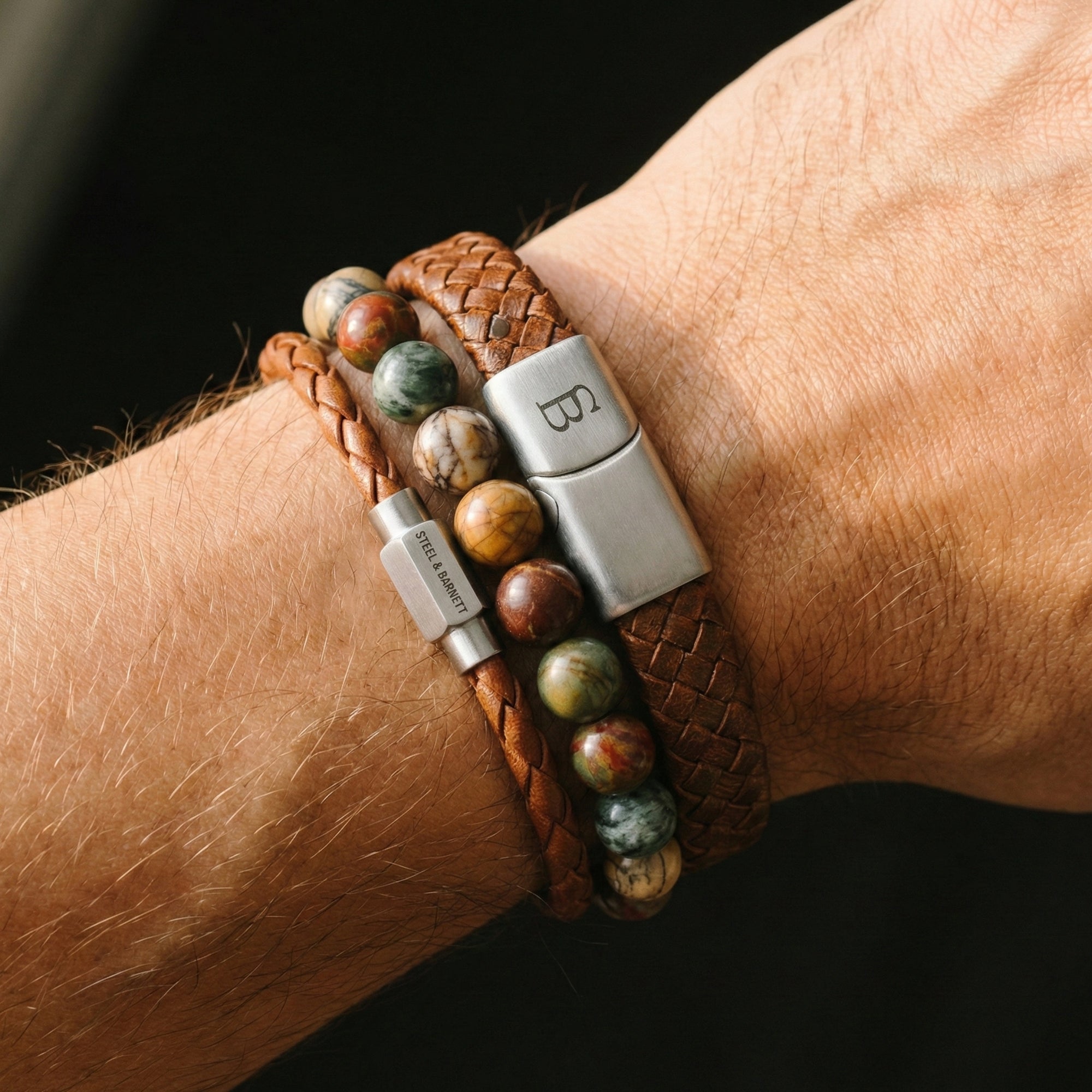
Gift Set Cognac
Gift Set Cognac

 View productRegular price $200.00Regular priceUnit price per
 -

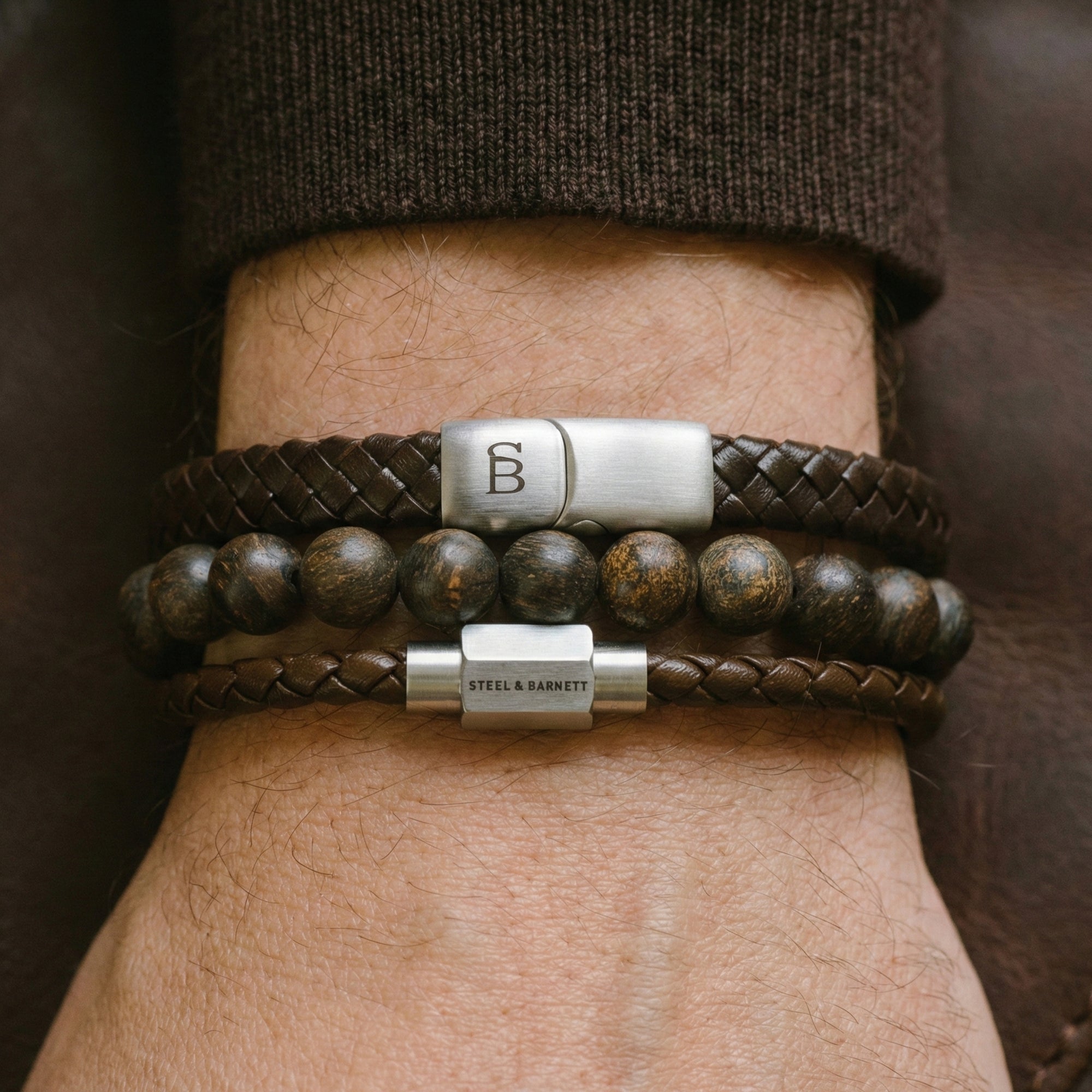
Gift Set Brown
Gift Set Brown
View productRegular price $200.00Regular priceUnit price per


What Actually Survives a Workday
Rings are the bad one. The rest is more forgiving.
Leather Bracelets
Leather suits a working wrist. It softens with sweat instead of corroding. It doesn't conduct. It won't scratch a customer's paintwork the way a hard steel cuff will. A magnetic clasp lets go under serious load — a quiet safety feature you'll never notice until you need it.
Our heavier braided buffalo styles were built for hard use, not display. Dirt, oil, sun, sweat — it all ages the leather. Some men want that. Some don't. A damp cloth and the occasional rub of leather balm keeps it closer to where it started. Grease eventually works into the grain regardless. That's how it ends up looking like yours.
Shop leather bracelets for men →
Steel and Chain Bracelets
316L stainless is the same grade as surgical tools and marine fittings. Doesn't rust. Doesn't react with sweat. Scrubs clean.
It's still metal, though. Anywhere near live circuits or hot machinery, it comes off with the band.
Outside that, a steel chain bracelet is one of the more durable things you'll own. Most of the clothes you wear with it will give up first. Concrete dust will still mark the surface up over time — fine scratches, the kind you only see in certain light. Comes with the territory.
Cheap plated pieces are a different story. Weld sparks burn through the plating, the base metal underneath starts to mark up, and inside a month it looks like nothing.
Shop men's stainless steel bracelets →
Chains and Necklaces
A chain under a workshirt does no work and takes no damage. The shirt holds it flat. Doesn't snag, doesn't see dirt, doesn't see sun. End of the day it's the same chain it was at six in the morning. In winter it disappears under a thermal — plenty of guys forget there's one tucked in there until they're getting in the shower. Cold first thing, settles after a few minutes.
Welding's different. So is kitchen work near open flame, and anything with strong chemicals up close to the throat. Chain off before the apron.

Where on the Body — A Quick Breakdown
Hands and Fingers
The most exposed part of you on a shift, and the worst place to wear anything. Rings off is the default across trades. Silicone if you want something there. The real band goes on when the boots come off — it lasts longer that way too, which is half the reason older hands do it.
Mechanics already know. Ring goes in the cupholder before the hand goes in.
Wrists
Lower risk than fingers. A bracelet on the non-dominant wrist — left, for most — takes a fraction of the abuse the working hand sees. A leather piece worn there for years is normal. Steel off when you're on electrical. Past that, there's more room here than anywhere.
One thing nobody warns you about: a chunky clasp will catch a hoodie cuff every time you push the sleeves up. Happens enough that some guys just push the bracelet halfway up the forearm and leave it. Smoother weaves give you less of it.
Neck
The safest spot on the body for jewelry on a job. A chain inside the collar doesn't see the work and the work doesn't see it. Keep it short enough to stay there. Long pendants are where the trouble starts.
Cleaning a Piece That's Spent the Day on a Worksite
Most men overthink it, then do nothing about it.
Steel and chain. Warm water, a drop of dish soap, an old toothbrush through the links. Rinse, towel dry. Two minutes a week if you wear it daily on a dirty job.
Leather. Damp cloth — not wet — for surface dirt. Once a month, a small amount of conditioner worked in with your fingers stops it drying out and cracking. Don't soak it. Leather and water don't get on.
Stone beads. Damp cloth. Don't submerge them. Natural stone takes up sweat and skin oils over time, which is partly how those pieces develop the look they do. Wiping the beads at the end of the day slows it down if you want.
Site jewelry gets cleaned more often than what stays in the drawer. Fair trade.
FAQ
Can I wear my wedding ring at work?
Depends what you do. Office or light-duty, fine. Electrical, heavy machinery with moving parts, welding, anything with serious lifting or grabbing — most safety bodies and trade unions advise against it. Two main risks: conduction, and ring avulsion, where a metal band catches on something and strips soft tissue off the finger. The common workaround is a silicone band on shift and the proper ring back on after.
How common is ring avulsion really?
More common than people think. Around 5% of upper-extremity ER visits — roughly 150,000 cases a year in the US. Some severe enough to need microvascular surgery or amputation. Concentrated in physical trades and a few hobbies — climbing, lifting. Not really a concern at a desk.
Are silicone rings worth it for tradesmen?
Yes, if you want a ring on during work. A biomechanical study found silicone rings fail at an average of 53 N compared to 495 N for metal, and no degloving injuries in the silicone group during avulsion testing. They give before the finger does. We don't make them — still the honest call if you're on tools all day and want something on the finger.
What jewelry can electricians wear?
Anything non-conductive near live equipment. Standard codes prohibit metal rings, bracelets, watchbands and necklaces in those conditions. Off-circuit the rules loosen. Leather's a common choice for sparkies. A chain under a shirt is fine away from energised work. Steel isn't appropriate while you're on live gear.
Will a leather bracelet hold up to manual work?
Better than most reckon. Buffalo or Nappa softens and patinas with daily wear. The clasp is the part that matters — magnetic gives way under serious force, safer than a fixed loop. Damp cloth, occasional conditioner, and a single bracelet will outlast a couple of pairs of work boots.
Does sweat damage stainless steel?
No. 316L doesn't react with sweat and doesn't rust. It picks up surface grime, which comes off with warm soapy water and a soft brush. Cheaper steels and plated pieces are a different story — the plating wears through and the base metal underneath starts to corrode.
Should I wear a necklace on a construction site?
Yes, if it stays under the shirt. A chain inside the collar doesn't catch on anything and doesn't see dirt. Pull a long chain or pendant out over the top and it's a snag risk near moving plant. In, not out.
What about welding or working near open flame?
All metal off. Steel and gold-plated pieces conduct heat as well as electricity. A chain heated by a weld spark sits against the skin and burns. Welding, foundry, kitchen line work near flame — jewelry off before the apron goes on. Leather is less of a worry, but not worth it in those conditions either.
Is it unprofessional to wear jewelry in the trades?
Not anymore. Trades, offices, creative work — bracelets and chains are part of how plenty of men dress now. A leather bracelet under a work jacket reads as personal, not flashy. The unwritten rules from twenty years ago on site have loosened with the rest of the culture.
Built for the kind of week that puts dirt under your cuffs. The leather, steel and chain pieces hold up to a real day and still sit right after it.
Shop men's bracelets