

Can You Shower With a Stainless Steel Bracelet?
Yes. Steel handles water better than anything else you're likely to wear on your wrist, and a daily shower won't do it any harm.
The thing that does cause trouble is rarely the thing people ask about. It isn't rust, it's soap. Below is what a few months of showering with steel on tends to look like, and the half minute afterward that keeps it from getting there.
Does Stainless Steel Rust in the Shower?
No. There's chromium in the alloy, and chromium reacts with oxygen in the air to form a thin protective layer across the surface. Scratch it and the layer closes again on its own, which is more or less the reason the material exists in the first place.
Jewelry grade steel is usually 316L. That grade adds molybdenum for extra resistance to chlorides, and it's the same specification used for surgical instruments and marine fittings, so tap water at shower temperature doesn't come anywhere near troubling it.
If a piece does show orange marks, one of two things is going on. Either it wasn't solid stainless steel to begin with, which happens more often than you'd expect with cheap clasps on otherwise decent bracelets, or those marks are mineral deposits left by hard water rather than corrosion of the metal. Deposits wipe off.
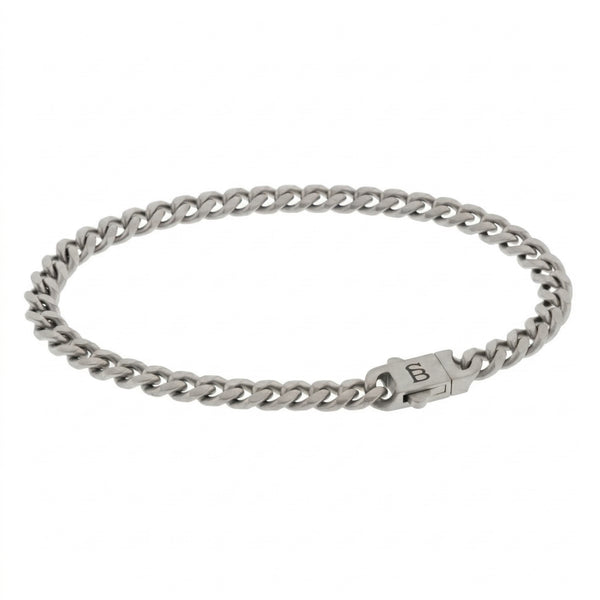
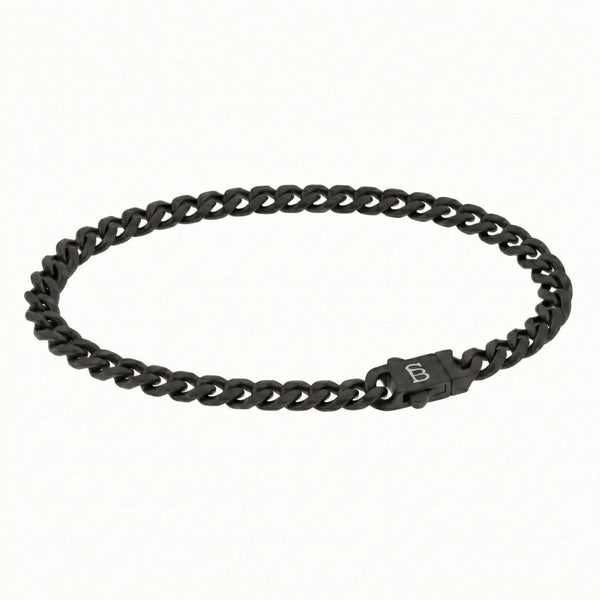
Everything in the men's stainless steel bracelets collection is solid 316L, clasp included.
Stainless steel bracelets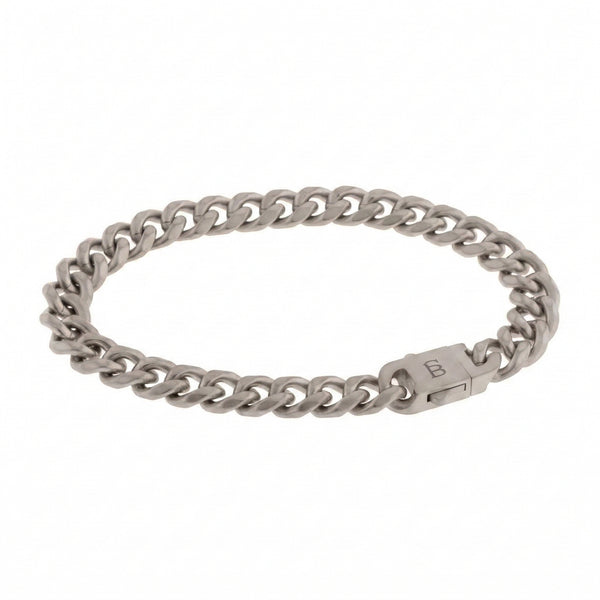
What Soap and Shampoo Actually Do
Water isn't really the issue here. Product is.
Shower gel, shampoo and conditioner all leave a fine film behind, and on a flat surface you'd never see it. A link bracelet has dozens of small joints, plus the inside of the clasp, and that's where the film settles and dries. Another layer goes on the next morning. After a few weeks the bracelet looks slightly gray rather than bright, and most men read that as tarnish and assume the steel has gone bad. It hasn't. It's buildup, which comes off.
The other place it turns up is your skin. A faint mark under the bracelet, sometimes a bit of itching after a few days of steady wear. That's usually not a nickel reaction, though it can be. More often it's trapped soap sitting against damp skin, and it tends to clear up within a week of rinsing the bracelet properly.
Gold Plated Steel Is the Exception
With 18K gold plated over steel, the rules change a little.
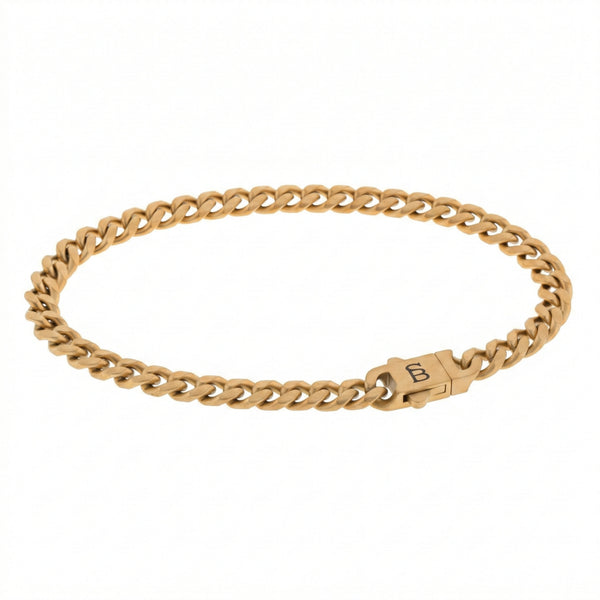
The steel underneath is unaffected. It's the plating that has a lifespan. It's a thin layer, and daily hot water, soap and friction wear it at the high points first, which in practice means the clasp and the outer edges of the links. Nothing visible happens after one shower, or after twenty. Over a year of daily showers you'll see the difference between a plated piece that came off every morning and one that never did.
So solid steel can stay on, and anything plated is better off in the dish by the sink, whether that's a bracelet from the gold plated collection or a plated chain around your neck.
Gold plated bracelets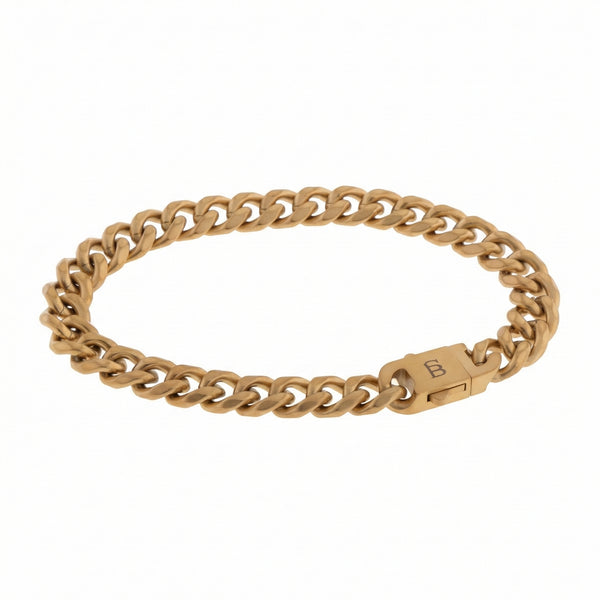
Pools, Sea Water and the Gym
When Your Bracelet Is Not Only Steel
Most of the damage blamed on steel belongs to the other material in the piece.
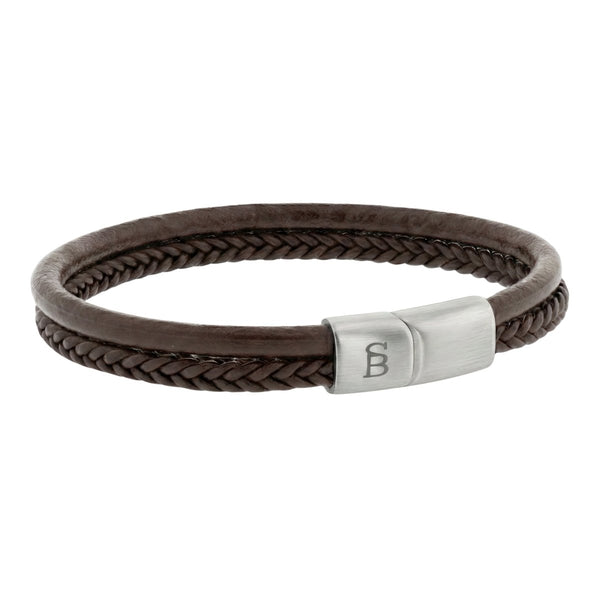
A leather bracelet with a steel clasp is a leather bracelet. The steel is fine. The leather isn't, and water gets into the seam where the two meet and sits there for hours. That's a separate question with a separate answer, covered in whether you can shower with a leather bracelet and in how to dry one that got soaked.
Beaded bracelets sit on elastic cord. Cord absorbs water, stays damp inside the beads where air can't reach it, and weakens somewhere you can't inspect. Some porous stones darken permanently as well, which is the part people notice first.
If the bracelet is steel all the way through, links and clasp included, there's nothing in it for water to reach.
Thirty Seconds That Keep It Looking New
No polish, no cloths, none of the special products sold for this. If you own other materials too, the full guide to cleaning bracelets covers leather, stone and plated pieces.
Frequently Asked Questions
Can you shower with a stainless steel bracelet?
Yes. Solid stainless steel isn't affected by water, soap or shower temperature. Rinse and dry it afterward so soap doesn't build up in the links.
Does stainless steel rust or tarnish?
Not under normal conditions. The chromium in the alloy forms a protective layer that repairs itself, and what looks like tarnish on a steel bracelet is nearly always soap buildup. It washes off.
Can I shower with a gold plated bracelet?
Better not to. The steel core is fine, but daily heat, soap and friction wear the plating faster, particularly at the clasp. Take plated pieces off first and the finish will hold up for years.
Can I swim with a stainless steel bracelet?
Yes, pool or sea. Rinse it with tap water afterward so nothing dries on the surface.
Why does my stainless steel bracelet look dull?
Almost always soap residue in the links and around the clasp. Warm water, a drop of dish soap and a soft toothbrush brings it back.
Can I sleep with a steel bracelet on?
Nothing happens overnight. Steel is one of the few materials that genuinely doesn't need a break, so this comes down to whether you find it comfortable.
Is stainless steel jewelry waterproof?
For everyday purposes, yes. It doesn't absorb water, swell, crack or corrode, which is why steel bracelets and steel necklaces are the standard recommendation for men who never want to take anything off.
Which bracelets should I take off before showering?
Leather, beaded pieces on elastic cord, and anything plated. Solid steel can stay on. If you want one piece you never have to think about, that narrows the whole men's bracelet range down to a single material.