

Home / Blog / What Your Bracelet Stack Says About You
What Your Bracelet Stack Says About You
People read your wrist before you say a word. Not consciously, and not in detail, but the impression lands anyway. A stack is a small set of choices worn out in the open, and choices signal something whether you meant them to or not.
This guide is not about how to build a stack. That one already exists, and so does a list of combinations worth wearing. This one is about the read: what different stacks tend to say about the man wearing them, and how to make sure yours says what you actually mean.
The one-piece read
A single bracelet, worn alone. A leather band, one clean steel piece, or a single row of stone beads.
Worn on its own, one bracelet reads as a decision. It says you know what you like and felt no need to prove it five times over. Minimal, but not timid. It is also the most forgiving look there is, because there is nothing to clash. If you want to look considered with almost no risk, this is where it starts.
Who it tends to fit: men who dress simply, and anyone testing the water for the first time.
Explore men's bracelets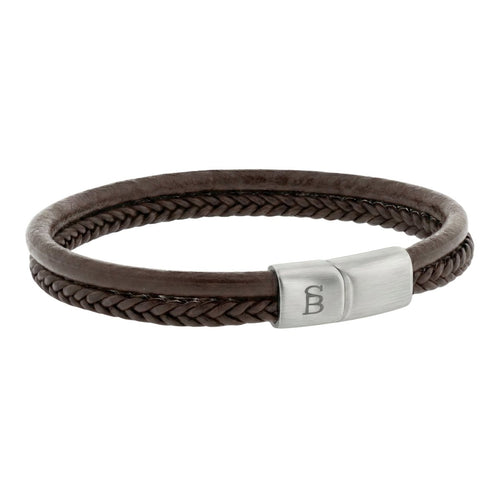
The earthy read
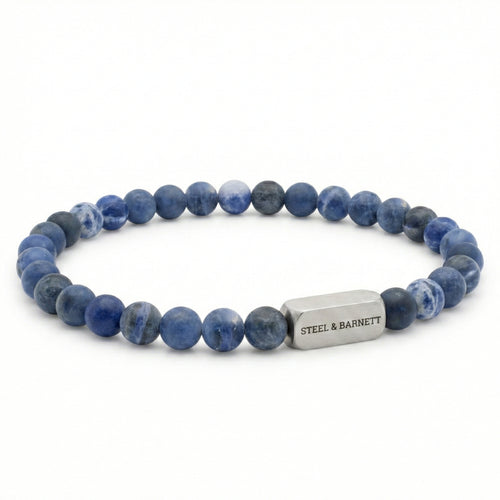
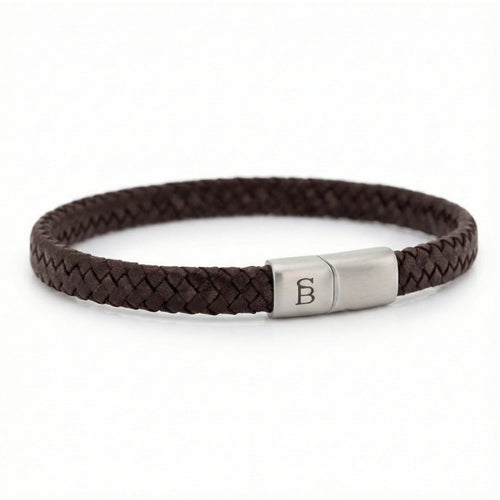
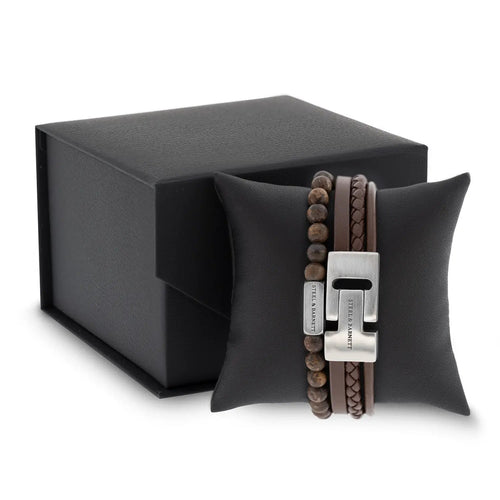
Leather and stone together. Browns, tans, matte black, natural texture. Two or three pieces that clearly belong to the same world.
This is the most approachable stack a man can wear. It reads relaxed without reading careless, the look of someone comfortable outdoors or at least comfortable looking like he might be. Nothing about it asks for attention, which is exactly why it holds it. People tend to read the wearer as easygoing and low-drama.
Who it tends to fit: casual wardrobes, weekend-first lives, men who would rather look at ease than sharp.
Shop bead bracelets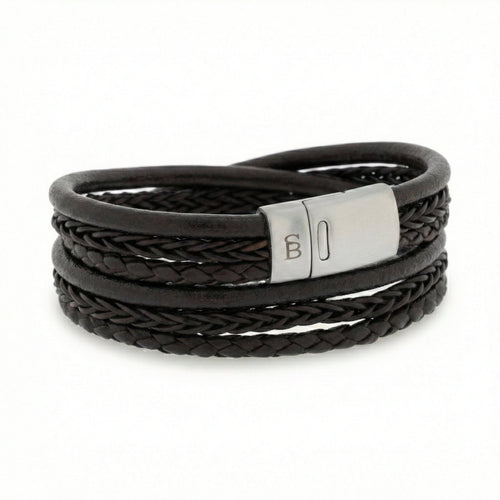
The stone read
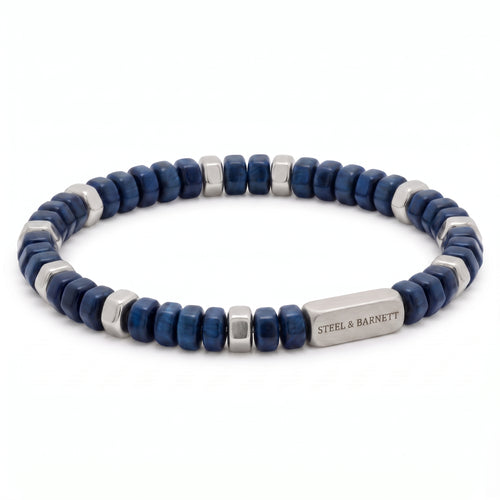
Bead and gemstone forward. Tiger eye, onyx, lava, sodalite. Often earth-toned, sometimes with a single metal accent.
Stone stacks almost always read as though there is a reason behind them, and usually there is. Even when a man bought the pieces for the look, the stones carry associations, and people pick up on that. The read is thoughtful, a little inward, sometimes quietly spiritual. It suggests a man who likes meaning in the things he keeps close.
Who it tends to fit: men who like a story in their objects, or who grow into one over time.
Shop bead bracelets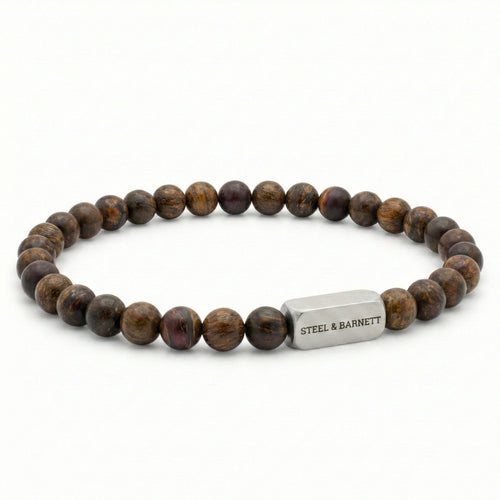
The metal read
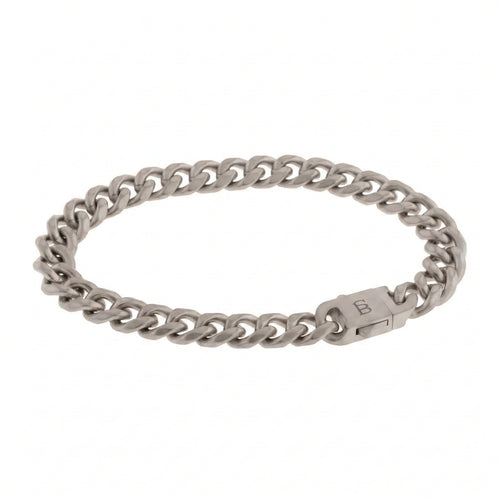
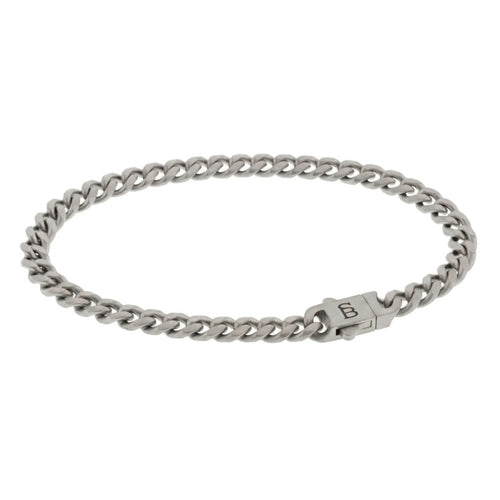
Metal forward. A steel chain, a link bracelet, brushed or polished, silver or dark.
This is the sharpest and least sentimental of the stacks. It reads modern and put-together, the kind of look that survives a handshake and a full day at a desk without a story attached. It signals low maintenance and a certain precision. Where the stone stack invites a question, the metal stack closes one. It is the most at home in a professional room.
Who it tends to fit: office-first wardrobes, and men who want a clean line with zero upkeep.
Shop stainless steel bracelets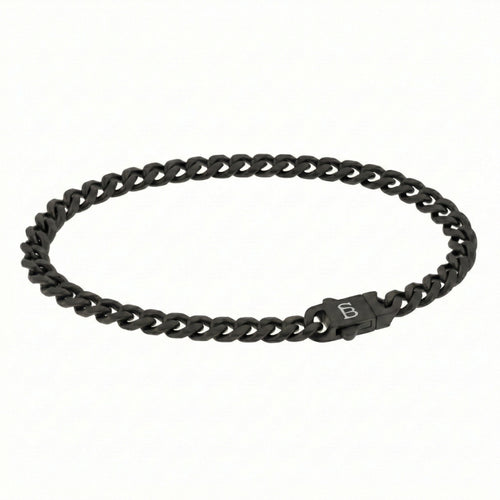
The bold read
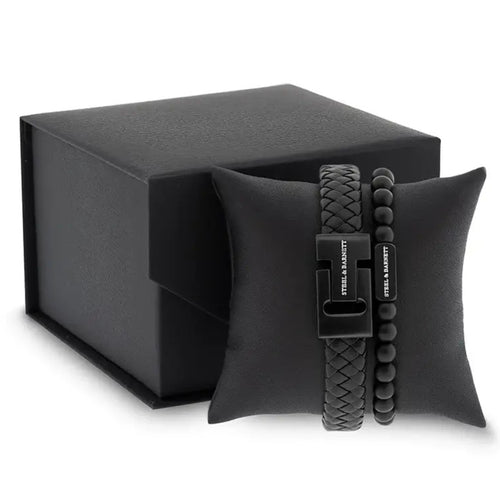
More pieces, mixed materials, all-black runs, a gold accent after dark. Leather next to steel next to stone.
A bold stack says you are comfortable being noticed, and comfortable enough with the whole thing to break a rule or two on purpose. All-black reads deliberate and a little edged. A gold accent warms it and pushes it toward evening. This is the read that rewards knowing what you are doing most, and punishes guessing hardest, which is why it pays to learn the mechanics before you commit to it.
Who it tends to fit: men who treat getting dressed as something they enjoy rather than something they get through.
Shop bracelet sets Shop black bracelets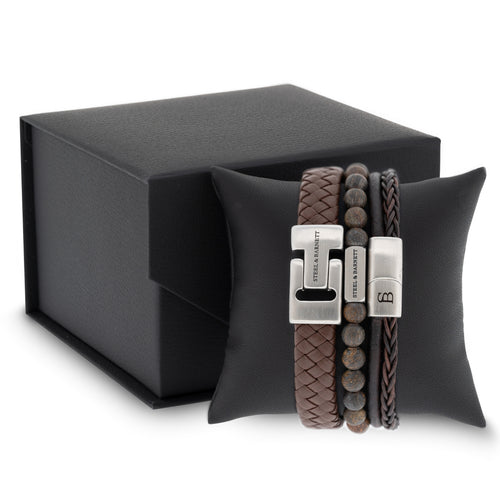
Making your stack say what you mean
The gap worth watching is between what you intend and what actually lands. A few things close it.
Match your metal tone
Look at what you already wear, the watch, the buckle, the ring. A mismatched metal is the most common way a stack ends up reading as unplanned.
Less is more
More pieces raise the volume, not the sophistication. If you want the read to be considered, take something off rather than adding to it.
Keep it together
Three pieces that agree will always read better than five that argue. It is not about spending more, it is about the stack looking like a choice.
Build a stack that reads the way you want
Start from a set that already agrees with itself, then make it yours.