

Why Most Men Wear Their Bracelet on the Left Wrist
Spend enough time noticing men's hands - occupational hazard, in my case - and one thing repeats itself. The bracelet sits left. Not by decree, not because anyone read a rule about it somewhere, but because that's where it drifts once a man stops overthinking the whole business. There's logic under the habit, and it owes nothing to fashion. It comes down to the hand that does your living for you. So: why the left won, when to trust it, and the few times the right wrist earns the spot instead.
The Real Reason Is Simple: Most Men Are Right-Handed
Nine in ten men, give or take, are right-handed. Which leaves the left as the passenger hand - the one that mostly goes along for the ride. Comfort follows from there. A bracelet on the wrist that does less gets tugged less, caught less, noticed less.
Your dominant hand never clocks off. It signs the receipt, hoists the bag, shoots across the table for the salt, closes the deal with a handshake. Strap something to it and you'll feel the weight all day, that faint drag at exactly the wrong moment. The other wrist? You'll have forgotten the bracelet by mid-morning. And forgetting it is the entire point of a piece meant for daily rotation.
-
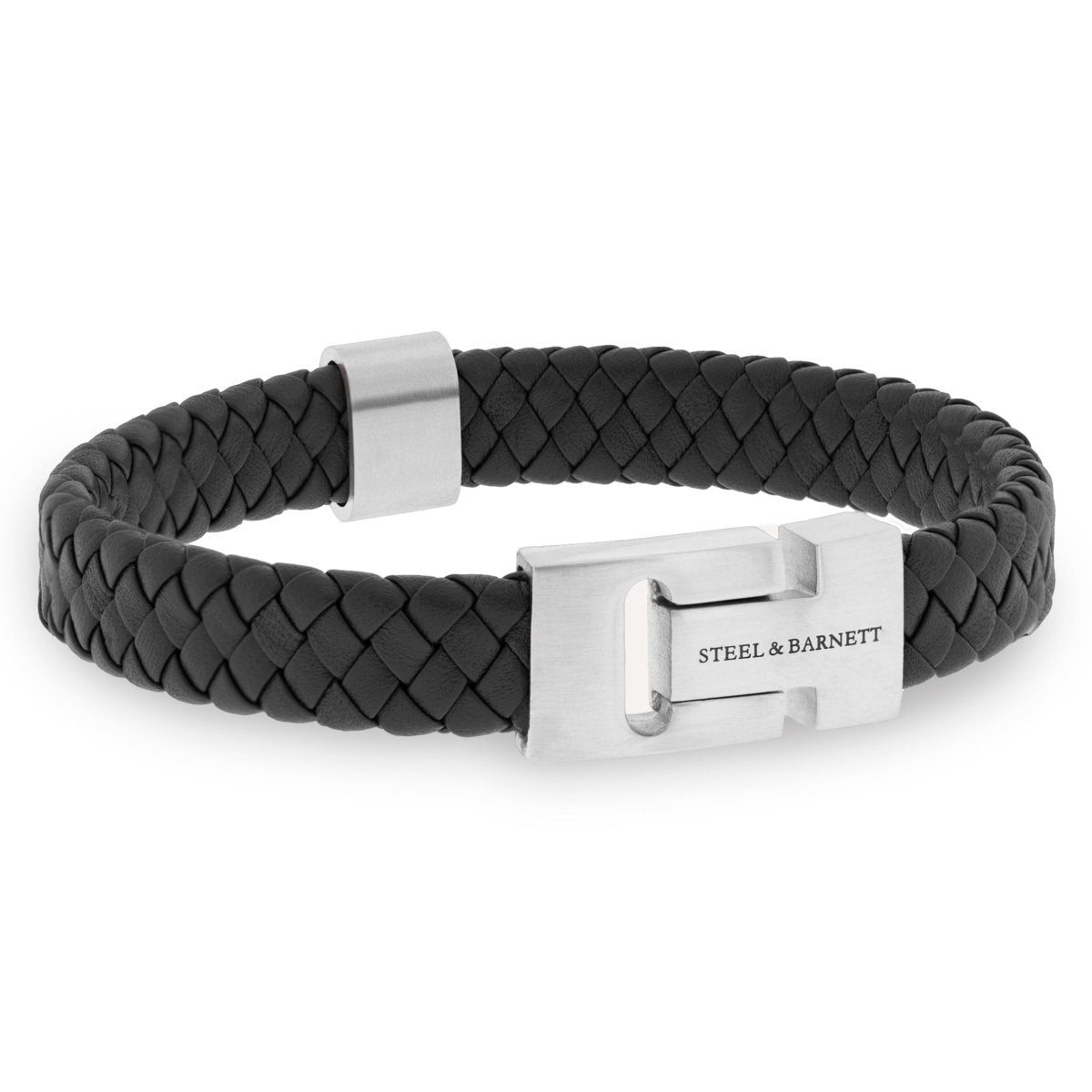

Thick Braided Black Leather Bracelet For Men
Thick Braided Black Leather Bracelet For Men


 View productRegular price $100.00Regular priceUnit price per
 -
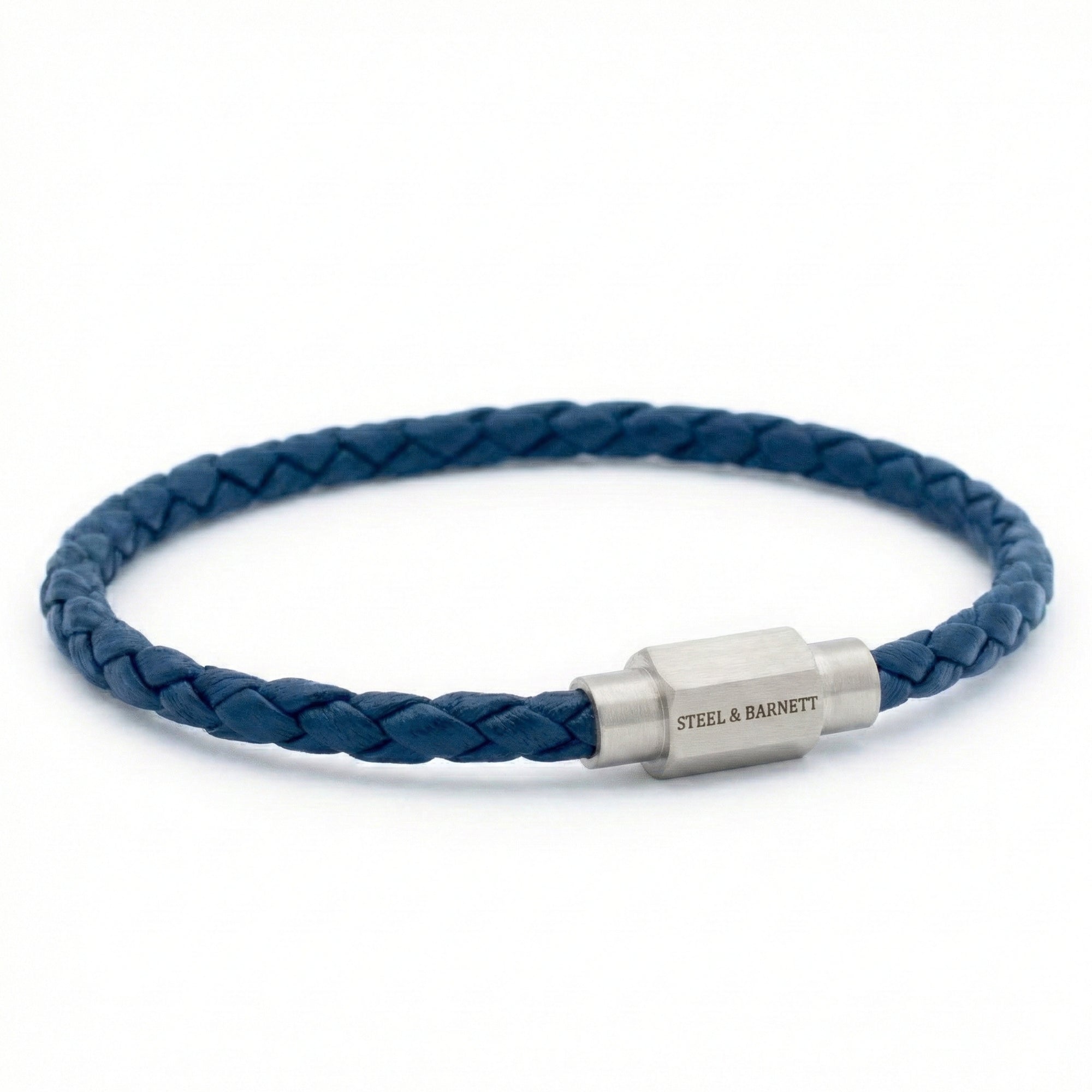
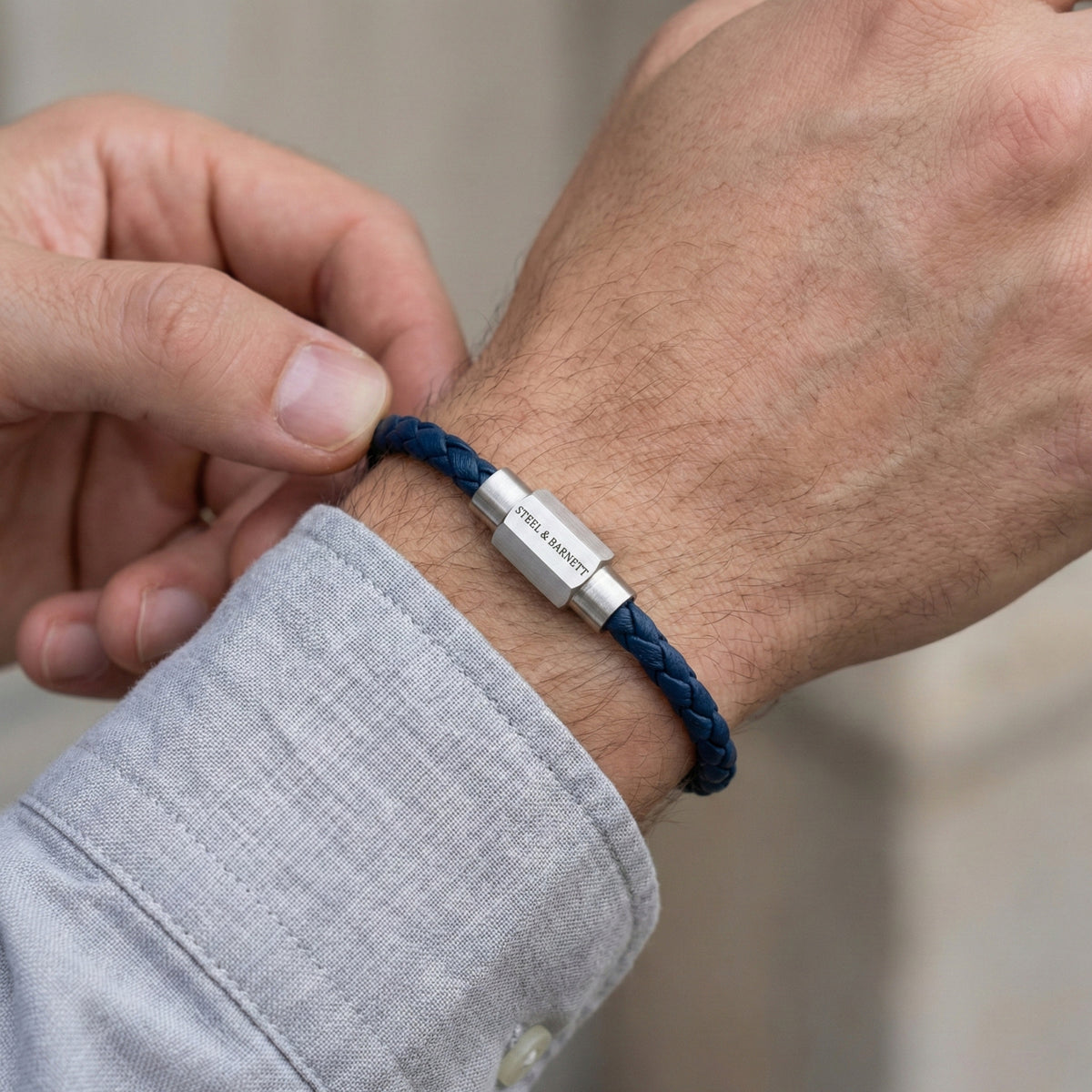
Thin Braided Blue Men’s Leather Bracelet
Thin Braided Blue Men’s Leather Bracelet
View productRegular price $60.00Regular priceUnit price per -
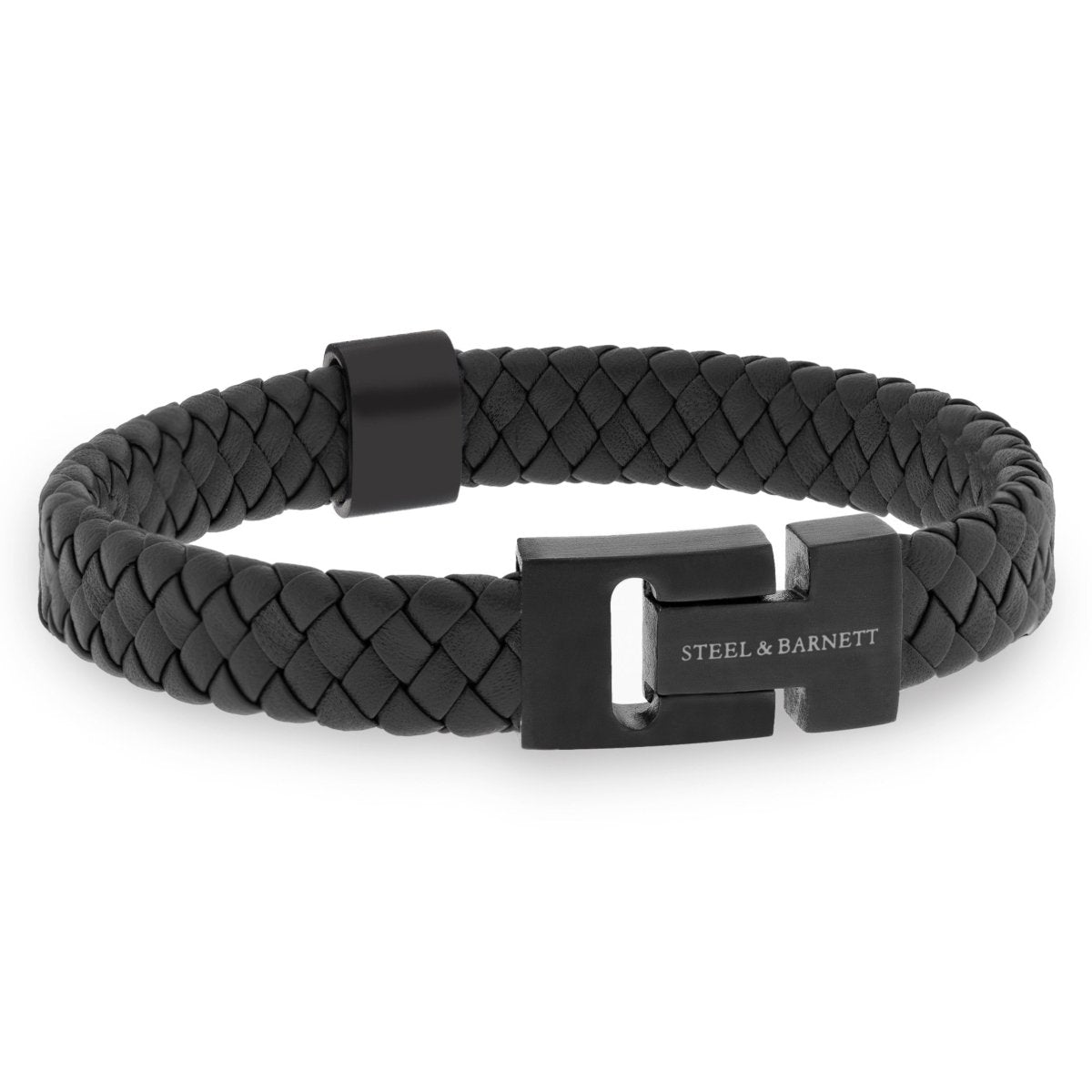
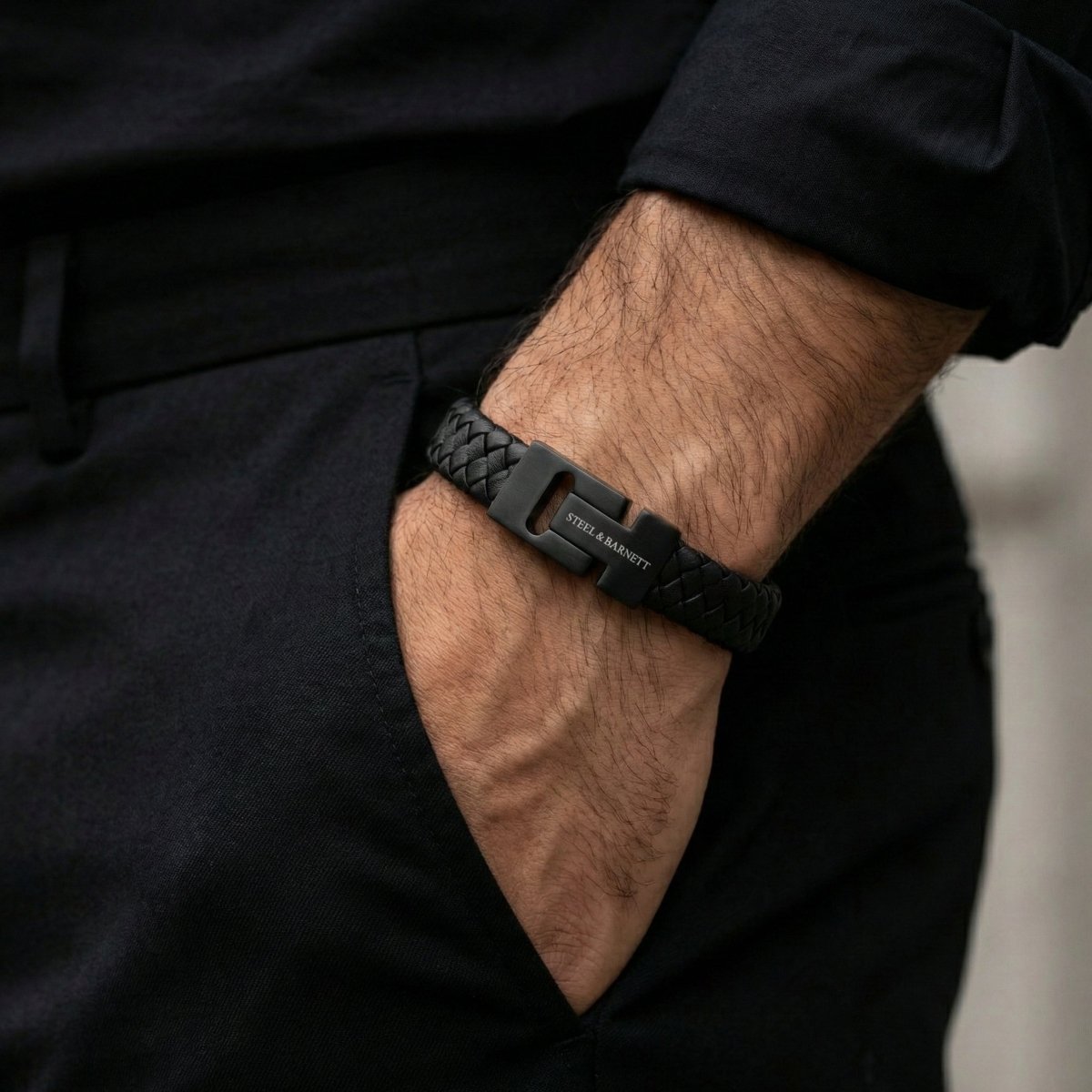
Thick Black Braided Leather Bracelet with Black Stainless Steel Clasp
Thick Black Braided Leather Bracelet with Black Stainless Steel Clasp
View productRegular price $100.00Regular priceUnit price per -
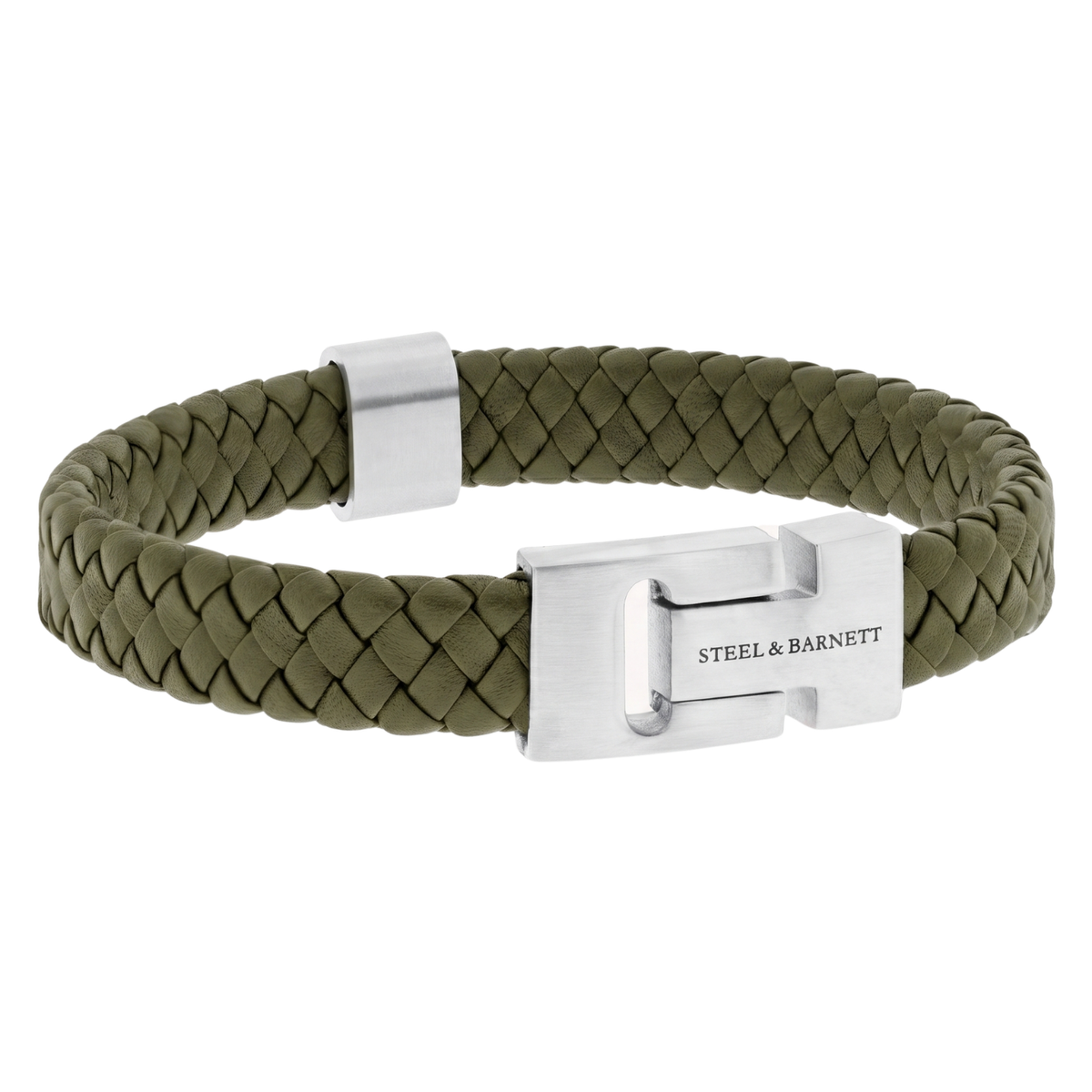
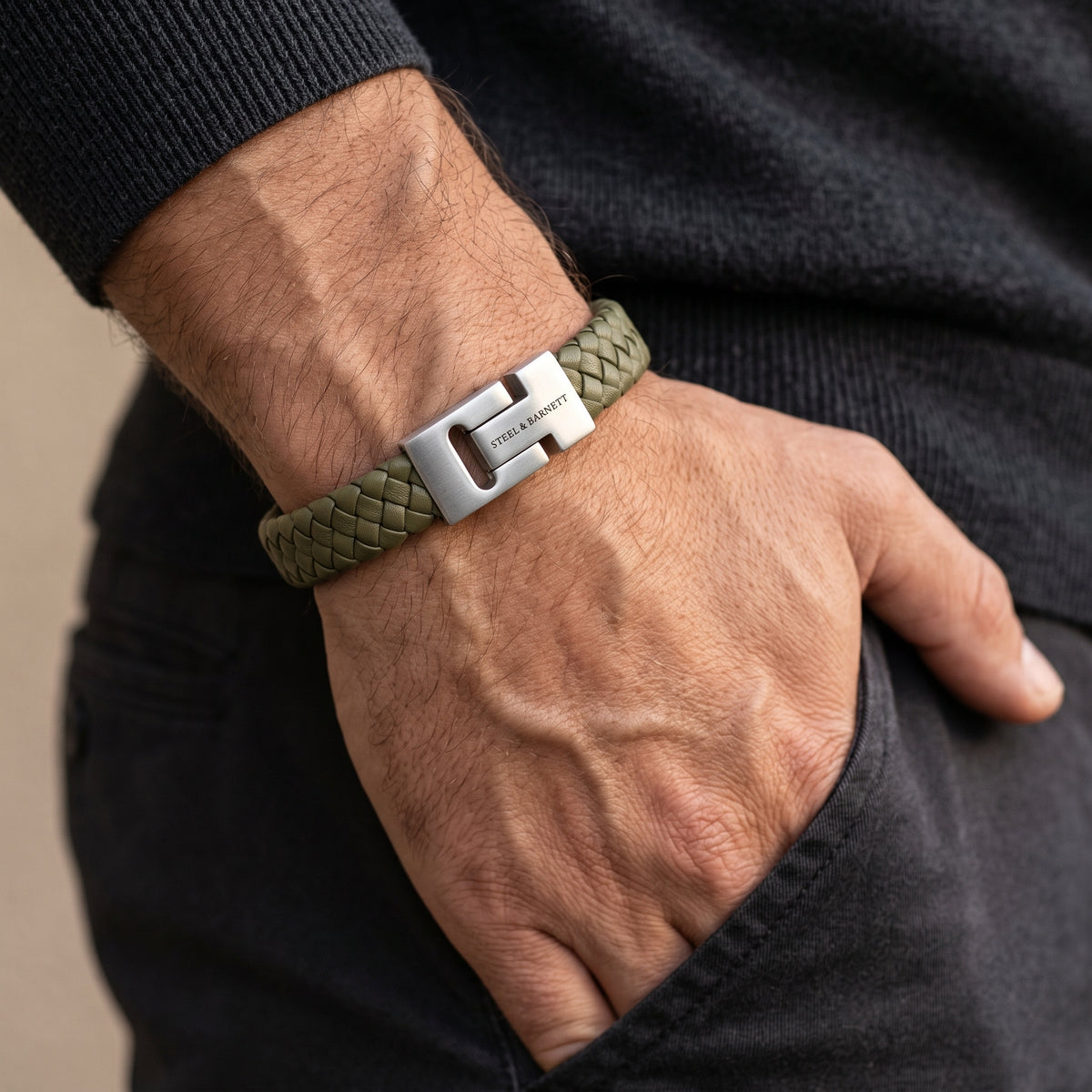
Thick Braided Olive Green Leather Bracelet For Men
Thick Braided Olive Green Leather Bracelet For Men
 View productRegular price $100.00Regular priceUnit price per


Wearing It Left Also Protects the Bracelet
Fewer knocks, longer life. Simple as that.
The working hand leads a hard existence, most of it unglamorous. Doorframes. Desk edges. That reflexive drag of a cuff across a countertop you never even register. On their own, nothing. Added up, a clasp keeps the receipts. This is where the price tag starts to matter, because a good leather bracelet is meant to earn its character - darkening, softening, going a little roguish at the edges the way a decent belt does. That's patina, and it's the payoff. Gouges and strained hardware are not. A steel clasp on the busy wrist works itself loose and collects scratches faster than most men expect. Park the thing on the left and you've done the maintenance without lifting a finger.
The Left Wrist Carries Meaning, Too
Now the soft stuff, which I'll admit I came to as a skeptic. In more than one tradition, the left is the receiving side. Ayurveda, Kabbalah, Feng Shui - each reads it as the inward channel, the grounding one, the wrist nearest the heart. The red string of Kabbalah goes on the left, and that's no accident.
Believe none of it and it still works on you a little. Even in flat styling terms the left wrist plays quieter, more private. It's the wrist a man reserves, half-consciously, for the piece that carries some freight - the gift, the anniversary, the thing he bought the week something shifted. A lone gemstone bracelet belongs there. Feels almost obvious once you've worn one.
Where the Watch Fits In
Then there's the watch, which complicates the tidy theory.
Most men wear theirs on the left, same wrist, and it's the one thing capable of shoving a bracelet across the body. If your watch already lives there, two roads, both perfectly good. Divide the territory - watch left, bracelet right - and nobody crowds anybody. Or stack them on the one wrist, which sings with a slim leather or cord bracelet and turns lumpy the second you try it with a chunky steel band next to a proper sport watch. Truth is, if you don't wear a watch at all, forget every word of this section. The left stays yours by default.
-
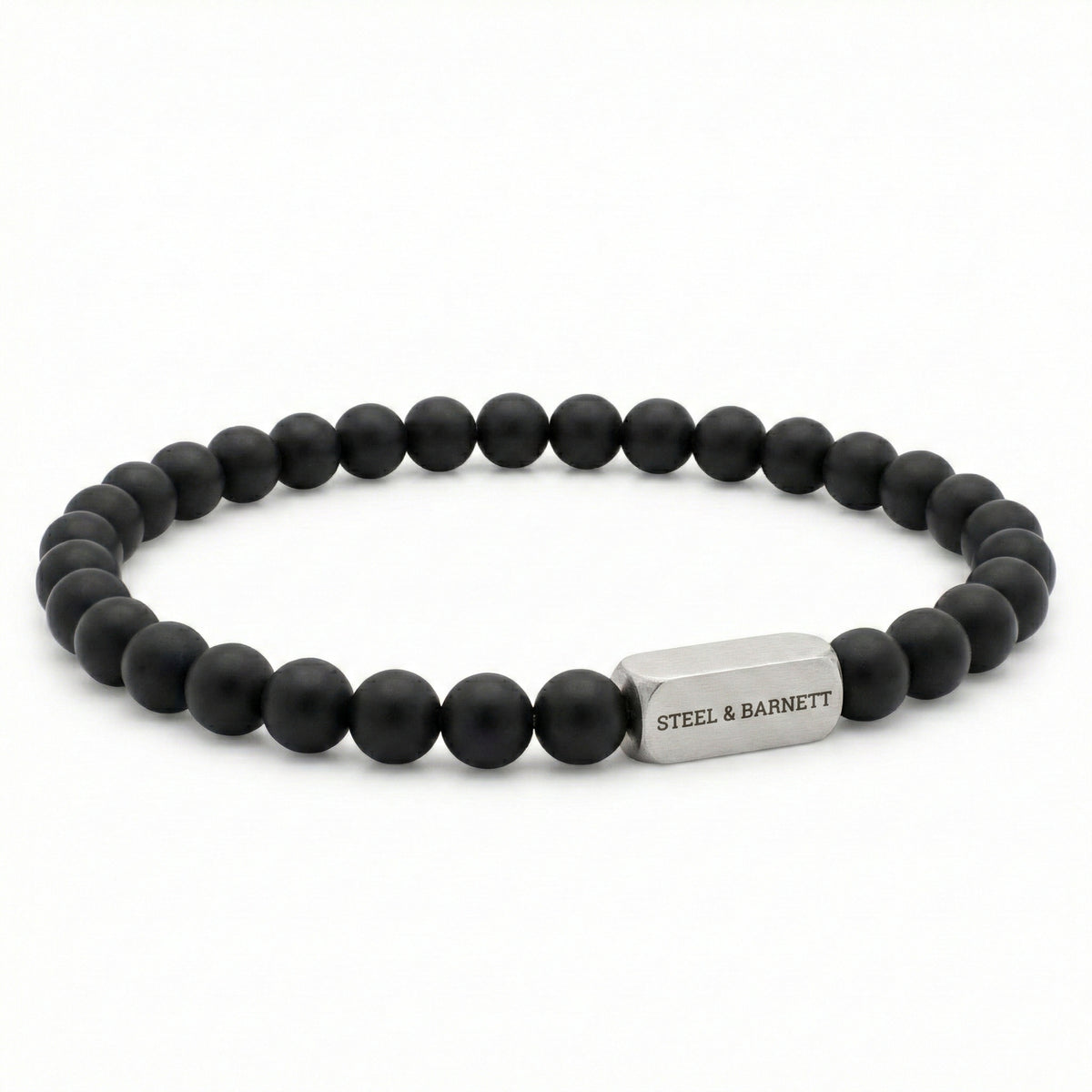
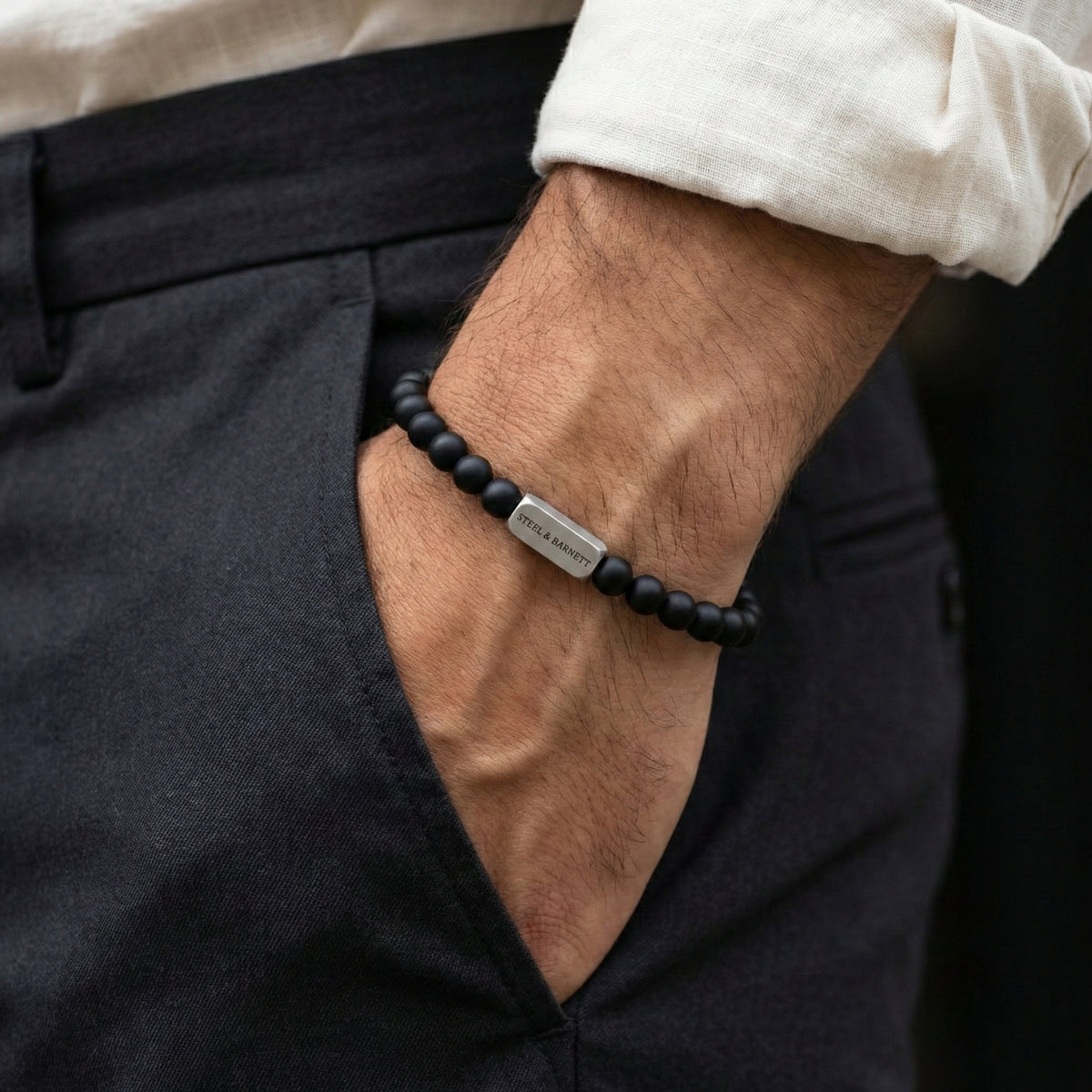
6mm Round Black Onyx Gemstone Bead Bracelet
6mm Round Black Onyx Gemstone Bead Bracelet


 View productRegular price $55.00Regular priceUnit price per
 -


6mm Round Matte Sodalite Gemstone Bead Bracelet
6mm Round Matte Sodalite Gemstone Bead Bracelet
View productRegular price $55.00Regular priceUnit price per -
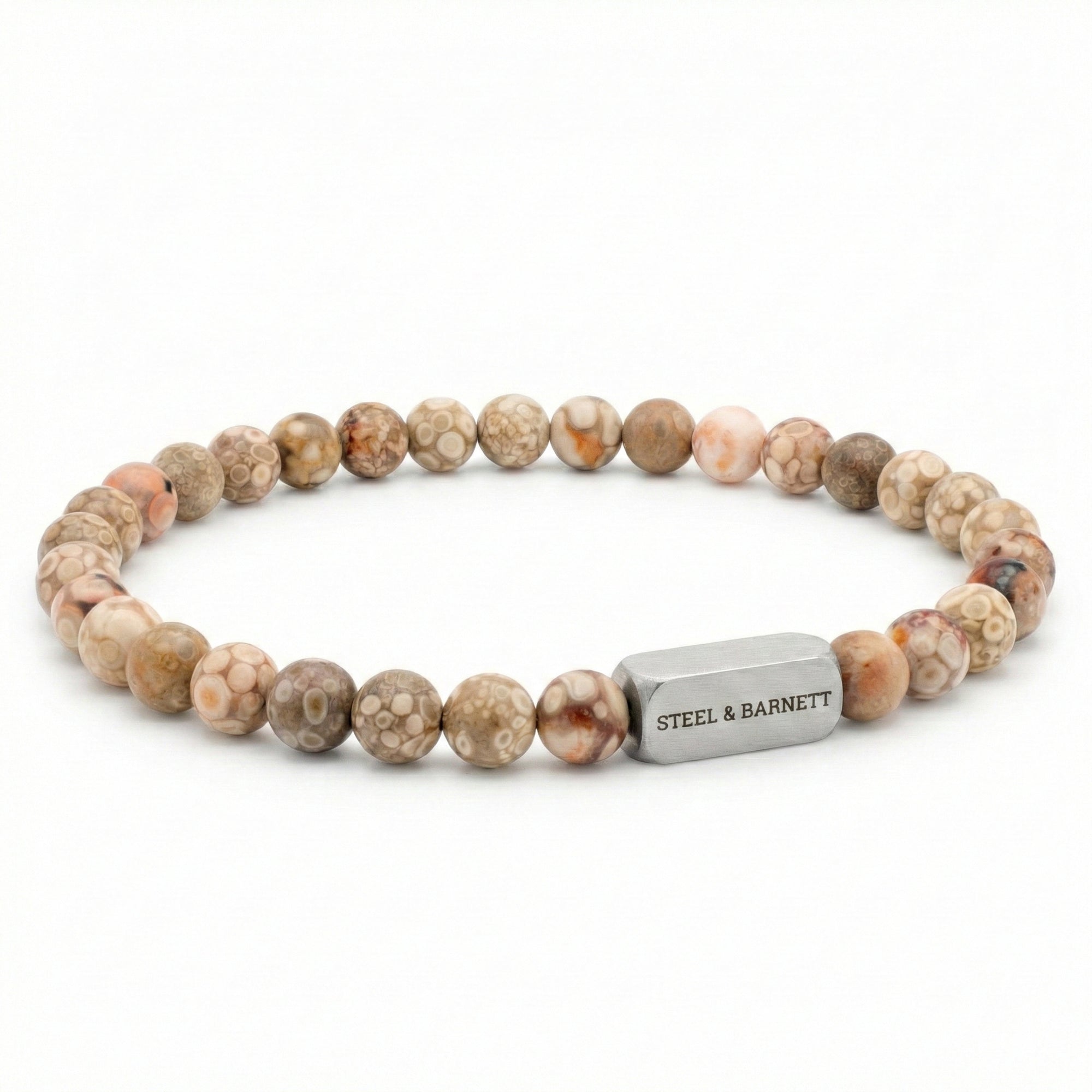

6mm Round Maifanite Gemstone Bead Bracelet
6mm Round Maifanite Gemstone Bead Bracelet
View productRegular price $55.00Regular priceUnit price per -
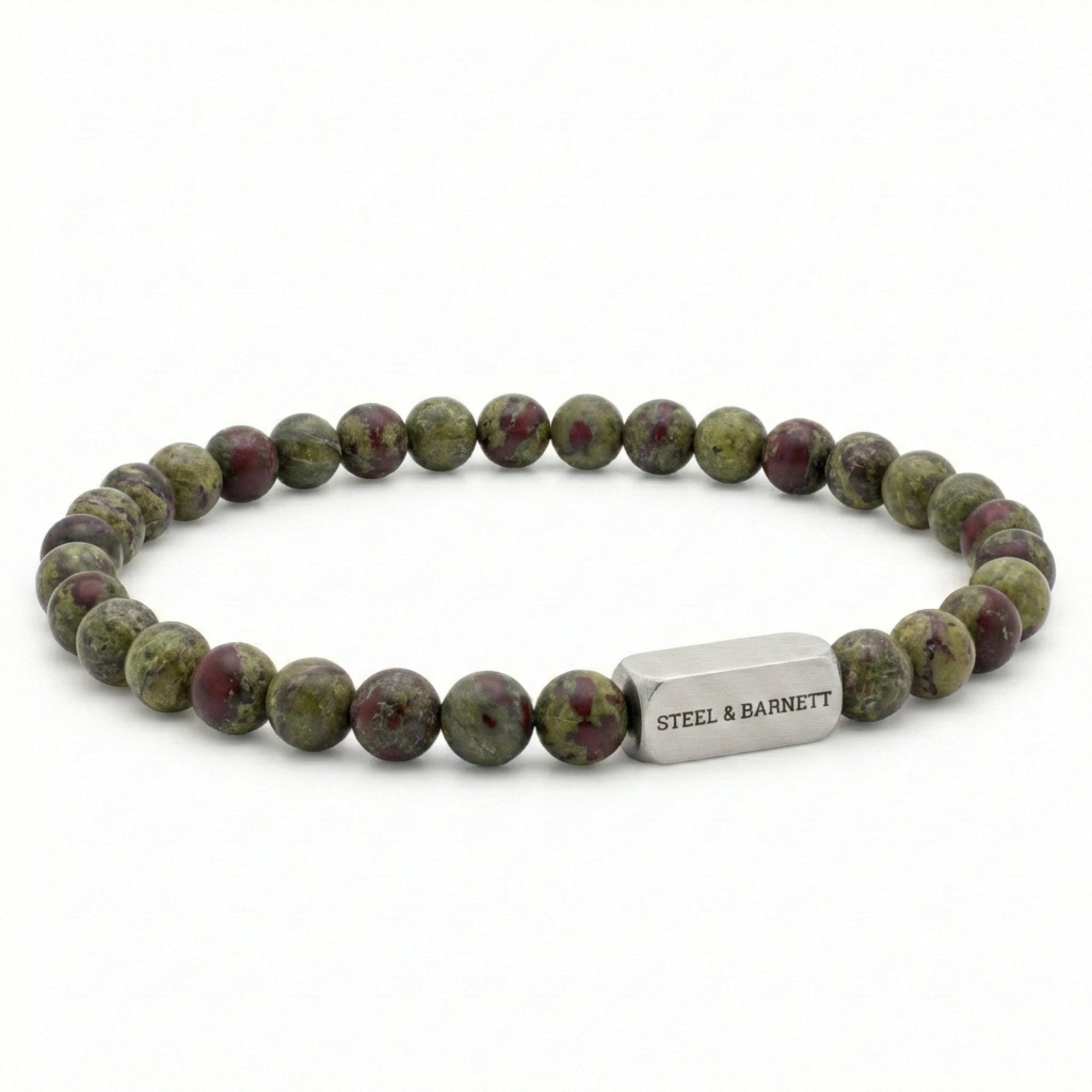
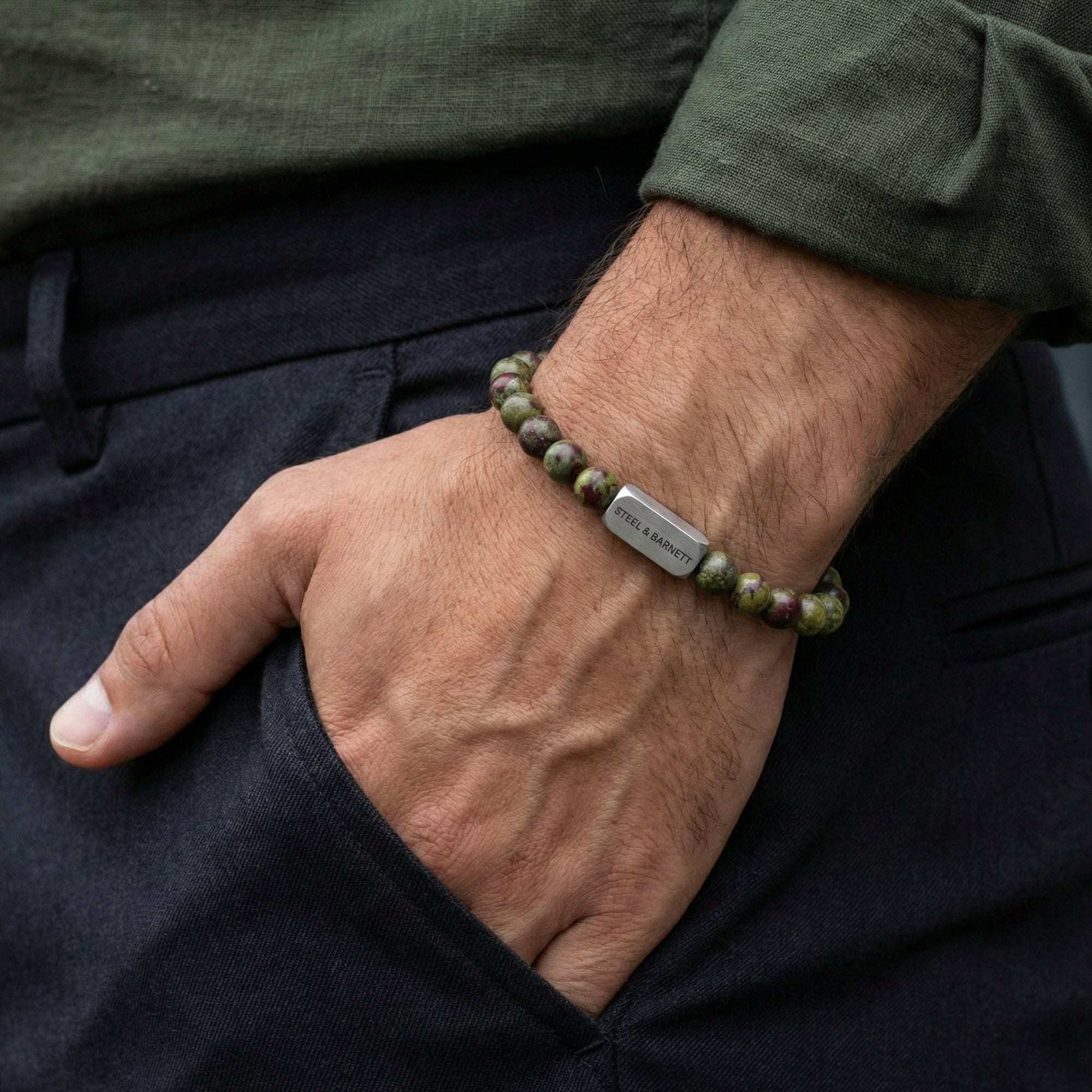
6mm Round Dragon's Blood Jasper Stone Bead Bracelet
6mm Round Dragon's Blood Jasper Stone Bead Bracelet
View productRegular price $55.00Regular priceUnit price per


When the Right Wrist Makes More Sense
The left is a tendency, not a commandment. Some men land right, and they're not wrong to.
Left-handed? Everything above just mirrors. Your right becomes the passenger wrist, the protected one, the natural home - which tells you the "left wrist default" was always a "non-dominant wrist default" wearing a disguise. And when a watch has permanently annexed your left, sliding the bracelet over to the right keeps the whole arrangement clean and balanced.
Besides, some men want the bracelet seen, and that's a fair reason on its own. The dominant wrist is the one forever entering the frame - every handshake, every gesture over dinner, every point made across a room. More traffic, more eyes. If you're honestly weighing that trade-off, we've taken the full left-versus-right question apart elsewhere, signals and all.
Frequently Asked Questions
Why do most men wear their bracelet on the left wrist?
Because for right-handed men the left is the non-dominant hand, so it's the comfortable pick and it soaks up less daily wear. Less movement, fewer snags, gone from your awareness inside a day. The old left-side symbolism about receiving and protection adds a nice layer, but comfort is doing the real work. Torn on it? The left vs right placement guide runs the whole thing down.
Is it wrong to wear a bracelet on the right wrist?
No such thing as a wrong wrist. The right is genuinely the better call for left-handed men, for anyone whose watch owns the left, and for the man who wants his bracelet on show. Left is simply where the numbers land, since most of us lead with the right. Have a look through the full men's bracelet range and wear it where it sits best.
Which wrist do left-handed men wear a bracelet on?
The right, as a rule. A lefty's right hand is the non-dominant one, so it collects fewer knocks and treats the bracelet more gently over the years. That "left wrist default" everyone repeats is really a "non-dominant wrist default" the moment you factor in which hand leads.
Does wearing a bracelet on the left wrist mean anything?
In a handful of traditions, yes - the left reads as the receiving, inward, protective side, which is exactly why the Kabbalah red string goes there. In ordinary Western styling it just comes across as the quieter, more personal placement. Wear a gemstone bracelet on the left and you lean into that, assuming the meaning matters to you.
Can I wear a bracelet and a watch on the same wrist?
You can, and the left holds both comfortably provided the bracelet stays lean. Leather or cord tucks in beside a watch without fuss. A heavy steel band crammed next to a sport watch is the problem child - cramped, and the metal grinding on metal wears both down. Unsure? Split them across wrists or thumb through our stacking guide.
Does it matter which wrist you wear a leather bracelet on?
Looks-wise, not really. For longevity, the non-dominant wrist wins. Leather molds to you either way, but the scrapes and knocks of the working hand age it in the wrong direction. Slip a leather bracelet onto the left and you've done the easiest possible thing to keep it handsome longer.
Left, right, or one on each wrist - placement is the footnote. The bracelet is the story. Start with one you'll reach for on the dull mornings, not only the good ones.
Shop bestsellers